PBOC Sets Seven-Day Reverse Repo Volume at Zero, Citing Primary Dealer Demand
Key Takeaways
- •The PBOC set its seven-day reverse repo volume at zero on Tuesday due to insufficient demand from primary dealers, marking the first such instance since June.
- •Zero demand for central bank liquidity typically indicates that the banking system already has adequate short-term funding.
- •The PBOC has maintained an accommodative policy stance throughout 2024, having reduced both policy rates and reserve requirement ratios to support economic activity.
- •Traders are watching China-linked assets including the Australian dollar and Chinese yuan for reactions to the PBOC's liquidity operations.
- •Upcoming monthly LPR fixings and MLF operations will provide additional signals about the central bank's near-term monetary policy direction.
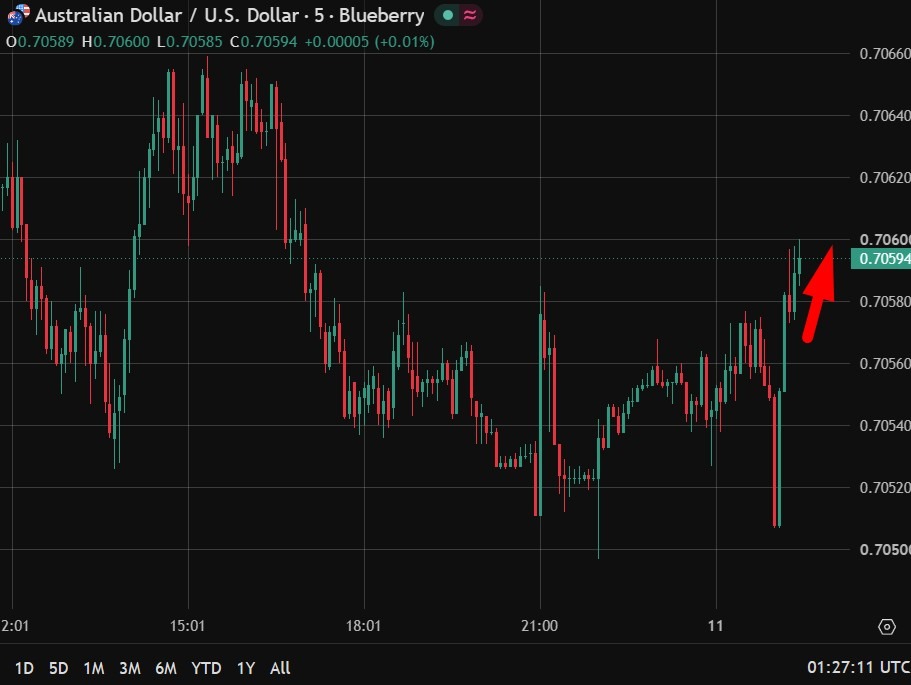
The People's Bank of China (PBOC) set the volume of its seven-day reverse repo operations at zero on Tuesday, citing insufficient demand from primary dealers.
This marks the first time since June that the central bank has conducted no seven-day reverse repo operations. The PBOC uses reverse repurchase agreements as a short-term liquidity management tool, through which it injects funds into the banking system by purchasing securities from primary dealers with an agreement to sell them back at a specified date and rate. The seven-day reverse repo rate is one of the PBOC's key policy rates, alongside the medium-term lending facility (MLF) rate and the loan prime rate (LPR), making its daily operations a reference point for broader monetary conditions.
When primary dealers do not bid for liquidity, it typically signals that the banking system already has adequate short-term funding. The zero-volume operation indicates that commercial banks had no need for additional central bank liquidity on the day. This comes against a backdrop of the PBOC maintaining an accommodative policy stance through 2024, having reduced policy rates and reserve requirement ratios to support economic activity.
The decision is likely to draw attention from traders positioned around China-linked assets, including the Australian dollar (AUD) and the Chinese yuan (CNY), which often react to shifts in PBOC liquidity operations. Market participants also monitor interbank benchmarks such as the 7-day weighted average repo rate (DR007) as a real-time gauge of funding tightness, with subdued demand at PBOC auctions typically consistent with lower interbank rates.
Key details:
- Operation: Seven-day reverse repurchase agreement
- Volume: Zero
- Reason cited: Lack of demand from primary dealers
- Previous zero-volume instance: June
The PBOC's daily reverse repo operations are closely monitored as an indicator of liquidity conditions in China's interbank market. When demand from primary dealers is absent, the central bank forgoes the operation rather than forcing funds into the system. Upcoming monthly LPR fixings and any changes to MLF operations will provide further signals on the PBOC's near-term policy direction.
Source: ForexLive / InvestingLive

