PayPal Stablecoin Launchpad PYUSDx Tops $100 Million in First-Day Volume
Key Takeaways
- •PayPal's PYUSDx developer platform debuted on September 9 and processed more than $100 million in volume on its first day.
- •M0 built the platform's onchain infrastructure, while MoonPay manages the PYUSD reserves backing PYUSDx.
- •PYUSDx launched with three partner projects—Saturn, Concrete, and Cap—with USD.AI and Fairblock expected to join later.
- •The platform makes PayPal's stablecoin programmable, letting each partner project configure its own tokenized version of PYUSD, which can be swapped onchain for PYUSD and USDC.
- •PYUSD has reached roughly $2.9 billion in circulation as PayPal faces competition from SoFi, US Bancorp, and a 21-institution consortium, with PYPL stock trading more than 80% below its 2021 peak.
PayPal's stablecoin infrastructure expanded on Sept. 9 with the debut of PYUSDx, a new developer platform that processed more than $100 million in volume on its first day.
The platform, built with M0 and MoonPay, launched alongside three projects—Saturn, Concrete, and Cap—and allows businesses to create configurable onchain products backed by PayPal USD. Stablecoins are blockchain tokens designed to track the value of fiat currency—in practice, almost always the US dollar—and PYUSD is PayPal's entry in that category. The launch gives PayPal another route to expand PYUSD, which has struggled to gain adoption, beyond its existing circulation of roughly $2.9 billion. The company is betting that making the stablecoin programmable will broaden its appeal: where PYUSD itself works as a standard dollar token, PYUSDx lets partner projects issue their own configured versions of it, each shaped around a specific product.
PayPal Stablecoin Launchpad Built for Developers
According to the announcement, traditional stablecoins are narrowly designed and cannot serve as programmable money. With PYUSDx, the firms intend to change that by enabling programmable dollars.
M0 built the onchain infrastructure for PYUSDx, while MoonPay is responsible for the PYUSD reserves backing PYUSDx. The platform launched with three projects—Saturn, Concrete, and Cap—and two others, USD.AI and Fairblock, are also expected.
Concrete is an onchain vault infrastructure that uses automated systems to allocate capital across DeFi protocols, while Saturn is a structured finance protocol built on digital credit that gives users exposure to Strategy STRC.
PayPal's PYUSD powers all of these protocols, but each project has full control over how to configure the tokenized dollar to fit its products. PYUSDx can also be swapped onchain for PYUSD and USDC, giving the new tokens a direct connection to established dollar liquidity.
The programmability of PYUSDx means businesses can easily integrate it and build an ecosystem around the stablecoin to meet their needs. Saturn's token is USDat, while Concrete's is concUSD.
PayPal Struggles as TradFi Interest in Stablecoins Intensifies
PayPal's efforts to boost stablecoin adoption highlight that traditional financial institutions and non-crypto firms are increasingly interested in tokenized money. What began as a crypto-native product is now appearing on the agendas of payments companies, retail banks, and investment banks alike. The company was one of the first payment firms to offer crypto, doing so as far back as 2020.
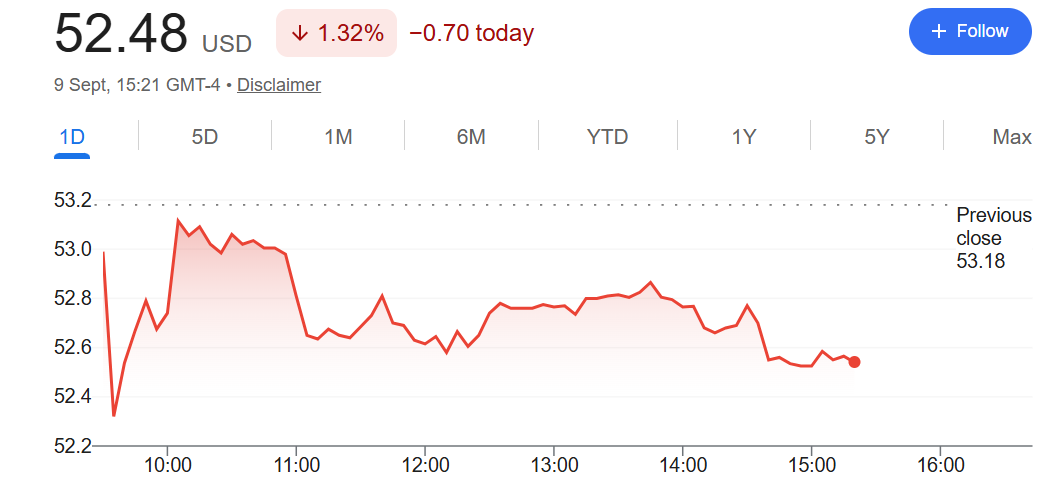
However, it has struggled in recent years, with its stock value down significantly, forcing a broad institutional selloff. Its stock, PYPL, is currently trading at $52, more than 80% below its 2021 peak of $300. With bearish sentiment surrounding the company, PayPal hopes its new stablecoin product will catch on.
PayPal is not the only US firm digging deep into stablecoins. Digital-first US bank SoFi has announced its SoFiUSD stablecoin, which will be integrated into its app.
Several TradFi institutions are also exploring stablecoins, with US Bancorp the latest to join the mix. The US bank disclosed today that it completed a pilot cross-border payment with its own stablecoin, USBDC.
Meanwhile, a group of 21 financial institutions—including Goldman Sachs, Deutsche Bank, and Bank of America—recently announced plans to issue a stablecoin through a consortium.
Much of this activity is still early: SoFi's stablecoin has yet to reach its app, US Bancorp's USBDC has so far appeared in a single pilot transaction, and the 21-institution consortium remains at the announcement stage. For PYUSDx, the near-term markers are whether first-day volume holds beyond the launch window and when USD.AI and Fairblock go live.
This article is for informational purposes only and should not be considered financial or investment advice. Cryptocurrency and equity markets remain volatile. Readers should conduct independent research before making investment decisions.
