Inside Paul Pogba's Saudi Camel Racing Club Al Haboob
Key Takeaways
- •Paul Pogba holds a minority stake in Al Haboob, a Saudi camel racing club launched last year by entrepreneurs Omar Almaeena and Safwan Modir to operate the traditional sport as a commercial business.
- •Camel racing in the GCC region features prize pools reaching approximately £4 million, comparable to Ascot's Champions Day, with competitive camels obtainable for as little as £40,000.
- •Major corporations including Shell and national Gulf banks have begun sponsoring camel races, a development the founders attribute partly to Pogba's involvement elevating the sport's international visibility.
- •Al Haboob's founders aim to stage a camel race somewhere in Europe within the next 14 months, though EU regulations currently prohibit the importation of camels.
- •The club is pursuing franchise expansion and hopes to attract additional celebrity investors, with basketball legend Shaquille O'Neal identified as a potential target.
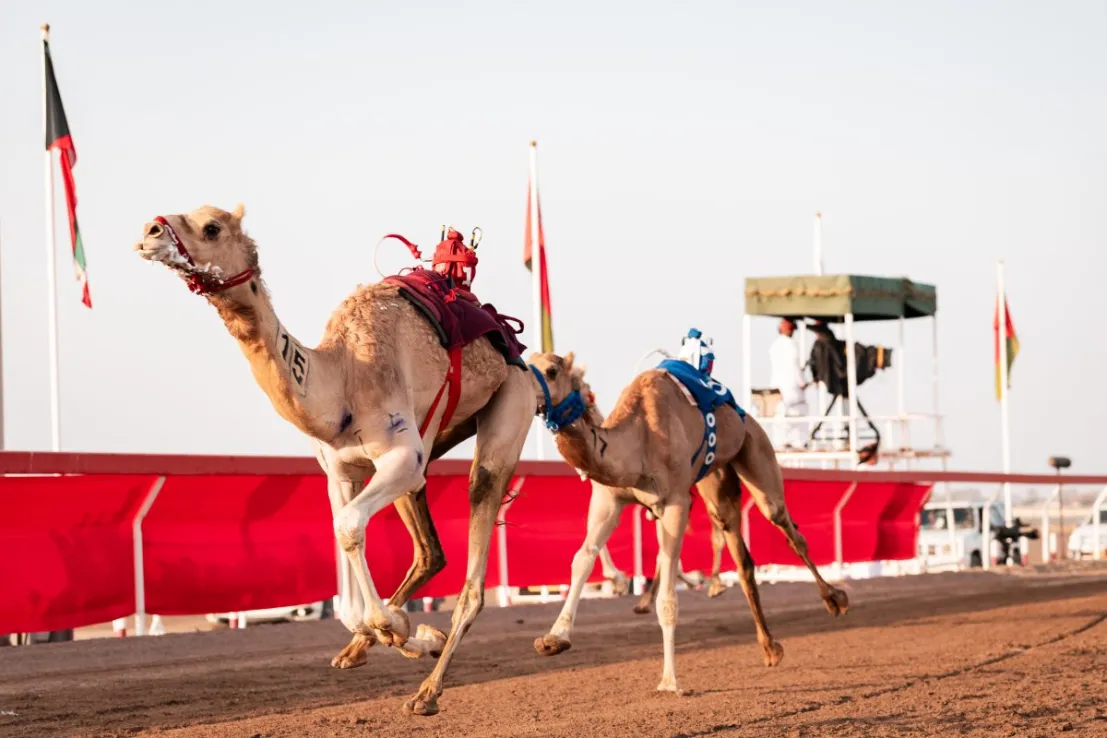
Last year, French footballer Paul Pogba invested in the Al Haboob camel racing club in Saudi Arabia. The club is the brainchild of two Saudi entrepreneurs, Omar Almaeena and Safwan Modir, who are seeking to demonstrate that the ancient sport can also function as a viable commercial business. The move comes as Saudi Arabia channels billions into sport through its Vision 2030 diversification programme, with the sovereign Public Investment Fund backing LIV Golf, Formula One's Saudi Grand Prix, and a transformed domestic football league — making Pogba's foray a small but emblematic piece of a much larger strategy to build new commercial sectors around heritage assets.
Over a thousand years ago, the warring tribes of the Arabian Peninsula settled territorial disputes not through armed combat but by racing camels — the backbone of transportation across the barren landscapes of what is now modern-day Saudi Arabia. Victorious owners earned coveted coastal territory access, critical for both trade and survival.
Today, camel racing is an exclusively sporting pursuit dominated by the royal families and aristocrats of the Gulf Cooperation Council (GCC) region, which spans Bahrain, Kuwait, Oman, Qatar, Saudi Arabia, and the United Arab Emirates. Race meetings stretch across weeks, with individual races drawing upwards of 85 entries and prize pools reaching tens of millions of Riyals — approximately £4 million, comparable to Ascot's Champions Day.
The Al Haboob team entered the sport last year as a new competitor with a business-oriented approach. Pogba — whose four-year doping ban was cut to 18 months by the Court of Arbitration for Sport in October 2024, allowing him to resume his career at Monaco — holds a minority stake in the club, described as a "decent" share by fellow camel owners, and has stated his ambition to build a stable featuring a $5 million star camel.
"Paul's involvement is about the crossover between sport and global icons," Almaeena told City AM. "He's not just there as an ambassador and for marketing, he is invested in the team as a shareholder and understands the value of what this means. He's into how we grow this and use his platform."
The Business of Camel Racing
The sport has evolved considerably from its tribal origins. A competitive camel can be acquired for as little as £40,000, and substantial profits can be earned by catching the attention of royal stables at major meetings in countries such as Saudi Arabia and Qatar.
Almaeena and Modir explained that wealthy owners — recently the Qataris in particular — have been known to purchase the top ten placed camels from major races. This strategy serves a dual purpose: strengthening their own stables while simultaneously weakening rival operations. For existing owners, this can produce a combined payout approaching £1 million: roughly £500,000 for winning a showpiece race and a similar sum from selling the victorious camel to the highest bidder.
"We are going to be inspiring more people to go into this industry with the same business model we are doing," Modir said.
Their growth model is built on franchise expansion. The pair are featured in the hit Gulf Netflix series Camel Quest, and they aim to challenge established racing families whose bloodlines span thousands of years. Commenting on Pogba's broader impact, Modir said: "You now have an entire football fan base that has been exposed to camel racing."
The Al Haboob founders noted that major corporations — including oil giant Shell and national Gulf banks — are now sponsoring races, a shift they attribute in part to Pogba's involvement raising the sport's international profile. That corporate interest mirrors wider sponsorship patterns across Gulf sport, where state-linked enterprises and global companies are increasingly backing events as the region positions itself as a hub for international competition.
Camel racing's reputation was significantly modernised in the early 2000s when Gulf states replaced child jockeys with robot alternatives. The US Department of State reported in 2005 that children as young as two had been trafficked from Asia and exploited as jockeys. The adoption of robotic riders addressed those human rights concerns, while the tradition of following races in vehicles rather than watching from hospitality stands has been cited as key to preserving the sport's authentic character.
European Ambitions
Almaeena and Modir — with Pogba involved — have set their sights on expansion into Western markets. When asked whether they would like to stage a camel race at Royal Ascot, Almaeena responded "definitely," though he acknowledged that European attitudes toward camels and the diseases they have been known to carry represent a major obstacle. The European Union currently prohibits the importation of the animals.
"There is a possibility that within the next 14 months we will have a race somewhere in Europe," Almaeena claimed.
Such a race could coincide with a second major sporting figure investing in Al Haboob's franchise system. "Hopefully we attract Shaquille O'Neal to invest," Modir said. "That's a wish that we have: Shaq on the track."
The broader landscape of relatively niche sports — SailGP, fencing, padel, and equestrian among them — is currently enjoying increased visibility. Camel racing remains one of the most popular pastimes in the Gulf, even as the region expands its westernised entertainment offerings.
The sport endures as a passion for the region's royals, much as the Ascot Gold Cup was cherished by the late Queen Elizabeth II. Its inherent display of domestic wealth and power remains its strongest asset. Breaking out of the Middle East and into Europe, however, presents an altogether different challenge — one where Pogba's global profile could prove decisive.
