Paraguay Protests Intensify as Impeachment Vote Nears After Ueno Bank Lockout
Key Takeaways
- •Ueno Bank locked approximately 3 million Paraguayan customers out of their accounts—roughly 60% of the country's adults—while holding $800 million to $850 million in public pension and health funds.
- •President Santiago Peña submitted his resignation, but Congress adjourned without a quorum, leaving him in office as the Senate moved toward a removal vote after the lower house approved impeachment 78-0.
- •Interior Minister Enrique Riera and central bank President Carlos Carvallo resigned, eight Ueno executives were arrested, and prosecutors opened a criminal investigation into Peña, who denies responsibility.
- •Despite a deposit guarantee covering up to about $36,000 per person and a new law requiring most deposits to be returned within five business days, initial payouts are limited to accounts holding up to roughly $1,600 with no debts to Ueno, leaving larger savers without a timeline for full access.
- •The Federation of Educators of Paraguay has called a national strike and march for Monday, Nov. 9, setting up the next major demonstration in the ongoing crisis.
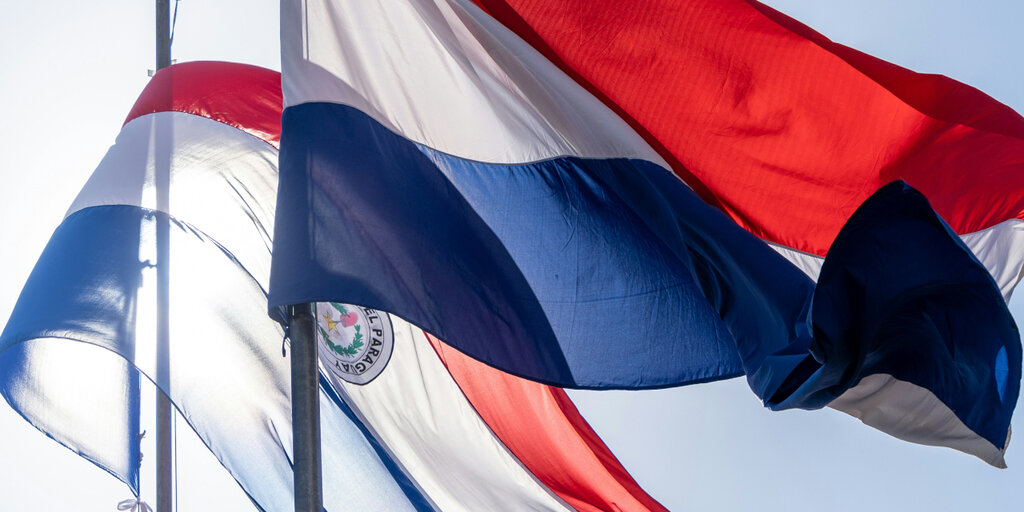
Thousands of Paraguayans marched through Asunción this week demanding the return of their money after Ueno Bank, a digital lender, locked about 3 million customers out of their accounts—roughly 60% of the country’s adults. The bank also held between $800 million and $850 million in public funds, including state pension and health money, according to the Associated Press, raising concerns about the impact on the pension system. That exposure of pension and health money to a single private lender helps explain why the lockout has escalated beyond a banking dispute into a full political crisis.
The protests intensified Thursday night outside Ueno’s headquarters in Asunción, where savers burned debit and credit cards. Former presidential candidate Paraguayo “Payo” Cubas attempted to join the demonstration but was booed, shoved and forced to leave.
Protesters shouted “divisor” and “oportunista”—meaning “divider” and “opportunist”—and accused Cubas of trying to benefit politically from public anger, according to the AP. Diario Hoy reported that demonstrators also blamed Cubas for the current makeup of the Senate. They said he placed Zenaida Delgado and Javier Vera on his party’s legislative ticket, the slate of candidates chosen by voters, and that both joined the government’s side shortly after taking office.
#Nacionales | 😱 Echan a "Payo" Cubas de la manifestación 🔹 Paraguayo “Payo” Cubas fue rechazado por los manifestantes cuando intentó acercarse a la protesta. Los presentes lo increparon y le gritaron “divisor” y “oportunista”. ➡️ Además, cuestionaron su responsabilidad en el… pic.twitter.com/odHzVvGPO3 — Universo 970 AM (@Universo970py) November 6, 2026
President Santiago Peña, who held shares in Ueno’s holding company until March 2025, submitted his resignation Thursday. However, a joint session of Congress convened to accept it adjourned without reaching a quorum, according to La Nación. The failed quorum means the resignation has not been formally accepted, leaving Peña in office as Congress pursues impeachment instead. Peña subsequently said he would face impeachment—a congressional trial to remove a president—and defend himself.
The lower house had already voted 78-0 to begin impeachment proceedings. On Friday, the Senate rejected Peña’s request for an additional 72 hours to prepare his defense. The Senate planned to vote on his removal Friday night, ABC Color reported. Vice President Pedro Alliana is next in line to the presidency.
Horacio Cartes, leader of the Colorado Party and Peña’s former political mentor, withdrew his support for Peña and backed impeachment. “We will not be on the side of the plunder of public, private and retirees’ funds,” Cartes said.
Interior Minister Enrique Riera and central bank President Carlos Carvallo have resigned. Eight Ueno executives have been arrested, according to La Nación’s Friday update. Prosecutors have also opened a criminal investigation into Peña’s possible responsibility for the bank’s irregularities. Peña denies responsibility.
Police used water cannons and tear gas against marchers near Congress. A new law requires most deposits to be returned within five business days, but the measure has not placated protesters.
The central bank says its deposit guarantee covers up to 228.3 million guaraníes per person, or about $36,000. However, as Decrypt previously reported, the first payouts will be limited to accounts containing up to 10 million guaraníes—approximately $1,600—and accounts with no debts to Ueno, leaving customers with larger balances without an announced timeline for full access to their funds.
The banking crisis has also prompted commentary from Bitcoin advocates, who have pointed to decentralization and self-custody while repeating the phrase “Bitcoin fixes this.” JAN3 founder Samson Mow said, “Bitcoin adoption at a nation-state level can mitigate these types of situations. If BTC is available to the people as a parallel rail, then systemic banking failures have far less impact.”
Bitcoin adoption at a nation-state level can mitigate these types of situations. If BTC is available to the people as a parallel rail, then systemic banking failures have far less impact. We at @JAN3com did meet with the Central Bank of Paraguay a few years ago and discussed… — Samson Mow (@Excellion) November 5, 2026
Stani Kulechov, founder of the DeFi protocol Aave, wrote, “Bitcoin matters now more than ever. Look at Paraguay today.”
The Federation of Educators of Paraguay has called a national strike and march for Monday, Nov. 9, Diario Hoy reported. The strike sets up the next major demonstration in a crisis that has already seen the interior minister and the central bank chief resign, and left the presidency itself awaiting a Senate vote.

