Panama Canal Starts Rationing Capacity and Draft Ahead of Expected El Niño Drought
Key Takeaways
- •Gatun Lake levels are forecast to keep falling through August, September and October despite the period normally being part of Panama's rainy season.
- •The Panama Canal Authority has cut daily booking capacity from 36 vessels to 34 and will reduce neopanamax draft limits on August 26 and September 3.
- •NOAA has raised the likelihood of a very strong El Niño to more than 90%, and it assigns a 69% chance to an event stronger than any since 1950 during October-December.
- •MSC has added a $100 per teu Panama Canal surcharge on Asia-to-US east and Gulf coast cargo, and CMA CGM has also increased canal-related charges.
- •Braemar said diversions during the 2023 drought lifted bulker tonne-mile demand by about 1.1%, with supramax and ultramax ships seeing the biggest gain.
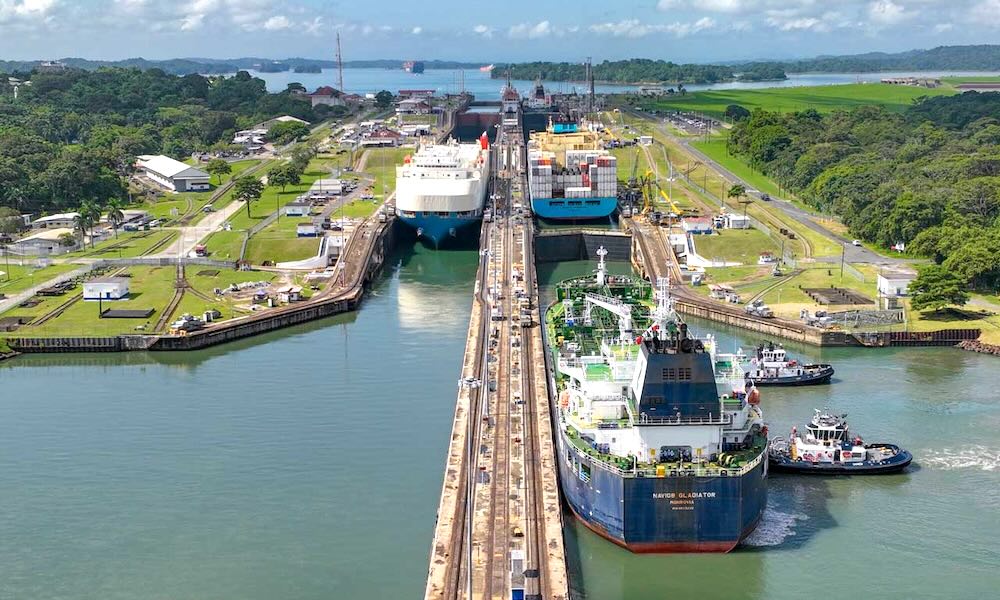
The Panama Canal has begun rationing capacity and draft ahead of an expected El Niño-driven drought, with forecasts for Gatun Lake serving as an ominous warning for shipping heading into the final months of the year.
Data from the Panama Canal Authority (ACP), charted by Braemar, shows Gatun Lake levels falling steadily through August, September and October — months that ordinarily form part of Panama's rainy season.
Under the ACP's latest projections, the lake stands at around 25.6 m today before dropping towards 25.3 m by early October and below that level later in the month. Panama's rainy season typically runs from May to November, with September and October ranking among its wettest months, making the current decline notable for carriers that rely on the canal as a shortcut between the Atlantic and Pacific.
The canal is already acting. Daily booking capacity was cut from 36 vessels to 34 in late July, while the maximum authorised neopanamax draft will fall to 14.6 m on August 26 and to 14.5 m from September 3.
For now, the measures remain a far cry from the extreme restrictions of 2023-24, when neopanamax draft limits fell to around 13.4 m and daily passages were eventually reduced to roughly 22 at the worst point of the drought. The trajectory, however, is concerning for operators that have to plan sailings, cargo volumes and transit costs weeks in advance.
The US National Oceanic and Atmospheric Administration (NOAA) last week raised the probability of a very strong El Niño during the Northern Hemisphere autumn and winter to more than 90%. More strikingly, its Climate Prediction Center puts the probability of an event exceeding the strength of every El Niño recorded since 1950 at 69% during October-December.
ACP administrator Ricaurte Vásquez Morales has already warned that further capacity restrictions are likely if conditions deteriorate, including additional draft reductions and cuts to daily booking slots.
Carriers have started pricing in the risk. MSC has introduced a $100 per teu Panama Canal surcharge, effective today, on cargo moving from Asia to the US east and Gulf coasts, while CMA CGM has also increased canal-related charges.
For dry bulk, a return of serious restrictions could in fact provide a significant tonne-mile boost.
Braemar estimates that Panama diversions during the 2023 drought added around 1.1% to overall bulker tonne-mile demand, with supramax and ultramax ships receiving the largest uplift at approximately 2.2% as vessels rerouted on substantially longer voyages.
The 2023 experience saw bulker transits fall sharply from the fourth quarter onwards, as owners weighed expensive auction slots and long queues against sailing around South America or taking alternative routes.
