Pan Ocean confirms latest VLCC pair at Qingdao Beihai
Key Takeaways
- •Pan Ocean has contracted two 319,000 dwt VLCCs at Qingdao Beihai Shipbuilding through China Shipbuilding Trading.
- •The new vessels are ammonia-ready and are designed to allow later installation of two 6,000 cu m ammonia fuel tanks.
- •A previous same-design VLCC ordered in March brings Pan Ocean’s VLCC orderbook at Qingdao Beihai to three ships.
- •Pan Ocean now has at least seven ships contracted at Qingdao Beihai, including four 210,000 dwt newcastlemax bulk carriers.
- •The company also has a separate VLCC newbuilding series booked at Hanwha Ocean in South Korea.
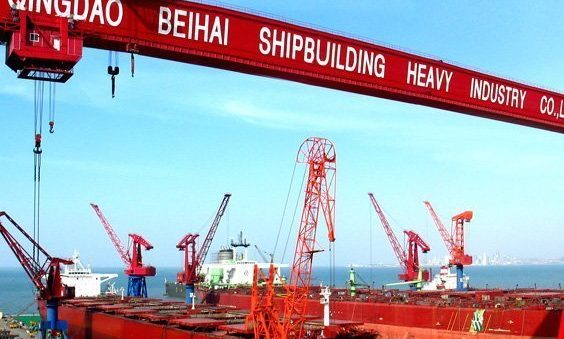
South Korea’s Pan Ocean has placed its latest pair of very large crude carriers, or VLCCs, at CSSC-controlled Qingdao Beihai Shipbuilding.
Splash reported at the end of June that the Harim-controlled owner had lined up two ammonia-ready VLCCs for delivery in September 2030, with market sources putting the price at around $122 million per ship.
Pan Ocean’s stock exchange disclosure did not identify the builder, although the vessels had been linked to Qingdao Beihai.
The Chinese yard has now confirmed that it and China Shipbuilding Trading signed contracts with Pan Ocean for two 319,000 dwt VLCCs.
The latest pair follows a single same-design VLCC booked by the Korean owner at Qingdao Beihai in March, bringing its VLCC orderbook at the yard to three ships.
The 339.5-metre vessels will comply with Tier III and EEDI Phase III requirements and have been designed to allow the later installation of two 6,000 cu m ammonia fuel tanks. That combination places the ships among a growing class of crude carriers being ordered with emissions rules and future fuel flexibility in mind, even before the tanks are fitted.
Pan Ocean now has at least seven ships contracted at Qingdao Beihai, including four 210,000 dwt newcastlemax bulk carriers. The owner also has a VLCC newbuilding series booked at compatriot yard Hanwha Ocean, underscoring how the company is spreading large-capacity fleet investment across both bulk and crude transportation segments.

