Pablo Hernández de Cos Emerges as Lead Candidate for ECB President Ahead of December Decision
Key Takeaways
- •European Union officials have recommended Pablo Hernández de Cos as the next president of the European Central Bank, according to a Wall Street Journal report.
- •Hernández de Cos currently heads the Bank for International Settlements and previously served as governor of the Bank of Spain.
- •EU leaders are expected to make a final decision in December, ahead of Christine Lagarde's planned departure in February 2027.
- •If approved, Hernández de Cos would become the first Spanish national to lead the European Central Bank.
- •The ECB sets interest rates for the 21 countries that use the euro, shaping financial conditions for approximately 350 million people.
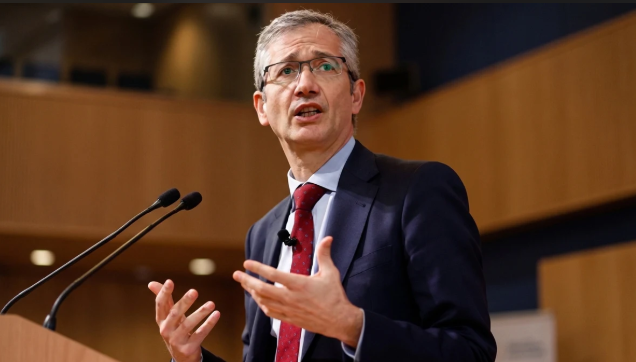
The European Central Bank (ECB) could appoint its first Spanish president, after European Union officials recommended Pablo Hernández de Cos to succeed current President Christine Lagarde, according to a report by The Wall Street Journal (WSJ) highlighted by Coin Bureau on X. EU leaders are expected to make a final decision in December, ahead of Lagarde's planned departure in February 2027.
The recommendation places Hernández de Cos in a leading position to take charge of one of the world's most influential central banks. His potential appointment would mark a historic development for Spain, which has never previously held the ECB presidency.
Who Is Pablo Hernández de Cos?
Hernández de Cos currently heads the Bank for International Settlements (BIS), often described as the central bank of central banks, an institution that plays a central role in international monetary and financial cooperation. Before taking up that position, he served as governor of the Bank of Spain, giving him experience in both national monetary policy and international financial institutions.
His professional background is directly relevant to the ECB presidency, which involves overseeing monetary policy decisions for the euro area. The report indicates that European officials are seeking an experienced central banking figure to replace Lagarde when her tenure ends, and Hernández de Cos's record spanning both a national central bank and a global monetary institution matches that description.
The recommendation, however, does not constitute a final appointment. Approval from EU leaders, expected in December, is the next major step in determining the ECB's leadership after February 2027.
Why the ECB Presidency Matters
The ECB president occupies a central position in setting monetary policy across the eurozone. The institution sets interest rates for the 21 countries that use the euro, shaping financial conditions for approximately 350 million people.
Rate decisions carry consequences well beyond financial markets. They affect the cost of mortgages for households, borrowing expenses for businesses, and the returns consumers receive on their savings. Shifts in the ECB's monetary policy can therefore influence household finances, corporate investment decisions, and broader economic activity throughout the euro area.
The president also plays a key role in communicating the central bank's policy direction and overseeing decisions that shape the region's financial environment. As a result, the selection of the next ECB leader is significant for governments, financial institutions, businesses, and consumers across the 21 euro-using countries.
December Decision Ahead of Lagarde's Departure
The expected December approval will be a key milestone in the succession process. Lagarde is scheduled to leave the presidency in February 2027, creating a transition period between the anticipated leadership decision and her departure.
If approved, Hernández de Cos would become the first Spanish national to lead the European Central Bank. His previous leadership of the Bank of Spain and his current position at the Bank for International Settlements are central elements of his profile as a potential successor.
For now, the recommendation reported by The Wall Street Journal remains subject to approval by EU leaders, with the final decision expected in December — the step that would determine who leads the institution once Lagarde's tenure ends.
Source: Hokanews

