Lawsuit: DOJ Pardon Attorney Elizabeth Oyer Fired Unlawfully After Refusing Mel Gibson Gun Rights Request
Key Takeaways
- •Elizabeth Oyer, the Justice Department's pardon attorney since 2019, was terminated in March 2025 hours after declining to recommend restoring Mel Gibson's gun rights following his domestic violence-related conviction.
- •Blanche signed the termination memo while serving as deputy attorney general, and Oyer's lawsuit argues the removal was invalid under the department's own position that only the attorney general can remove department officials.
- •The lawsuit alleges the firing violated Oyer's due process rights, federal civil service protections, and First Amendment rights, and seeks to void the removal and reinstate her.
- •The Merit Systems Protection Board dismissed Oyer's appeal after 16 months without a substantive review, prompting her to file six counts in federal court.
- •The case's outcome could affect how much protection career civil servants retain against removal by officials other than the attorney general.
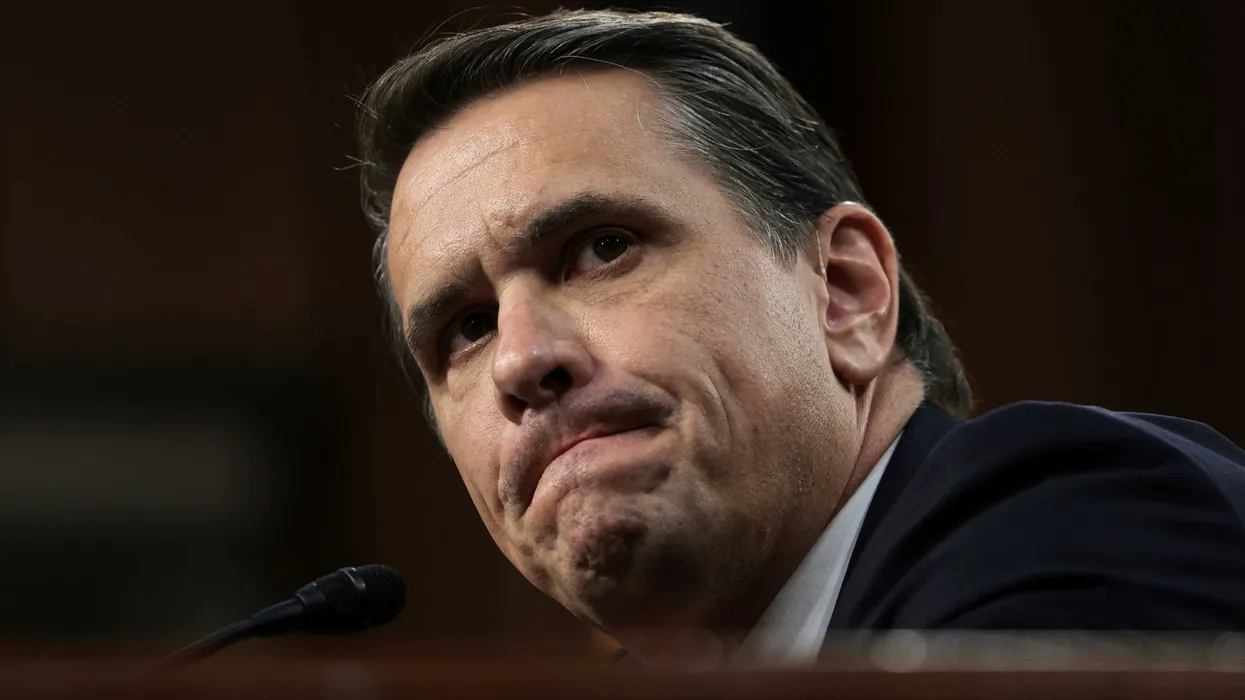
Attorney General Todd Blanche unlawfully fired a career Justice Department lawyer hours after she declined to help restore actor Mel Gibson's gun rights, according to a lawsuit filed Thursday in federal court in Washington, D.C.
The complaint was brought by Elizabeth Oyer, who served as the department's pardon attorney—reviewing clemency requests—until March 2025. She held the post since 2019 and had worked on clemency initiatives in both Democratic and Republican administrations, including review of pandemic-era compassionate release cases. Notably, Blanche was not attorney general when he signed her termination memo; he was deputy attorney general, the department's second-ranking official.
"This removal was unlawful," the lawsuit states, arguing that the firing violated Oyer's due process rights, her protections under federal civil service law, and her First Amendment right to political association. According to the complaint, the memo accused Oyer of no misconduct and cited no reason that federal law recognizes as grounds for removing a career executive. The memo read: "Pursuant to Article II of the Constitution and the laws of the United States, your employment with the Department of Justice is hereby terminated."
Before becoming deputy attorney general, Blanche represented President Donald Trump at his Manhattan hush-money trial and in both federal criminal cases brought by special counsel Jack Smith.
The Gibson gun rights dispute
Weeks after Trump's inauguration, Oyer was assigned to a working group tasked with identifying people who had lost their gun rights due to criminal convictions but might deserve to have them restored—work the complaint describes as "an unusual task for the Office of the Pardon Attorney." Federal law generally bars people convicted of felony crimes and, since the 1996 Lautenberg Amendment, those convicted of misdemeanor domestic violence offenses, from possessing firearms. Oyer took it on, and her office produced a list of roughly 95 people with old, nonviolent convictions who had been vetted and judged unlikely to reoffend.
Blanche's staff cut the list to nine and asked Oyer to write a memo recommending those nine, the complaint says. "Mr. Blanche's staff then came back to Ms. Oyer with another request: they asked her to add the actor Mel Gibson to the list."
Gibson had lost the right to own a gun following a domestic violence conviction and had asked the attorney general to restore it, according to the complaint. In 2011, Gibson pleaded no contest to a misdemeanor battery charge involving his then-girlfriend, part of a custody dispute that drew extensive public attention. Oyer had "serious concerns about the public safety implications." The department's own guide on domestic violence and firearms, quoted in the complaint, states: "Over half of the women murdered in the United States are killed by a current or former intimate partner" and "The presence of firearms significantly escalates the danger in relationships where there is domestic violence by increasing the risk of homicide by 500%."
Unlike everyone else on the list, Gibson had never been investigated, and Oyer's staff had no way to judge whether he was likely to reoffend. On March 6, 2025, she emailed her concerns to Blanche's staff and said she could not recommend restoring Gibson's gun rights.
"Later the same day, a senior official on Mr. Blanche's staff called Ms. Oyer and urged her to recommend reinstatement of Mr. Gibson's gun rights anyway in consideration of the fact that Mr. Gibson had a personal relationship with President Trump," the complaint says. "The official employed a bullying tone and suggested to Ms. Oyer that she would be wise to make the recommendation."
The next day, Oyer sent a new memo declining to recommend it, saying she did not know the particulars of Gibson's case and that the decision belonged to the attorney general. A few hours later, according to the complaint, a colleague pulled her out of an unrelated meeting to tell her that security officers were waiting in her office with termination papers.
"Ms. Oyer returned to her office, where two DOJ security officers handed her a memo from Mr. Blanche, instructed her to pack up her personal belongings, and escorted her out of the building," the lawsuit explains.
Legal arguments
Federal law permits removal of a career senior executive only for misconduct, neglect of duty, malfeasance, or refusal of a reassignment, and requires 30 days' notice and a chance to respond, the complaint says. Oyer says she received neither.
The lawsuit also notes that the department's own position is that only the attorney general can remove a department official under Article II. In other litigation, it argued that a removal by a lower-ranking official is "void ab initio," or invalid from the start, according to a copy of that filing attached to the complaint. Pam Bondi was attorney general in March 2025; Blanche was not. By the department's own standard, Oyer argues, the memo that ended her 13-year career never legally removed her.
Confirmation and subsequent controversies
The Senate confirmed Blanche as attorney general more than a year after Oyer was fired, on a 50-49 vote, with two Republicans joining every Democrat in opposition.
As head of the Justice Department, Blanche worked to settle Trump's private lawsuit against the IRS on terms favorable to the president. "President Trump did not pursue his claims until he once again occupied the White House and had appointed his former lawyer … to prominent positions in the DOJ," U.S. District Judge Kathleen Williams wrote in July in voiding the settlement, according to CBS News. "It is risible to suggest that there was ever adverseness between the Parties." Williams ordered copies of her ruling sent to the New York and District of Columbia bar associations for disciplinary review of Blanche, The Hill reported.
"There was no collusion in this case, and the partisan judge who speculated otherwise has disregarded decades of precedent," the department said in a statement.
The department has fired employees who worked on Trump-related cases since January 2025, citing the president's constitutional powers, Reuters reported. At least 37 came from Smith's team, and Blanche fired Peter Carr, the career spokesman for both Smith and former special counsel Robert Mueller, CBS News reported.
A path through the courts
Oyer spent 16 months at the Merit Systems Protection Board, which Congress created to hear federal personnel disputes, without receiving a substantive review, the complaint says. The board has operated with a backlog and extended periods without a full slate of members in recent years, which has delayed appeals for many federal employees. It dismissed her appeal in June, leaving her without a decision for at least six more months. It had already ruled in March that it lacks jurisdiction over many Article II firings, which would shut her out entirely, according to the complaint.
She has now turned to federal court. Her suit brings six counts and asks a judge to void the removal and order her reinstated. The case's outcome could bear on how much protection career civil servants retain against removal by officials other than the attorney general, an issue that has surfaced in other litigation over the administration's personnel actions.
Blanche offered a different explanation for the firing when he appeared before the Senate Judiciary Committee in July seeking confirmation. "The decisions that she had made as pardon attorney … were completely inconsistent with President Trump," Blanche said, pointing to her recommendation to commute the sentences of everyone on federal death row.
"I took an oath to uphold the law, not to do political favors," Oyer said in July, in a separate records lawsuit she brought against the department.
The complaint filed Thursday is available here.
