Why the Outer Hebrides Is Scotland's Ultimate Wellness Escape
Key Takeaways
- •The Outer Hebrides form a roughly 130-mile arc of islands off Scotland's north-west coast, home to about 20,000 residents and linked to the mainland by state-owned CalMac ferries.
- •Cold-water snorkelling and sauna culture anchor the islands' wellness appeal, exemplified by the Saltbox Sauna on Horgabost Beach, founded by local couple Neil and Norma MacLeod.
- •The medieval Lewis chessmen, 93 pieces unearthed at the Uig sands in 1831, are mostly held by the British Museum and the National Museum of Scotland.
- •A military range on Benbecula has tested missiles since the 1950s, and planning permission has been granted for a proposed vertical-launch spaceport on North Uist.
- •Eriskay's Am Politician pub houses bottles of whisky salvaged from the SS Politician, which ran aground in 1941 and inspired the novel and film Whisky Galore!
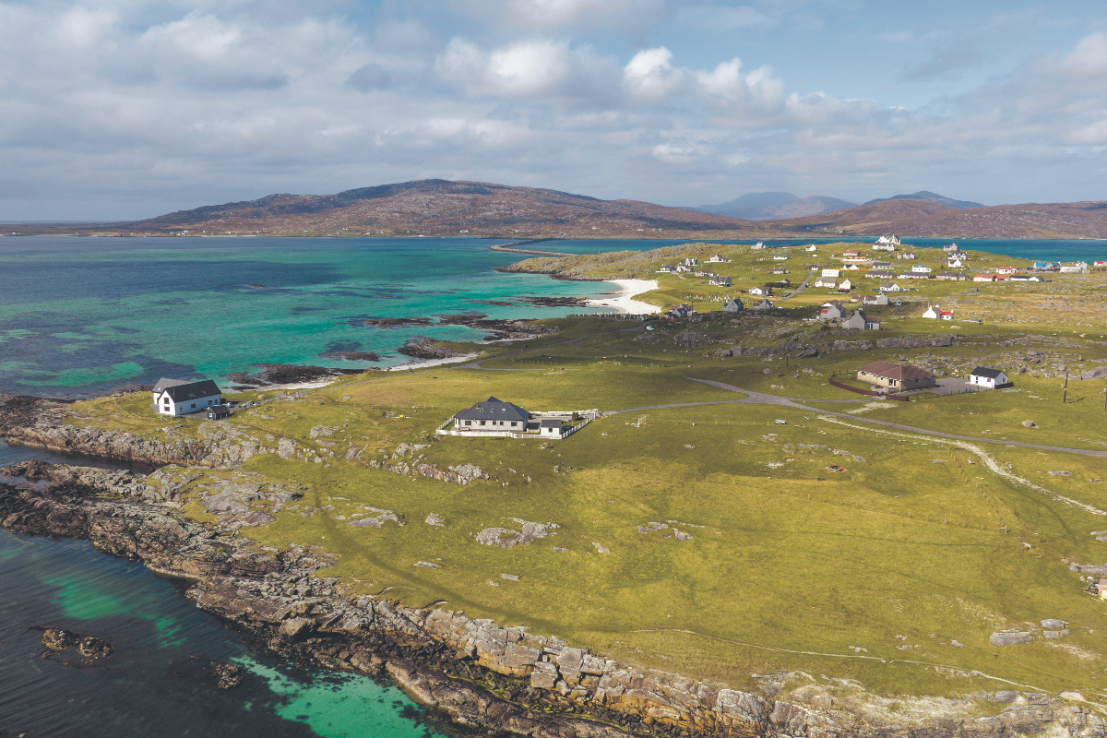
Exquisite silence and beautiful beaches define the Outer Hebrides, Scotland's wildest corner — a roughly 130-mile arc of islands off the country's north-west coast — where cold-water snorkelling, sauna culture and a profound sense of stillness make for an unlikely wellness escape.
I am floating above luminous purple coral and brilliant white starfish. The water beneath me is so clear that I can see individual grains of sand and the scales on the fish. The giveaway that I am not somewhere exotic? I am wearing a wetsuit, and my hands have gone numb — the kind of numb that aches so much it almost stops aching again, as though there were no hand there at all. When I come up for breath and take off my mask, the immaculate Bayble beach sits some 30 metres away. Under the glare of the sun, the sand is so white it is hard to look at. I pause to take in the strange reality of snorkelling in Scotland, certain there is no one around for miles.
I had been bobbing about in the ocean with SurfLewis, who collected me from the beach and returned me to warm up in Stornoway, the largest town in the Outer Hebrides.
Arriving in Stornoway
To paint a picture of the remoteness: the recent announcement that Tesco would open on a Sunday was so controversial that an elderly local still petitions outside. Sabbath observance runs deep here — Sunday ferry sailings on the Stornoway route began only in 2009, after years of debate. It is a town of opposing vibes. At The Star Inn, the oldest pub in the Outer Hebrides, I am invited into a music circle one weekday evening. While most of the crowd are older men, the make-up of the group is more diverse than expected. Late-night spot McNeills, by contrast, is where people go to drink shots chased with bottles of Smirnoff Ice — a drink that, curiously, never went out of fashion here.
Late on a Saturday, there is a charged energy. There are only 20,000 residents, and half of them seem to be sitting on top of one another — the crowded scenes suggesting slim pickings on the dating front. You can lap Stornoway on foot in about the time it takes locals to sink a Smirnoff Ice. After a night in town, head outwards into the profound emptiness, and the profound beauty.
The Outer Hebrides by beach
One of the beaches here was once used by the Thai tourism board in promotional material, and with the weather going the way it is, Scotland is more likely than ever to have temperatures that match the vistas. I explored caves on Garry Beach, took in Reef Beach and — when it did get cold one day — warmed up in the Saltbox Sauna on Horgabost Beach. Heed the advice of the locals when it comes to getting in without a wetsuit: "It can't hurt you, it's just cold!"
Saltbox Sauna was set up by local couple Neil and Norma MacLeod, who wanted to introduce their international wild swimming community to the Outer Hebrides.
"I was staring out at the views from this sauna in Iceland and I knew that the Outer Hebrides had just as stunning if not better views," says Norma. "There was something about the silence, the heat, that felt healing and disconnected from daily stresses."
The pairing of cold dips and hot saunas has spread along the British coastline in recent years, and Saltbox brings it to one of its most spectacular settings. For sheer Instagram potential, Luskentyre and Seilebost Beach, an hour's drive away at the bottom of the neighbouring Isle of Harris, are the most panoramic — the former curving and undulating daily according to the tide, its miraculous washes of blue best seen from above. Drive to the cafe Talla na Mara for a hot drink and the chance to buy local art from the series of artisan studios, each with impeccable sea views.
Hipsterisation of Scotland's remotest part
Saltbox is not the only hipster development. In Stornoway, the floor-to-ceiling glass windows of Stornoway Distillers stand out against the pubs and fish 'n' chip shops. Husband-and-wife duo Gez and Nat make gin using foraged items from the Hebrides and run workshops from their distillery, which has an industrial, stripped-back feel. Over on Harris — famous for Harris Tweed, a cloth still hand-woven by islanders under legislation that protects its name, and connected to Lewis by car (the two are in fact a single island) — Italian pop-up Blasta Pasta sells out weekly foodie experiences, while the Crust pizza restaurant occupies a shipping container a short drive outside Stornoway.
The following morning I am lying on a rock near the Uig sands, a 45-minute drive from Stornoway — the dunes where the medieval Lewis chessmen were unearthed in 1831, with most of the 93 pieces now held by the British Museum and the National Museum of Scotland. Mairi Gillies, a local visual artist, pours me my second whisky in ten minutes and instructs me to lie on my back and listen to the sounds of the Hebrides. It is exquisite solitude, mildly enhanced by the inebriation. Here lies not just the permission to slow down, but to come to a complete halt.
"When people tell me the Outer Hebrides are remote, I say remote from what?" Gillies says during our walk. Strikingly Celtic in appearance — orange hair, pale skin and a broad smile — she rests her hand on a cairn, an ancient pile of stones designed for navigation. I am tasked with walking to the next cairn without any help, traversing bogs and clambering over rocks, feeling my way. When I ascend the hill opposite, I feel a real sense of accomplishment. "You found higher ground, found your way out," says Gillies. It feels like outdoor therapy.
Very little changes
I took a pit stop at the Isle of Harris Brewery before boarding the hour-long ferry to Uist, one of the remotest places in Europe. On this collection of six islands there are no trees, due to acidic peat soil and strong Atlantic winds. What the islands do have is machair — the flower-rich, shell-sand grassland that erupts into colour in early summer, a rare habitat of which the Outer Hebrides hold one of the largest extents anywhere. There are 50 miles of islands and few major settlements — visitors are well advised not to miss closing time. Stay in one of the handful of pubs-with-rooms, all of which feel as though they have not changed since the 1970s.
One long road runs down the islands, and this simplicity shapes the trip, taking you over dramatic causeways as you traverse from one island to another. On North Uist, eat lobster and whelks at The Seafood Spot by Kallin Harbour, where day boats offer nature tours. A short drive south, the island of Benbecula puts its remoteness to use for testing space rockets — a military range here has tested missiles since the 1950s, and planning permission has been granted for a proposed vertical-launch spaceport on North Uist. It is a further hour's drive down to South Uist, where you can stand feet away from Highland cattle and go whale-watching with Long Island Retreats.
DJ doesn't mince his words
The 4x4 'crofting' experience is worth booking for Donald 'DJ' Cameron alone, who runs the company with his partner Lindsay Robertson. Not a man who minces his words, he is full of incredible local stories and Uist gossip. Once you reach the most southerly island of Eriskay — where Bonnie Prince Charlie came ashore in 1745 to begin the Jacobite rising — go for a pint at the Am Politician pub, which houses some of the last remaining bottles of whisky saved from the SS Politician, the ship that ran aground near the island in 1941. Islanders were drunk for years on the haul that came ashore — an event that inspired Compton Mackenzie's novel and the film Whisky Galore!
Minke whales and dolphins showed off as I took the ferry back from Lochboisdale to the Scottish mainland port of Mallaig, a fairly common sight in these parts. Then came a whimsical drive through the Highlands as I headed back south. With its lack of tourists, spectacular beaches and profound sense of calm, the Outer Hebrides truly stirred something in me.
Visit the Outer Hebrides yourself
The writer spent five nights exploring the Outer Hebrides in Scotland, driving north to south and arriving in Stornoway via CalMac ferries, the state-owned operator that links the islands to the mainland. The itinerary included one night at Broad Bay House, 7 miles north of Stornoway; two nights at The Royal Hotel in Stornoway; and two nights at the Polochar Inn at West Kilbride on South Uist. For more information and inspiration on holidays in Scotland, and to plan a trip, go to visitscotland.com and visitouterhebrides.co.uk.

