Inside OPPO's Binhai Bay R&D Base: The Testing and Engineering Behind the A7 Pro
Key Takeaways
- •OPPO's flagship A5 laboratory building in Dongguan represents an investment exceeding 3 billion yuan, roughly $430 million, and contains more than 500 high-level laboratories.
- •The OPPO A7 Pro carries an IP69K rating, the highest Ingress Protection tier, certifying it as fully dust-tight and able to withstand high-pressure, high-temperature water jets, alongside military-grade shock resistance.
- •The smartphone's 8,000mAh battery is engineered to retain more than 80% of its rated capacity after 2,000 full charge cycles, supporting a roughly five-year battery lifespan.
- •OPPO is shifting from raw hardware competition toward AI-driven experiences, embedding features such as AI LinkBoost 4.0, AI GameBoost 3.0, AI Night Mode, and AI Portrait Glow into the A7 Pro.
- •In Nigeria, the A7 Pro 5G is available for pre-order in 6GB+128GB and 6GB+256GB configurations priced at 569,800 and 659,800 respectively, both backed by 5-Year Smoothness Protection.
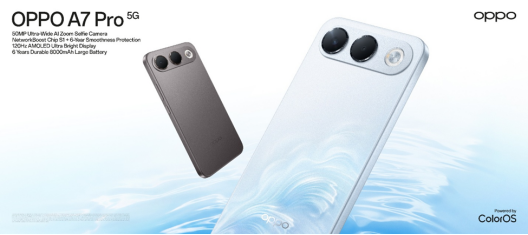
In September 2026, OPPO opened the doors of its Binhai Bay R&D base in Dongguan, China, to a group of international media, technology editors, and industry professionals attending the APEC Asia-Pacific Media Forum. What was arranged as a corporate visit became a detailed look at the research, engineering, and testing processes behind the company's products — including the OPPO A7 Pro, a smartphone whose durability ratings and AI features were shaped within this infrastructure.
Consumer conversations about smartphones tend to center on battery life, screen quality, and price. Far less attention is paid to what happens beforehand: the months, and sometimes years, of testing a device undergoes before release. Behind each visible improvement sits a less visible world of research and engineering — one that, in OPPO's case, extends well beyond the device itself and explains why the OPPO A7 Pro exists in its current form.
The visit offered a glimpse into a side of smartphone innovation consumers rarely see: the laboratories, engineers, and extensive testing required to turn a concept like the OPPO A7 Pro into technology people can rely on every day. For buyers, that behind-the-scenes process is where durability claims are validated long before a device reaches a store shelf.
A 3 Billion Yuan Investment in Quality and Durability
Behind the OPPO A7 Pro's design lies infrastructure built to guarantee reliability. The company's flagship "A5" laboratory building alone represents an investment exceeding 3 billion yuan ($430 million USD). Within its walls, more than 500 high-level laboratories focus on the less visible factors that determine how the device performs over years of daily use.
That work spans three core areas:
- Signal and communication testing: ensuring the NetworkBoost Chip S1 and AI LinkBoost 4.0 deliver consistent connectivity, including in areas with weak reception.
- Extreme material and durability verification: subjecting the phone's frames and screens to drop, splash, and stress tests — the foundation of its IP69K dust and water protection and military-grade shock resistance.
- System longevity and reliability: validating that performance remains fast and stable years into ownership, confirmed through OPPO's 5-Year Smoothness Test.
According to OPPO, results such as the phone holding its charge in high heat, surviving a sudden downpour, or maintaining clear reception in a crowded market are the direct outcome of this laboratory testing. The IP69K rating underpinning the dust and water claims is the highest tier of the Ingress Protection standard: it certifies a device as fully dust-tight and able to withstand high-pressure, high-temperature water jets — a stricter benchmark than the splash resistance denoted by entry-level IP ratings.
A Shift Toward AI-Driven Experiences
The tour also highlighted OPPO's move away from raw hardware competition toward practical, AI-driven experiences. Rather than focusing solely on processor benchmarks, the company is embedding AI into daily interaction — from live cross-language translation during conversations to intelligent imaging and camera processing.
The OPPO A7 Pro embodies that shift across several features:
- AI LinkBoost 4.0 runs quietly in the background to maintain the strongest possible connection.
- AI GameBoost 3.0 is designed to keep gaming smooth.
- AI Night Mode applies a RAW Super Night algorithm to optimize low-light photos.
- AI Portrait Glow recommends the best lighting for each selfie.
Each of these features is the consumer-facing output of the laboratory work described above — AI LinkBoost 4.0, for instance, ties directly back to the signal and communication testing carried out inside the A5 building.
For Nigerian professionals, creators, and entrepreneurs operating in a global market, the company frames this shift as ownership of a device built to make daily tasks faster, smarter, and more seamless — less about what the phone can do in a lab, and more about what it can do in real life, in real time.
From Laboratory to Mass Production
Located in the heart of China's advanced manufacturing ecosystem, OPPO says its setup bridges the gap between laboratory innovation and mass production: an idea validated in the lab can move quickly to the shelf as a durable, everyday device. The base's location in Dongguan, within Guangdong province's Pearl River Delta, places it inside one of the world's densest electronics manufacturing belts — proximity that shortens the distance between a validated prototype and a production line.
That pipeline carried several of the OPPO A7 Pro's headline specifications from concept to reality:
- An 8,000mAh battery engineered to retain more than 80% of its rated capacity after 2,000 full charge cycles.
- IP69K protection and military-grade shock resistance, validated and mass-produced at scale.
- A 4,300 mm² Glacier VC Vapor Chamber designed to keep the Dimensity 6360 Max chipset running cool in Nigeria's heat.
The specifications carry precise technical meanings. A charge cycle counts as one full use of the battery's capacity, so a cell rated to retain more than 80% after 2,000 cycles is engineered for roughly five years of typical daily charging — the arithmetic behind the device's five-year battery lifespan positioning. A vapor chamber, meanwhile, cools by cycling a sealed working fluid between evaporation and condensation, letting a thin phone draw heat away from the chipset without a fan.
Built for the Nigerian Market
Since entering the Nigerian market in 2019, OPPO has steadily expanded its footprint, earning consumer trust through durability and localized engineering, according to the company. The OPPO A7 Pro represents the culmination of that approach: the five-year battery lifespan, IP69K protection, 5-Year Smoothness Test, and AI-powered signal boosting were all developed around the premise that in Nigeria, a phone is not a luxury but a lifeline.
Read side by side, the ratings map onto daily realities: IP69K addresses dust and rain exposure, military-grade shock resistance addresses drops, and the battery cycle rating addresses the long-term wear of constant recharging.
Held in Lagos, Abuja, or Port Harcourt, the device is, in OPPO's telling, the output of 500 high-level laboratories, thousands of engineers, and a global commitment to technology that lasts — summarized in its tagline: "Tough Outside. Smart Inside."
Pricing and Availability
The OPPO A7 Pro is available in Nigeria in two configurations:
- A7 Pro 5G (6GB + 128GB): 569,800
- A7 Pro 5G (6GB + 256GB): 659,800
Both are backed by 5-Year Smoothness Protection. The device is currently available for pre-order at OPPO-authorised retail stores nationwide and through official online partners. Because that protection is attached to the product itself, the company's longevity claims now come with a defined timeframe over which buyers can evaluate them — worth tracking as pre-orders move into general retail availability.
About OPPO
OPPO is a leading global smart device brand. Since entering the Nigerian market in 2019, the company has grown steadily, earning consumer trust with devices engineered for durability, reliability, and real-world performance. Its global R&D network includes the OPPO Binhai Bay R&D base and more than 500 high-level laboratories, supporting its stated commitment to building technology that lasts.
Further details are available on the official OPPO Nigeria website at OPPO Nigeria can also be followed on social media: Instagram (@opponigeria), Facebook (OPPONigeria), TikTok (@oppo.nigeria), and X (@OPPONigeria).

