OpenAI’s Micro Keypad Offers a Niche ChatGPT Hardware Tool for Power Users
Key Takeaways
- •The OpenAI Micro keypad is a $230 customizable macropad built in collaboration with Work Louder for ChatGPT and Codex workflows.
- •Users can configure the device inside ChatGPT to assign commands, adjust key brightness, link projects, and use voice dictation.
- •The keypad is aimed primarily at frequent ChatGPT users and software developers rather than general consumers.
- •Early reviews have been mixed, with critics questioning the price and usefulness compared with cheaper alternatives.
- •The Micro is currently OpenAI’s only physical device as the company pursues wider hardware plans.
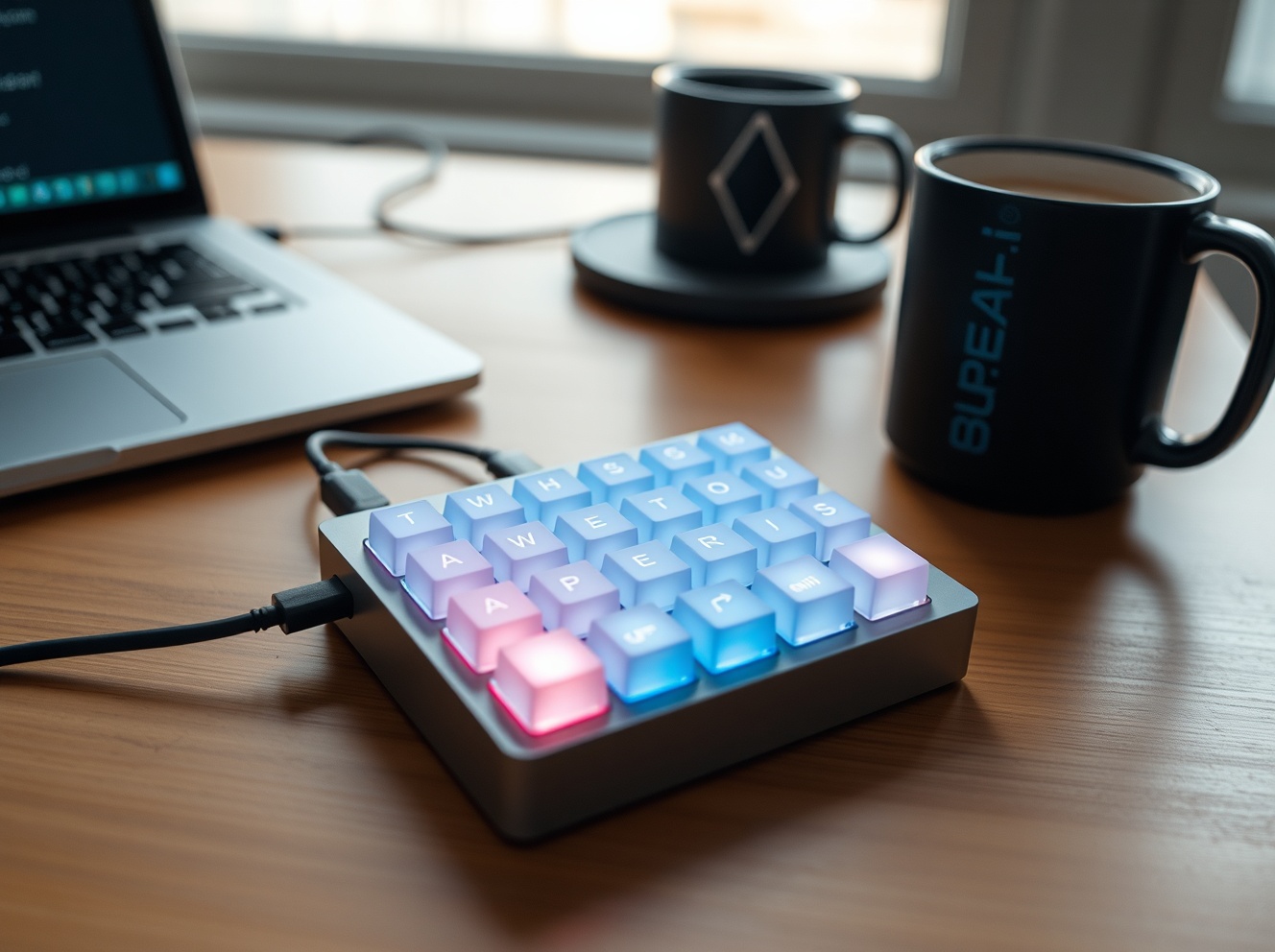
OpenAI released its first consumer hardware product last week: the Micro keypad, a compact accessory built to work with ChatGPT. Created in collaboration with specialty keyboard maker Work Louder, the device functions as a customizable macropad that lets advanced users launch ChatGPT sessions, run commands, and submit voice dictation through dedicated buttons.
Priced at $230, the Micro is positioned as a niche accessory for dedicated coders and AI enthusiasts. For many general users, however, its purpose may be less immediately clear. Macropads are already a familiar category among productivity-focused keyboard users, streamers, and developers, where programmable keys are often used to reduce repetitive clicks or shortcuts. OpenAI’s version applies that idea specifically to ChatGPT workflows.
Build Quality and First Impressions
Bitcoin World received a test unit of the OpenAI Micro keypad. Its most noticeable characteristic is the build quality: the device feels solid, heavy, and sturdy enough to serve as a paperweight. The packaging comes in a clean white box with a minimalist style that invites comparisons to Apple’s product design.
The keypad includes six frosted “agent” keys along the top. These can be programmed to perform specific tasks in ChatGPT or in OpenAI’s coding tool, Codex. Beneath them are six command keys used to control those programs. The Micro can connect to a computer through Bluetooth or a USB cable.
Customization and Everyday Use
Users configure the keypad directly inside ChatGPT. A dedicated Micro tab allows them to adjust key brightness, assign commands, and link keys to specific projects.
One of the more convenient functions is a voice dictation button. Users hold the button down, speak their request, and then press a send button to submit it. The keypad also uses color-coded buttons to show status: white indicates idle, blue means processing, green signals that a task is complete, and red indicates an error.
Those visual cues can be useful, but they also require some initial learning. Users must become familiar with the color system and remember which projects or commands are assigned to particular keys. That setup burden matters because the Micro’s value depends less on basic access to ChatGPT and more on whether a user has repeated tasks that benefit from dedicated controls.
Intended Users and Reception
The Micro is clearly aimed at ChatGPT power users and software developers who use the platform every day. Even among that target group, early reception has been mixed.
Reddit reviews have been largely negative, with one user describing the device as “a prank and not a real product.” Independent outlet Aftermath titled its review: “OpenAI’s expensive macropad feels engineered to piss me off specifically.” Critics have argued that the $230 price is difficult to justify when cheaper do-it-yourself and off-the-shelf alternatives are available.
After spending time programming the keypad, however, the device can be genuinely fun to use. Switching between ChatGPT sessions and using voice dictation can make the experience more efficient. Still, the Micro has a learning curve, and for most users it may not be functionally easier than relying on a standard mouse and keyboard.
OpenAI’s Broader Hardware Plans
The Micro arrives as OpenAI is making broader moves into hardware. Several weeks before the keypad’s release, Apple sued the AI lab, accusing it of trade theft in a legal dispute expected to be lengthy. Reports have also said OpenAI is developing a smart home device, reportedly built by former Apple engineers.
That makes the keypad a small but notable test of how OpenAI may translate its software into physical interfaces. Unlike phones, laptops, or smart speakers, the Micro does not attempt to be a general-purpose device; it is an accessory designed around a narrow set of AI interactions.
Until those plans become products, the Micro remains OpenAI’s only physical device.
Conclusion
The OpenAI Micro keypad is a well-built and highly customizable accessory that can provide real convenience for heavy ChatGPT users. Its $230 price and learning curve, however, limit its appeal to a narrow audience.
For people who use ChatGPT extensively and have the budget for a dedicated hardware interface, the Micro may be a useful addition. For most others, it is likely to remain an interesting but puzzling piece of hardware.
FAQs
What is the OpenAI Micro keypad?
The Micro is a customizable macropad developed by OpenAI in collaboration with Work Louder. It connects to a computer through Bluetooth or USB and allows users to launch ChatGPT sessions, execute commands, and use voice dictation with dedicated buttons.
How much does the Micro cost?
The Micro keypad is priced at $230.
Who is the Micro keypad for?
The device is designed for ChatGPT power users and software developers who frequently use the platform and want a dedicated hardware interface for faster interaction.

