OpenAI’s first hardware device launched at $230 and is now listed on eBay for $1,850
Key Takeaways
- •OpenAI launched the Codex Micro on July 15 as a limited-run keyboard for developers using its Codex tool.
- •The device sold out in about 12 hours, and resale listings quickly rose well above the original $230 price.
- •The keyboard uses an LED ring, dial, joystick, and microphone button to help users monitor and control coding tasks.
- •OpenAI developed the product with Work Louder and does not plan to restock it.
- •OpenAI is using the Micro as a testing ground for hardware-based interaction and voice features ahead of future devices.
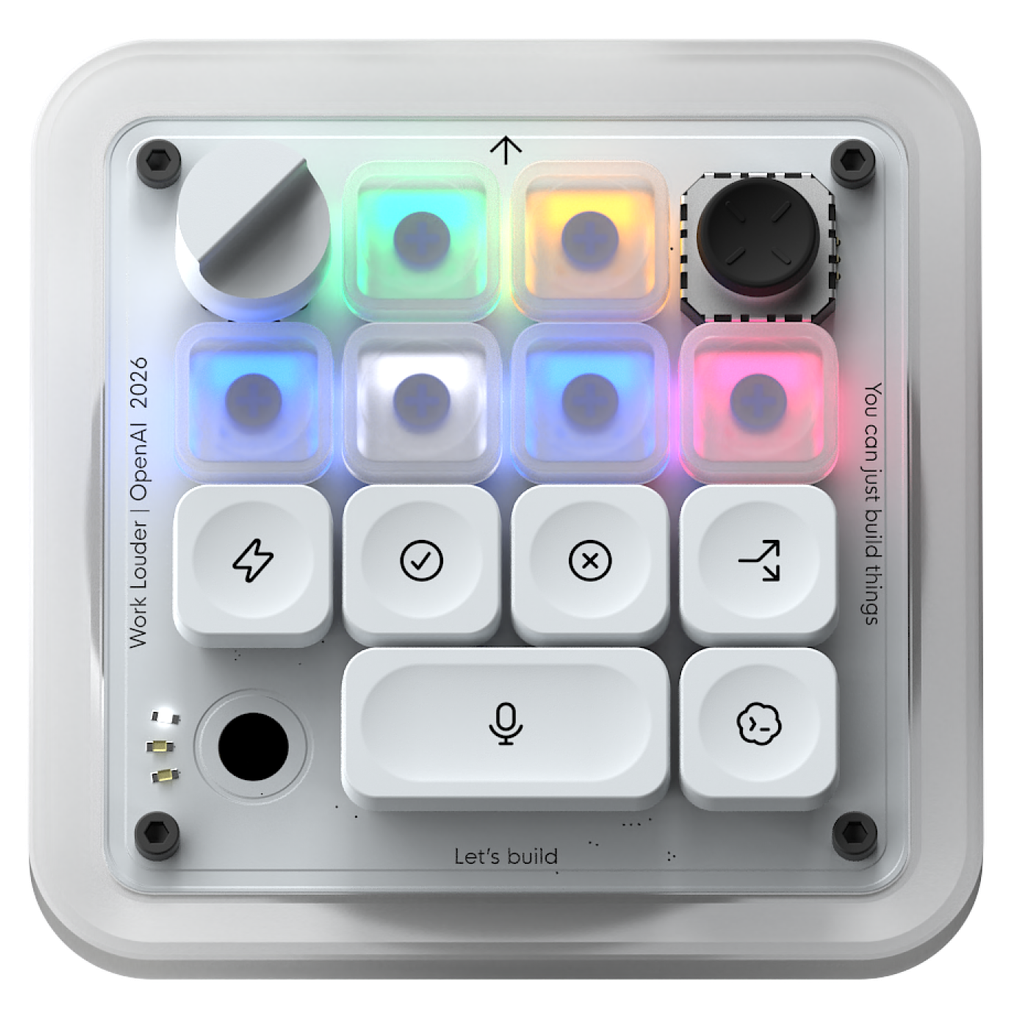
OpenAI’s move into hardware has drawn attention from tech enthusiasts for more than a year, with speculation over the company’s mystery device ranging from a smart speaker to a wearable. In the end, OpenAI’s first hardware product was more modest: a keyboard.
On July 15, OpenAI introduced the Codex Micro, a $230 square keyboard with a 12-key pad, a joystick, and neon lights. The device is designed specifically for computer programmers who use OpenAI’s Codex tool. OpenAI developed the Micro as a one-off project with boutique keyboard maker Work Louder. It is separate from the consumer device — the so-called AI companion — that OpenAI is expected to release sometime next year.
Despite its narrow focus, the Codex Micro sold out the day it went on sale, with inventory disappearing in about 12 hours. Some buyers are now reselling the keyboard on eBay. One listing is currently priced at $1,850, although a sale at that level appears unlikely. On eBay, the highest recorded resale price was $1,250, listed on July 16, one day after the product’s debut.
Resale prices have declined since then. In the week after release, the keyboards were selling for roughly $800 to $1,000. Today, listings are closer to $450, still well above the original price. Most sellers are in the U.S., though others are located in France, the Netherlands, and Ireland.
The device is intended to help developers track their progress in Codex, OpenAI’s flagship coding assistant, which competes with Anthropic’s Claude Code. An LED ring around the keyboard changes color — red, orange, green, or blue — to indicate conditions such as an error or whether the AI agent is still working on a task. Turning the dial adjusts the AI’s effort on a given task. The joystick triggers common actions such as debugging an error or refactoring code. That makes the Micro less of a general-purpose accessory than a specialized control surface for a workflow OpenAI is trying to make more visible and easier to manage inside developers’ day-to-day tools.
Some programmers, however, have dismissed the product as unnecessary. “You can get a programmable keyboard, with a knob, for 18 bucks,” one Reddit user wrote. Another commenter linked to open-source software that can be used to program almost any keyboard to perform similar functions.
For buyers, the appeal may be less practical than collectible. The keyboard can be viewed as an artifact from the early days of the AI era, when OpenAI was one of the technology’s standard-bearers. OpenAI does not plan to restock the device. Work Louder, the company that manufactured it in partnership with OpenAI, sells a version on its website with Codex integration, but without OpenAI branding.
Lacking hardware experience, OpenAI turns to Work Louder
The idea for the Codex Micro originated with OpenAI’s merchandise team, which initially planned to sell the product through the company’s online store, Supply Co. The store began as a private place for OpenAI employees to buy company swag. In December 2025, OpenAI briefly opened it to the public to mark the company’s tenth anniversary, Quartz reported.
Social media quickly mocked the merchandise. According to The Wall Street Journal, some users described the minimalist, streetwear-inspired hoodies and tote bags as “tasteslop” and “nerd merch.”
“OpenX started to get a little bit of heat for their merch,” said Mike Di Genova, co-founder of Work Louder. That prompted the OpenAI team to want to “step up their merch game.”
Later that month, OpenAI contacted Di Genova to explore a product aimed at developers, whom the company sees as an early adopter group. OpenAI and Work Louder finalized the concept within a few months, and OpenAI placed a large order for the devices.
“I thought it was going to take at least a month to sell through the inventory,” Di Genova said, laughing in disbelief. “It was limited stock, but they purchased a lot.” Neither OpenAI nor Work Louder disclosed the exact number of units.
A testing ground for future OpenAI devices
The Micro is not directly tied to OpenAI’s upcoming hardware device, which the company is developing with former Apple designer Jony Ive. But the keyboard is serving as a testing ground for two ideas central to that effort: hardware as a physical interface for OpenAI’s software, and voice.
Now that the Micro devices are in users’ hands, OpenAI is monitoring feedback and discussing it regularly in a Slack channel that includes Di Genova. The Micro also includes a microphone button, which lets users speak instructions to the AI.
OpenAI last week released a digital microphone button for ChatGPT Work, a desktop app that combines ChatGPT and Codex.
OpenAI co-founder and president Greg Brockman has called voice the “interface of the future” for computing, saying it means “the computer moves closer to you rather than you having to contort yourself around the machine.” He said people will one day look back on “clicking and typing” as a “phase.”
Whether that prediction proves correct — and whether detailed work such as deep editing and prompting can realistically be done only by voice — remains to be seen. For now, many in the AI industry view hardware as a way for companies such as OpenAI to differentiate themselves.
“There’s this quote from Steve Jobs where he says, ‘If you want to make great hardware, make software,’” Di Genova said. “I think we’ve quite literally reached the point where now we’re on the backswing of that pendulum. If you want to make great software, make hardware, because basically basically there’s no moat anymore.”
This story was originally featured on Fortune.com

