OPay vs Nigeria's five biggest banking groups: the 2026 figures so far
Key Takeaways
- •OPay reported first-half 2026 revenue of $467.1 million and net income of $90.9 million, up from $197.5 million and $21.7 million in the same of 2025.
- •The platform's gross transaction value more than doubled to $339.1 billion, with transaction volume rising to 53.5 billion from 25.7 billion a year earlier.
- •Loan financing services contributed $236.1 million and transaction-based services $130.6 million of OPay's first-half revenue, together forming the majority of the total.
- •Access Holdings and UBA had not published their half-year 2026 results as of October 13, preventing complete like-for-like comparisons with OPay.
- •OPay's first-half figures are unaudited and reported in U.S. dollars, while the banks' 2025 asset totals are audited and reported in naira, making direct comparisons unreliable.
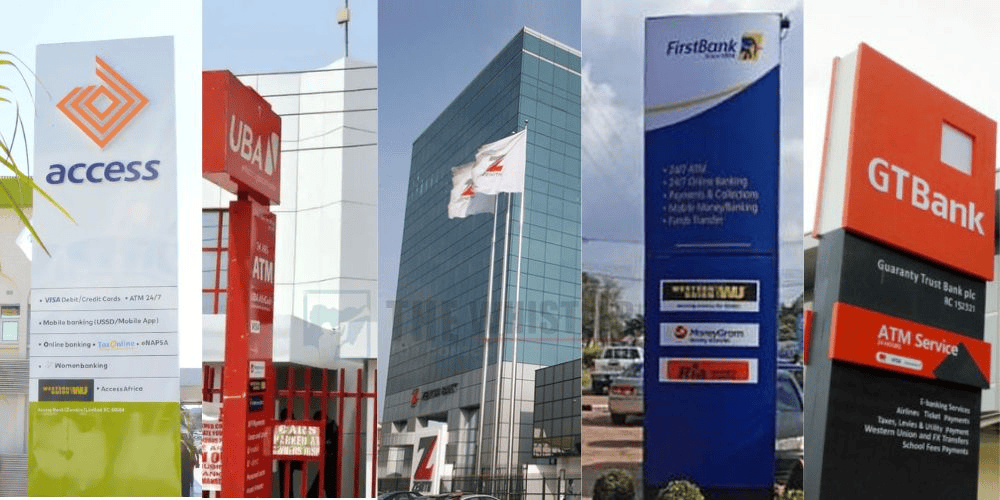
OPay has emerged as a significant force in Nigeria's digital payments market, handling money transfers, bill payments and a range of other financial services for millions of users. Its growing footprint has raised a recurring question: how does the company compare, financially, with established institutions such as Access Bank, UBA, Zenith Bank, FirstBank and GTBank?
A recent financial filing offers the most detailed picture yet of OPay's performance for the six months ended June 30, 2026. The company reported revenue of $467.1 million, net income of $90.9 million and gross transaction value (GTV) of $339.1 billion.
Those numbers are eye-catching, but they do not automatically make OPay larger than the banks. Revenue, profit, transaction value and total assets are measured in different ways, which makes direct comparisons difficult. There is also a reporting gap: Access Holdings and UBA had not yet published their half-year 2026 results as of October 13.
What OPay's filing shows
OPay reported revenue of $467.1 million for the six months ended June 30, 2026, up $197.5 million in the same period of 2025. Net income rose to $90.9 million from $21.7 million.
The company's gross transaction value increased to $339.1 billion, compared with $139.3 billion a year earlier. Over the same period, the platform processed 53.5 billion transactions, more than double the 25.7 billion recorded in the prior year.
These figures point to rapid growth, but they require careful reading. GTV measures the total value of transactions processed on the platform; it is not the revenue OPay earns. The company generates income from several lines of business, including payments, loan financing and interest earned on short-term investments. In the first half of 2026, loan financing services accounted for $236.1 million of revenue, while transaction-based services contributed $130.6 million. Together, those two lines made up the majority of the period's revenue.
The filing also discloses a trailing 12-month view: over the year ended June 30, 2026, the platform processed 90.1 billion transactions valued at $558 billion. That figure covers twelve months rather than the first half alone.
The statistics were drawn from OPay's filing with the U.S. Securities and Exchange Commission. The first-half financial results are currently unaudited.
The benchmark: Nigeria's tier-one banking groups
The comparison group is drawn from total assets in the banks' audited 2025 financial statements, a standard measure of balance-sheet size. The five groups — Access Holdings, UBA, Zenith Bank, First HoldCo and GTCO — held combined assets of ₦161.3 trillion at the end of 2025, according to The Nation. They are commonly known as Nigeria's tier-one banking groups, or FUGAZ. That combined asset base is what makes the five groups the natural benchmark when a payments company's financial weight is set against Nigeria's biggest financial institutions.
It matters that these are banking groups rather than the individual banks customers see on their phones. Their consolidated figures take in other businesses and, in some cases, international operations. The latest available 2026 results are set out below, with the missing half-year figures clearly identified.
Access Holdings: H1 results still pending
Access Holdings, the parent company of Access Bank, had not publicly released its H1 2026 financial statements as of October 13. The group is still awaiting approval from the Central Bank of Nigeria after receiving an extension from the Nigerian Exchange.
Its most recent data comes from the first quarter of 2026, when the group reported gross earnings of roughly ₦1.38 trillion, a profit of ₦216.54 billion and total assets of ₦53.44 trillion as of March 31. Those numbers convey the group's scale, but they cover only three months. They should not be equated with half-year results, nor set directly against the six-month figures published by OPay and other groups. Access Holdings' H1 accounts will be essential for accurate, like-for-like comparisons.
UBA: also awaiting H1 publication
United Bank for Africa (UBA) had not released its H1 2026 financial statements by October 13. The bank had earlier secured an extension until September 30 to file the results, pending regulatory approval.
UBA's first-quarter results showed gross earnings of ₦801.46 billion, profit after tax of ₦146.62 billion and total assets of ₦33.13 trillion as of March 31. The figures offer a view of early-year performance but cannot replace the half-year accounts. Presenting quarterly and six-month data side by side without a clear distinction could mislead readers, and UBA's H1 statements are needed to compare its first-half earnings and balance sheet with those of its peers.
Zenith Bank: pre-tax profit up, post-tax profit down
Zenith Bank reported a profit before tax of ₦637.6 billion for the half-year ended June 30, 2026, an increase of 1.9% from ₦625.6 billion in the same period of 2025, as reported by Nairametrics. Profit after tax, however, fell 19.1% to ₦430.8 billion — a reminder that pre-tax and post-tax results can move in different directions.
The bank's pre-tax profit benefited from a significant reduction in impairment charges, the provisions set aside for potential loan losses. Foreign-exchange trading, by contrast, swung from a profit in the first half of 2025 to a loss in the first half of 2026, and a higher tax bill weighed on the final profit.
The results illustrate that no single number captures a bank's performance. Profit before tax, profit after tax, total assets and customer deposits each offer distinct insights into the business.
First HoldCo: the largest reported H1 pre-tax profit
First HoldCo, the group behind FirstBank, reported gross earnings of ₦1.93 trillion for the first half of 2026, a 16.7% increase from ₦1.66 trillion in the same period last year. Profit before tax rose 83.5% to ₦653.5 billion, while profit for the period reached ₦526.1 billion. Total assets climbed to ₦30.65 trillion by June 30, up from ₦27.25 trillion at the close of 2025.
On the results published so far, First HoldCo leads Zenith Bank and GTCO in reported H1 profit before tax. Even so, the figures alone do not determine the strongest group: business mix, asset quality, cost management and overall balance-sheet strength all bear on long-term performance. The numbers also reflect the wider First HoldCo group, whose activities extend beyond FirstBank.
GTCO: modest pre-tax growth, lower post-tax profit
Guaranty Trust Holding Company (GTCO), the parent group of GT, reported a profit before tax of ₦603.03 billion for the first half of 2026, up 0.4% from ₦600.9 billion in the same period last year. Profit after tax declined 7.8% to ₦414.2 billion.
Total assets rose to ₦18.6 trillion by June 30, from ₦17.76 trillion at the end of 2025. Interest income increased 7.5% and trading income rose 24.7%, but a fair-value loss of ₦46.2 billion held back growth in pre-tax profit. As with Access Holdings and First HoldCo, GTCO's consolidated figures span a variety of businesses beyond its traditional commercial banking operations, and its results show how much sits beneath headline earnings growth.
Why the figures cannot be compared directly
Several caveats apply across the board. The figures cover different reporting periods and different financial measures. OPay reports in U.S. dollars, while the banks report in naira, so placing the numbers side by side requires converting one currency into the other — a step that makes any result sensitive to the exchange rate and the date chosen. Gross transaction value is not revenue, and profit for the period is not necessarily the same as profit attributable to ordinary shareholders. There is also a difference in assurance: OPay's first-half figures are unaudited, while the banks' 2025 asset totals come from audited statements. Access Holdings' and UBA's H1 results were not publicly available in the sources verified for this article as of October 13, 2026.
The bottom line
OPay's filing confirms the sheer scale of its payments operation. Revenue and net income multiplied year on year, transaction volumes more than doubled, and $339.1 billion in GTV points to an enormous flow of money passing through the platform.
That flow, however, is not money that OPay earns or owns. The distinction matters when the company is set against traditional banks, which occupy a different position in the financial system: they manage customer deposits, extend loans and invest in a variety of assets. Those balances feed into total assets, a metric that has no direct equivalent in OPay's GTV.
A fair comparison requires separating revenue, profit, total assets, customer deposits and transaction volumes — and matching the reporting periods. On the results published so far, OPay's numbers underline the scale of its payment operations but do not establish that it surpasses Nigeria's largest banking groups in total assets or overall financial weight. A more complete picture will have to wait until Access Holdings and UBA release their H1 2026 results.

