Inside OPay's town hall: Trust, legal threats and the ₦1.2 billion education story
Key Takeaways
- •OPay publicly denied rumours of a September 1 shutdown of its Nigerian operations, a claim the Central Bank of Nigeria has also labelled fake news.
- •The company employs over 7,000 staff and has opened more than 26 new physical customer support offices across Nigeria this year.
- •OPay is working with the Department of State Services and the Nigeria Police Force to trace the misinformation's source, and one person is already facing court action.
- •Industry representatives warned that misinformation targeting OPay could trigger customer panic, disrupt merchants, and shake investor confidence across Nigeria's digital finance sector.
- •Tunde Onakoya of Chess in Slums Africa announced that OPay has invested approximately ₦1.2 billion in education programs over the past ten years.
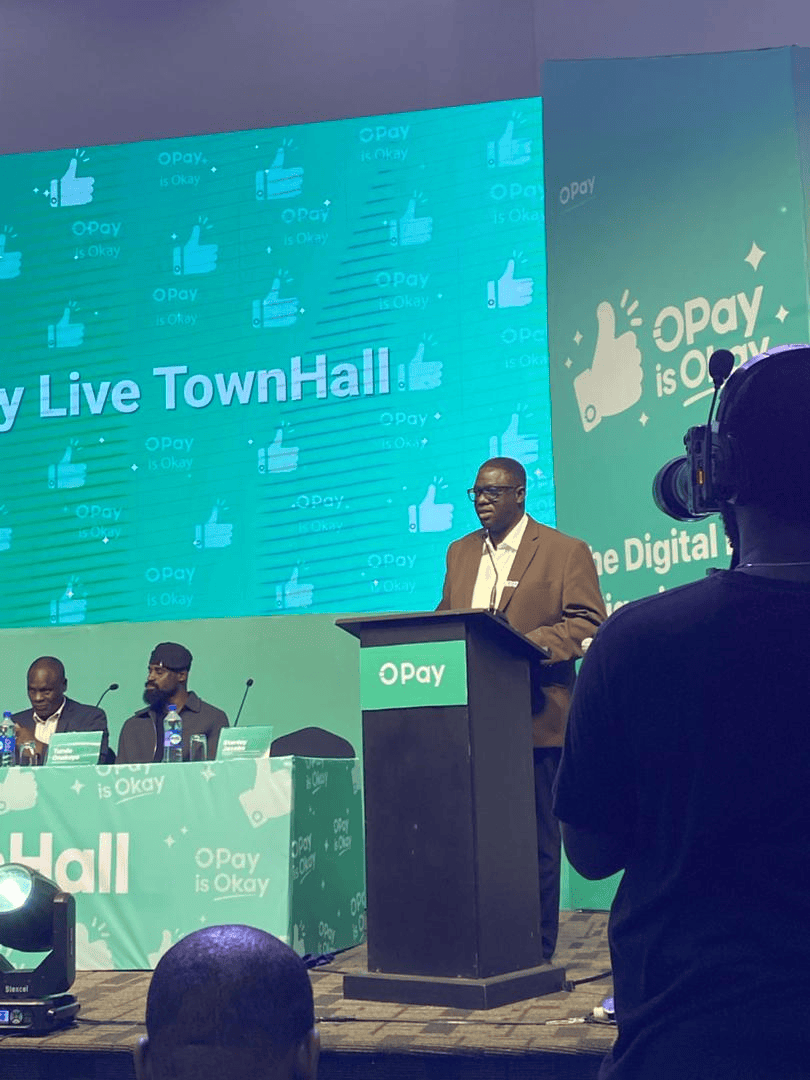
There is a particular tension that fills a room when a company the size of OPay is forced to publicly defend itself. That was the atmosphere at Providence Hotel in Ikeja on Wednesday, where the fintech company assembled its executives, industry leaders, and community partners for a live town hall meeting.
The gathering was convened to confront a damaging rumour: that the fintech giant would shut down its Nigerian operations on September 1. OPay had denied the claim the previous day, but Wednesday's session carried more weight because the denial was reinforced by a range of external voices. Beyond OPay's own leadership, industry associations, representatives of the hospitality sector, and a founder who works with vulnerable children in Lagos—someone whose work has no connection to fintech—all explained why misinformation of this kind can carry serious consequences.
The stakes are amplified by OPay's scale in Nigeria's digital finance ecosystem. Launched in 2018, the platform has grown into one of the country's most widely used payment apps, serving a customer base that includes many unbanked and underbanked Nigerians who rely on mobile money operators and payment service banks as an alternative to traditional banking channels. In a market like this, word of a shutdown does not stay confined to social media—it travels quickly through the markets, shops, and communities where cash-in and cash-out agents anchor daily commerce.
OPay's denial and the numbers behind it
Dotun Adekunle, OPay's Chief Operating and Technology Officer, opened the meeting with an unambiguous statement: the messages circulating on social media claiming the company would take an indefinite break starting September 1 were false and did not originate from OPay. He noted that the Central Bank of Nigeria had already labelled the claims fake news, and he assured attendees that the business had continued operating smoothly—from customer transactions to merchant payments—even while the rumours were spreading.
To underline the point, Adekunle cited a series of figures. OPay has opened more than 26 new physical customer support offices across Nigeria this year alone. The company now employs over 7,000 people across technology, risk, and security. Its ecosystem spans millions of customers and more than one million merchants. "We are here to stay. We are here to play," he told the audience.
That closing line carried weight beyond its catchiness. For a fintech operating in a market where trust is everything—where a customer's willingness to keep money on a platform depends on believing it will still exist tomorrow—rumours of this kind are not merely public relations problems. They strike at the foundation of the business itself.
Gbenga Paseda, representing FintechNGR, reinforced this in his remarks, observing that Nigeria has long struggled with issues of trust. Digital finance platforms have spent years building the confidence that allows individuals and small businesses to transact online smoothly. A single piece of misinformation aimed at a major player like OPay can trigger customer panic, increase stress on financial institutions, disrupt merchant activity, and shake investor confidence across the broader digital finance landscape—not just for OPay but for the entire industry. When one trusted player is hit, everyone feels the impact.
The legal response and the line OPay is drawing
Akinfolabi Moses Rokosu, OPay's Chief Legal Counsel, clarified points the company had previously hinted at in legal notices sent to several social media users. OPay is officially working with the Department of State Services, the Nigeria Police Force, and other relevant authorities to trace the source of the misleading information. As a result, one person is already facing court action.
Rokosu emphasised that while freedom of expression matters, it does not extend to illegal activity intended to harm OPay's financial system. He stressed that the company is not targeting critics or dissatisfied customers; its focus is on individuals spreading false information capable of provoking panic and triggering a rush of withdrawals—an issue with potentially serious consequences.
He urged customers to verify information about OPay only through the company's official channels, and repeated a piece of advice that has become standard in Nigerian fintech: never share your PINs, passwords, or OTPs with anyone, even someone claiming to represent the company.
Omotayo Sunday, speaking for the hospitality and tourism sector, told attendees that the shutdown rumours were entirely false. He reassured hotels, restaurants, and resorts that rely on OPay for payments that the platform remains fully operational and committed to its partners. The reassurance carried real significance for businesses that depend on OPay for daily cash flow, where a disrupted payment system would mean disrupted revenue.
Speakers at the meeting also highlighted OPay's compliance commitments, describing the thorough documentation required for business registration—such as CAC documents and utility bills—which enables OPay to track users and businesses legitimately. They further pointed to how OPay is reshaping Nigeria's banking landscape with free transfers, attractive savings promotions, and loan products designed to help customers facing financial difficulties.
The ₦1.2 billion education story
The most memorable moment of the town hall had little to do with fintech. Tunde Onakoya, founder of Chess in Slums Africa, took the stage to share news of a different kind: OPay has invested approximately ₦1.2 billion in education programs over the past ten years. One such initiative is the Scholars Program, which aims to bridge the gap between talent and opportunity for underprivileged youth in areas such as Makoko and Oshodi.
Onakoya also highlighted the OPay and Google National Innovation Challenge, a program that gives young Nigerians the chance to tackle real-world problems using technology. Thousands of people, including many university students, have already applied to take part, he said.
A ₦1.2 billion commitment is not the kind of figure typically associated with a company in difficulty. It signals that OPay has spent a decade building its legacy rather than merely reacting to a shaky rumour that began circulating on WhatsApp last week.
How far that message travels among everyday Nigerians scrolling past shutdown claims remains an open question. What was clear at the meeting, however, is that OPay understands the challenge before it extends beyond legal or operational matters. At its core, it is about restoring the trust and belief that have carried seven thousand employees and one million merchants this far on their journey.
Related coverage: OPay threatens legal action against 3 social media users over false shutdown claims | OPay: We are not shutting down, over 7,000 staff still working in Nigeria

