Oil Shocks Could Accelerate EV Adoption, WoodMac Says
Key Takeaways
- •Wood Mackenzie said disruptions in oil supply and higher fuel prices are creating stronger incentives for EV investment and supply chains.
- •The report said China is advancing in five-minute charging and in sodium-ion and lithium iron phosphate battery technologies.
- •WoodMac expects global oil consumption to ease to 99 million barrels per day by 2040 from more than 100 million bpd now.
- •The report projects U.S. EV market share rising from 3% today to 20% by 2040, while Europe could rise from 3% in 2025 to 35% by 2040.
- •WoodMac said the EV industry may need an additional $45 billion in metals investment over the next decade, with copper identified as the main constraint.
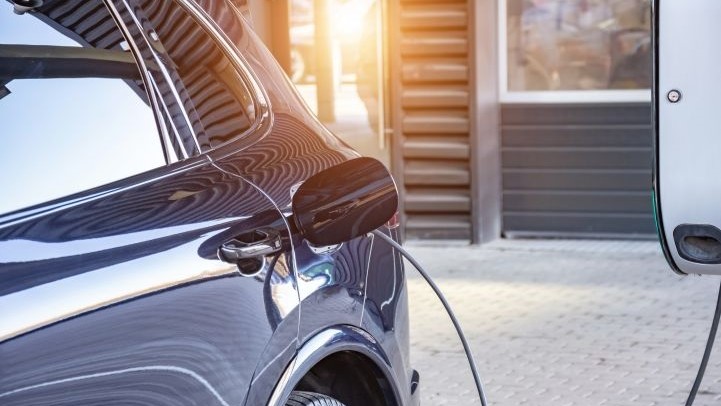
Oil supply disruptions, elevated fuel prices, and rapid advances in battery technology could give electric vehicle adoption renewed momentum, with far-reaching implications for oil demand, power grids, and metals markets, according to Wood Mackenzie.
In a report released Thursday, WoodMac noted that conflicts affecting major oil producers Russia and Iran have exposed governments and consumers to higher fuel costs and supply risks, creating additional incentives to invest in EV manufacturing and supply chains. The analysis comes at a time when major economies are already codifying transport electrification targets: the European Union has mandated a phase-out of new combustion-engine car sales by 2035, while the United States' Inflation Reduction Act offers consumer tax credits of up to $7,500 for qualifying EV purchases.
Battery technology is advancing rapidly. China, already the world's largest EV market by sales volume, is making significant progress on five-minute charging capabilities, as well as sodium-ion and lithium iron phosphate (LFP) batteries. Western governments may need to increase support for domestic EV technology, or at minimum license more Chinese technology, to keep pace and reduce their exposure to oil-price shocks, the report said.
WoodMac expects these combined forces to eventually weigh on petroleum demand. Global oil consumption could decline to 99 million barrels per day by 2040, down from more than 100 million bpd currently. The International Energy Agency has separately projected that global oil demand may plateau before 2030, though other forecasters, including OPEC, expect continued growth over a longer horizon.
The transition, however, will not be evenly distributed. The oil-rich United States, where gasoline prices remain politically sensitive and fuel-economy standards have fluctuated across administrations, is projected to see its EV market share rise from 3% today to 20% by 2040. Europe, which has greater reliance on imported oil and has embedded electrification into binding regulation, could see its EV share climb from 3% in 2025 to 35% by 2040.
David Brown, one of the report's authors, said that accelerating EV innovation outside the United States could eventually compel Washington to take transport electrification more seriously if American manufacturers wish to remain competitive both domestically and internationally.
According to WoodMac, there is sufficient mineral supply potential to support a 50% increase in global EV volumes by 2040, but extracting those materials quickly enough presents a separate challenge. The industry would require an additional $45 billion in metals investment over the next decade, with copper emerging as the most significant constraint. EVs use roughly three to four times more copper per vehicle than conventional internal combustion vehicles, according to industry estimates.
A growing fleet of EVs would also add another demand source to already-strained power systems, WoodMac noted. Utilities and regulators will need to expand managed charging programs, shifting vehicle charging toward periods when electricity supply is more readily available.
By Charles Kennedy for Oilprice.com

