Brent Crude Tops $106 as Houthi Strikes Disrupt Saudi Infrastructure
Key Takeaways
- •Saudi Arabia closed its East-West pipeline after a coordinated Houthi drone attack, removing an export route that bypasses the Strait of Hormuz.
- •Crude stocks at Yanbu are estimated to cover only five to seven days of continued shipments, according to sources familiar with Saudi operations.
- •Houthi control of Perim island increases risks to shipping through the Bab el-Mandeb, a route that recently carried 4% to 5% of global petroleum output.
- •A projectile struck a tanker in the Strait of Hormuz, causing a fire and prompting the crew to evacuate; Iranian authorities reported one death and four injuries on another vessel.
- •Planned Iranian and Gulf discussions on Hormuz security were postponed, leaving diplomatic efforts and the pipeline’s repair timeline unresolved.
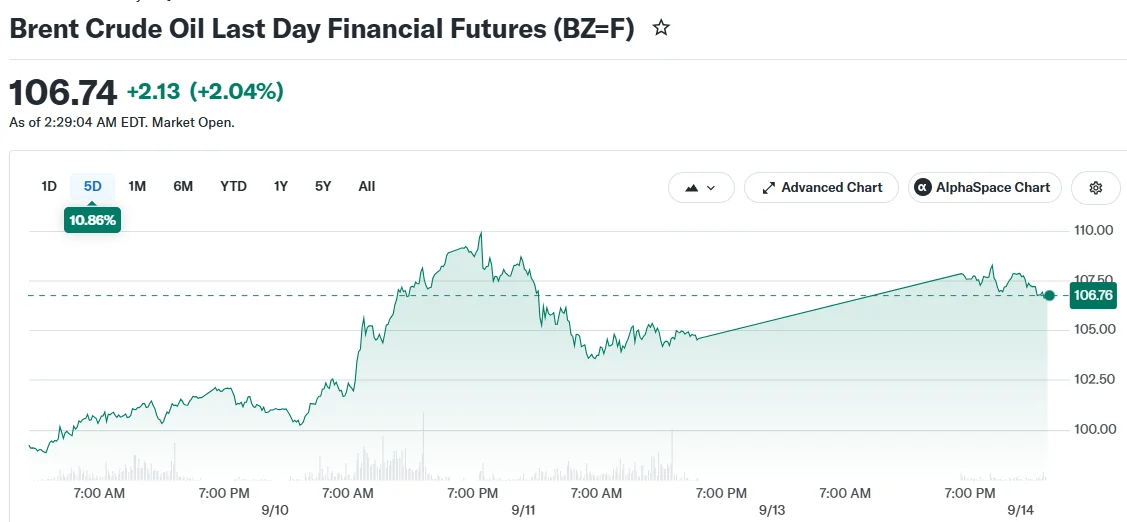
Oil prices rose more than 2% during Monday trading as intensified Houthi attacks on Saudi energy infrastructure and strikes affecting vessels in the Strait of Hormuz increased concerns about potential supply disruptions across the Middle East.
Brent crude futures climbed to $106.72 per barrel, while West Texas Intermediate reached $102.15. Brent briefly touched $108.41 during morning trading. Both benchmarks have gained more than 8% over the past seven days, moving above $100 per barrel for the first time since July.
Saudi East-West Pipeline Shut Down
Saudi officials confirmed the closure of the kingdom’s East-West pipeline system after a coordinated drone attack by Houthi forces. The pipeline is a critical alternative export route because it allows Saudi Arabia to transport crude to the Red Sea while bypassing the Strait of Hormuz.
It seems most people don't understand how severe the energy situation is right now in the Middle East. As of Friday, Saudi Arabia's East-West pipeline has officially been shut down after recent attacks, putting -4 million barrels of daily oil exports at risk. Meanwhile, the Bab… pic.twitter.com/S71vSoFand — The Kobeissi Letter (@KobeissiLetter) September 13, 2026
Following the shutdown, crude stored at facilities in Yanbu is sufficient to support only five to seven days of continued shipments, according to three sources familiar with Saudi petroleum operations. The interruption places approximately 4% of global oil production at risk.
ANZ energy analysts said Saudi Arabia had effectively lost its western shipping alternative if conditions in the Strait of Hormuz deteriorate further. Saudi government broadcasters also released video showing structural damage to residential buildings and a religious site in southern Jazan province after a Houthi offensive. The group separately reported attacks on a Saudi military facility in a neighboring province.
Perim Island Raises Bab el-Mandeb Risk
Houthi forces took control of Perim island on Friday, giving them a strategic position from which to conduct operations against vessels using the Bab el-Mandeb strait. Between 4% and 5% of global petroleum output has passed through the narrow waterway in recent weeks.
Over the previous seven days, the group attacked several major Saudi facilities, including an Aramco processing plant, oil storage terminals, aviation facilities and commercial shipping. A tanker traveling through the Strait of Hormuz was hit by a projectile over the weekend, starting a fire that forced the entire crew to evacuate.
Iranian authorities said one person was killed and four others were injured aboard an Iranian-flagged commercial vessel that was struck in waters near Iran’s coast.
Analysts at ING described the attacks on Saudi energy infrastructure as a major escalation. They said the full extent of the damage and how long the East-West pipeline would remain out of service were still unclear. Those unresolved questions leave the duration of any supply disruption dependent on the pipeline’s repair timeline, available crude inventories and the security of alternative shipping routes.
Iran-Gulf Security Talks Postponed
Oman’s Foreign Minister Badr Albusaidi said Sunday that planned talks between Iranian representatives and Gulf states on Strait of Hormuz security had been postponed from Monday. No new date was announced.
Energy markets had been closely watching the discussions. Expectations of diplomatic engagement had temporarily limited crude’s gains during the previous week. With the talks delayed indefinitely, concerns about supply vulnerability along the Hormuz route remain elevated.
Oil flows through the strategic waterway had already fallen substantially from pre-conflict levels after tensions between Washington and Tehran intensified again in August. The delayed talks and the pipeline shutdown leave the status of both the diplomatic track and Saudi Arabia’s export alternatives as the immediate issues to monitor.
The post Crude Surges Past $106 as Yemen Rebels Strike Saudi Infrastructure, Threatening Global Supply appeared first on Blockonomi.

