Oil Prices Fall as Iran Negotiation Hopes Return
Key Takeaways
- •US Treasury Secretary Scott Bessent unveiled new sanctions pressure on Iran, threatening its trading partners with exclusion from the dollar system if trade continues.
- •Iran’s August crude exports have fallen to about 0.3 million barrels per day, far below the 2025 average of 1.7 million barrels per day.
- •Chinese imports of Iranian oil are running near 800,000 barrels per day for now, but they are expected to decline further and could face shortages by October if the blockade continues.
- •Only two commodity vessels crossed the Strait of Hormuz on Monday, down sharply from the previous 10-day average of 14.
Oil prices moved lower on Tuesday, with ICE Brent easing to $89 per barrel, as Pakistan’s mediation efforts offset the bullish momentum that followed US Treasury Secretary Scott Bessent’s Monday press conference and market participants continued to hope for some form of negotiated settlement over Iran.
The Trump administration is ratcheting up sanctions pressure on Tehran, threatening to sanction all of Iran’s commercial partners unless they wind down trade, though it has not specified the timelines for doing so. That uncertainty is keeping the market focused not just on headlines from Washington, but on whether enforcement and diplomacy will alter flows through one of the world’s most closely watched oil corridors.
US Blockade Leaves Iran’s Oil Trade on Borrowed Time
The announcement of the Trump administration’s “Economic D-Day” sanctions on Iran coincides with an overall slump in Tehran’s crude exports, which have been choked off by the US Navy’s maritime blockade in the Gulf of Oman. Iran’s crude exports in August have so far been minimal compared with the 2025 average of 1.7 million b/d, averaging only around 0.3 million b/d, with just one confirmed loading at the country’s largest terminal, Kharg Island.
Thanks to the volumes evacuated during the three-week period of free navigation in June–July, Chinese imports of Iranian barrels are running slightly above Tehran’s pace of loading, at around 800,000 b/d. Because buyers are drawing down stocks, however, those imports are set to decline further next month. Should the US maritime blockade of Iran continue, China could run out of Iranian options by October — a scarcity already reflected in soaring Iranian differentials, with Iran Light now trading at a $4 per barrel premium to ICE Brent.
Iranian floating storage outside the Gulf has shrunk to just 24 million barrels, down 7 million barrels since the beginning of August, with Chinese buyers mopping up the last remaining volumes.
Market Movers
- US shale pioneer Continental Resources has agreed to acquire privately held Firebird Energy II, boosting its Permian portfolio by 54,000 net acres that currently yield some 32,000 boe/d of oil-weighted output.
- Brazil’s state oil firm Petrobras (NYSE:PBR) has entered direct negotiations with the government of Ghana for exploration contracts covering 4 offshore blocks in the underexplored Keta basin, seeking to expand beyond Brazil.
- US oil major Chevron (NYSE:CVX) has finalized its return to Libya, signing a production-sharing contract covering onshore block S4 in the Sirte basin, which contains one 100-million-boe gas discovery and several unconfirmed prospects.
- Guyana’s regulatory body has vowed to investigate a fire that broke out this weekend at ExxonMobil’s (NYSE:XOM) Liza Unity floating production vessel, leading to a suspension of operations.
- The $8 billion sale of Shell’s (LON:SHEL) US chemical assets has drawn interest from several high-profile buyers, with ExxonMobil and LyondellBasell expressing interest alongside Kuwait’s state oil firm KPC.
Washington Takes Its Iran Sanctions War Global
US Treasury Secretary Scott Bessent unveiled the Trump administration’s long-mooted “economic D-Day” measures against Tehran, threatening Iran’s main trading partners — without singling out China — with exclusion from the dollar system. The move underscores how sanctions policy is now being used not only to pressure Iran directly, but also to test the willingness of its buyers, shippers and financial intermediaries to keep participating in the trade.
Iran Turns Its Hormuz Blacklist into a Contagion Risk
Tehran has threatened fines, detention and cargo confiscation against 45 tankers deemed non-compliant for dark transits through the Strait of Hormuz, warning that any vessel conducting ship-to-ship transfers with them could also be listed.
Hormuz Traffic Collapses as Iran Widens Its Shipping Threat
Only 2 commodity vessels crossed the Hormuz strait on Monday, a notable plunge compared with the previous 10-day average of 14, following the Iranian authorities’ threats against dark transits and vessels deemed non-compliant. The drop highlights how quickly shipping patterns can react to added compliance risk, even before any new disruption is formally imposed.
Saudi Arabia’s Hormuz Bypass Runs into Red Sea Risk
A Houthi attack on the Amzan tanker, owned by Saudi Arabia’s national shipping firm Bahri, near Riyadh’s only operational loading port of Yanbu exposed the vulnerability of the East-West pipeline, forcing all tankers to move towards the Suez.
IEA Keeps Its Oil Reserve Firepower in Check
The International Energy Agency is not discussing another emergency release after deploying 400 million barrels in March, according to its chief Fatih Birol, who said the agency is monitoring the current situation as 80% of the IEA’s strategic stocks remain intact. For traders, that means the IEA is signaling watchfulness rather than immediate intervention.
Ukraine’s Drones Keep Russian Diesel Off the Market
Moscow may extend its diesel export ban through October, according to Russia’s deputy prime minister Alexander Novak, after a series of Ukrainian drone strikes on southern refineries perpetuated the pressure on domestic fuel balances.
Trump Rebuilds His China Tariff Wall
US President Donald Trump is set to impose an additional 7.5% tariff on Chinese goods over allegations of excess manufacturing capacity, restoring the White House’s second-term duties to 20%, less than a month before the September 24 Trump–Xi Summit.
Britain Eyes an LNG Lifeline as North Sea Gas Fades
The UK government is reportedly considering investment in LNG import capacity amidst declining output, defying calls for a reversal of London’s restrictive oil and gas policy, which imposed a 78% headline tax under the Energy Profits Levy.
Qatar’s LNG Woes Shift from Gas to Ships
QatarEnergy’s 77 mtpa Ras Laffan liquefaction plant is running short of available gas carriers as the Middle Eastern country’s Hormuz transits have stalled completely, leaving 1.2 million mt of LNG afloat in the Gulf and raising the prospect of production cuts.
Iran Finds More Gas, but Not Yet More Supply
Iran has reported the discovery of a giant gas field containing up to 5.7 Tcf of recoverable gas — the second significant gas find in the southern province of Fars alongside Pazan — with Tehran aiming for a commissioning date in the second half of 2029.
EPA Relief Threat Deflates US Biofuel Credits
Prices for US ethanol blending credits plunged 16% to $1.75 after the Environmental Protection Agency delayed its compliance deadline, while pending refinery exemptions raised expectations that 1.2–1.8 billion credits could return to the market.
Braskem’s Petchem Slump Ends in Restructuring
Latin America’s largest petrochemical producer Braskem (NYSE:BAK) will renegotiate $10.9 billion of its unsecured debt after weak industry margins and a salt-mine disaster drained liquidity, potentially opening the door to new investors.
Pemex Battles Fire at Pajaritos Terminal
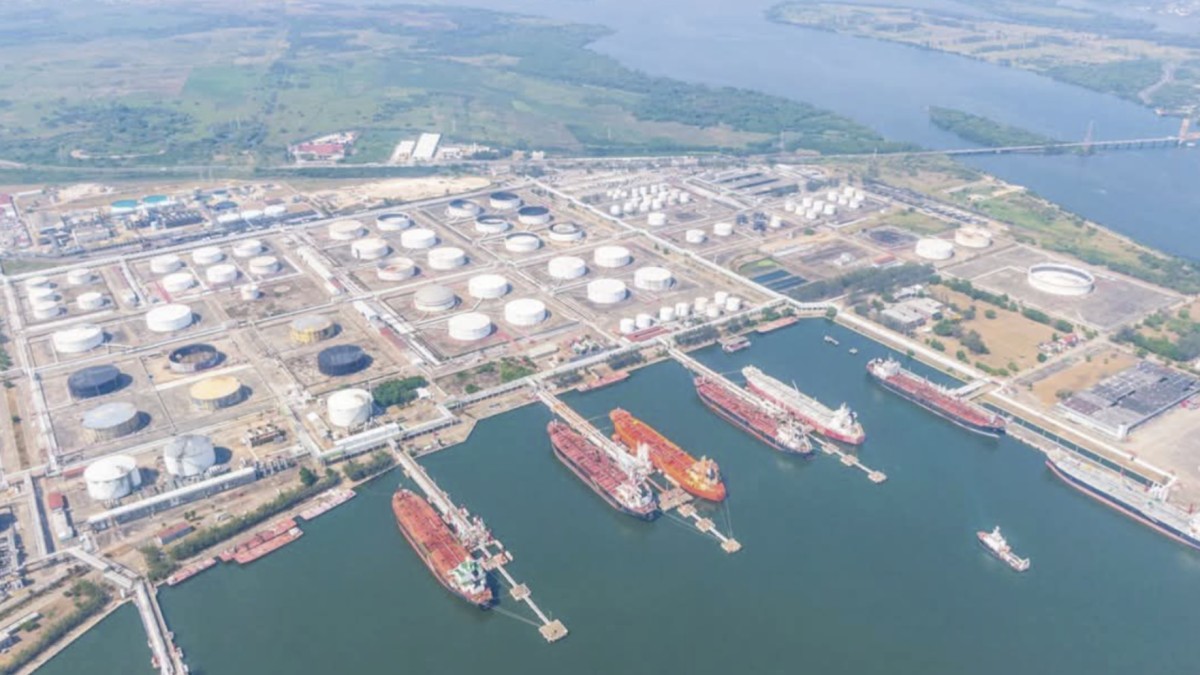
Mexico’s state oil firm Pemex said a fire at the Pajaritos storage terminal remains under control but has yet to be fully extinguished, claiming the blaze was sparked by an electrical storm. The incident has derailed crude loadings for the 100,000 b/d Isthmus crude stream.
Trump Wins a Procedural Round on Offshore Drilling
An Alaska judge dismissed a lawsuit from environmentalists challenging President Trump’s move to allow offshore drilling, but left unresolved the question of whether a president can legally reverse a predecessor’s coastal protections.
China Has the Zinc, the LME Has the Squeeze
Zinc prices hit a four-year high of $3,825 per tonne as LME inventories fell 25% since June, driven by soaring Chinese stocks and record-negative treatment charges confirming concentrate scarcity, with the LME cash premium jumping to $132 per tonne.
By Tom Kool for Oilprice.com

