Oil Prices Retreat, but the Strait of Hormuz Remains the Key Wild Card
Key Takeaways
- •Hedge funds raised net long positions in ICE Brent futures and options to a two-month high in the week ending July 21.
- •Trading activity in crude futures remains subdued, which has helped magnify price swings in recent sessions.
- •Omani and Iranian officials are discussing a Hormuz navigation plan that could restore shipping through the strait.
- •OPEC+ is expected to pause further output increases after September and keep production steady through the rest of 2026.
- •China’s seaborne crude imports are projected to rebound in July as delayed Gulf cargoes arrive and Russian flows increase.
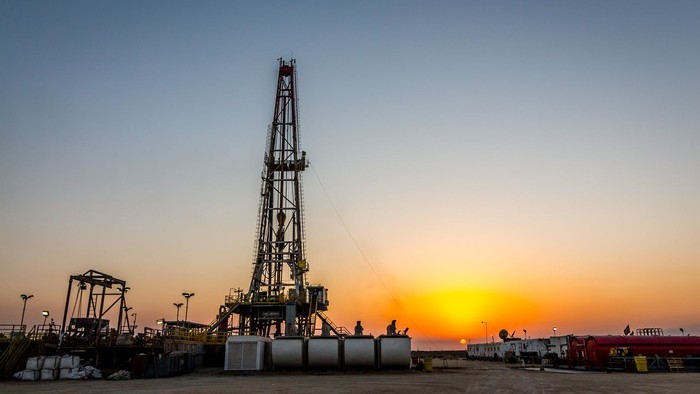
Trump's latest comments eased oil prices, but talks over ending the Strait of Hormuz blockade could prove far more consequential for supply routes and shipping risk.
Hedge funds return to oil as chokepoint risks reappear
The signing of the US-Iran Memorandum of Understanding triggered one of the largest hedge fund sell-offs in crude futures and options. However, the closure of the Strait of Hormuz — and now Bab el-Mandeb — has pushed bullish positioning back into favor, showing how quickly traders reassess risk when key maritime chokepoints are threatened.
Net positions held by hedge funds and other money managers in ICE Brent futures and options rebounded to the equivalent of more than 192 million barrels in the week ending July 21, a two-month high. By contrast, hedge fund positioning in Nymex WTI has remained relatively stagnant through June and July, suggesting that speculative market participants prefer to avoid the futures contract with physical delivery.
Last week’s rally and this week’s sharp drop also underscored how lower trading activity in crude futures has been amplifying price swings. Open interest in ICE Brent is down 11% year over year. Diesel may be the most bullish energy commodity of all, with hedge funds lifting their net long positions in ICE gasoil to 84,540 lots last week, the highest level seen during the US-Iran conflict.
Market movers
- Expand Energy (NASDAQ:EXE), the largest independent gas producer in the US, agreed to buy privately held gas marketer Twin Eagle Holdings for $1.25 billion to strengthen its logistics and marketing presence.
- French oil major TotalEnergies (NYSE:TTE) said it will appeal a Paris Court decision ordering it to bring its business in line with climate change-mitigating policies under France’s corporate duty of vigilance law.
- Africa’s largest refinery, the Dangote Group’s 650,000 b/d Lekki plant in Nigeria, raised $2.5 billion in private funding for its planned expansion, with 1.4 million b/d capacity targeted as soon as end-2028.
- Russia’s largest private oil firm Lukoil (MCX:LKOH) had its deadline to divest international assets extended by the US Treasury Department until August 22, marking the eighth one-month extension.
- US asset management giant Apollo Global Management (NYSE:APO) agreed to invest $1.5 billion in six operational oil rigs owned by Singapore’s Keppel (SGX:BN4), seeking to benefit from renewed activity in Asian offshore drilling.
Tuesday, July 28, 2026
Oil markets continue to trade on Donald Trump’s announcements, with his “good talks” comment about ongoing diplomatic engagement between the US and Iran sending a temporarily bearish signal. Omani-Iranian negotiations, however, may prove equally consequential, as media reports indicate that Gulf states have coalesced around a voluntary fee proposal aimed at ending the blockade of the Strait of Hormuz. Against that backdrop, ICE Brent is trading around $87 per barrel, with markets awaiting the next major geopolitical development.
Muscat floats a voluntary aya-toll
At a meeting with Iranian officials on Tuesday, Omani authorities presented Tehran with a Hormuz navigation plan backed by Gulf states. Modeled on the Strait of Malacca, the proposal suggests that transit fees should be voluntary and used for environmental protection, an approach intended to offer a non-coercive framework for restoring traffic through a route that carries a large share of seaborne crude and fuels.
Oman seeks a middle way through Hormuz
Iranian and Omani negotiators are discussing reopening the Hormuz strait’s largely unused middle passage, which could restore commercial shipping. Iranian sea mines may need to be removed before vessels can safely return, making any reopening dependent on practical security measures as much as diplomacy.
OPEC+ hits pause on supply hikes
The seven-member OPEC+ group is expected to halt its gradual output increases after September and keep production steady through the remainder of 2026, allowing time for negotiations over increasingly contentious national production quotas for 2027. For traders, that adds another layer of attention to whether tighter policy elsewhere is offset by any improvement in Middle East shipping conditions.
China’s imports crawl back from the abyss
China’s seaborne crude arrivals are expected to rise to 7.8 million b/d in July from a 10-year low of 6.2 million b/d last month, as stranded Gulf cargoes finally reach China and Russian flows increase 10%. Domestic consumption, however, remains constrained, which keeps the import rebound more about cargo timing and supply logistics than a broad-based demand surge.
Russia keeps gasoline at home until year-end
Moscow will extend its gasoline export ban until the end of 2026 as Ukrainian drone attacks continue to disrupt refinery operations and leave some southern regions short of fuel. Diesel export restrictions could be lifted relatively soon.
Houthis disable key Saudi refinery
Saudi Aramco’s (TADAWUL:2222) 400,000 b/d Jazan refinery has become the most significant victim of Houthi missile attacks to date. Fires have burned across the plant’s storage tanks for three days after the Yemeni militia targeted the site over the weekend.
Kuwait sells $16 billion worth of pipelines
Kuwait’s KOC will lease a 49% stake in 13 domestic and export pipelines to Blackstone, Brookfield and KKR while retaining operational control. The deal will raise $7.85 billion to help finance Kuwait’s push toward 4 million b/d of crude production capacity by 2035.
Italy cuts diesel taxes as fuel prices soar
The Italian government will temporarily slash diesel duties by €0.17/l until August 6 and spend €125 million to contain protests over soaring fuel costs. Public debt is approaching 139% of GDP, and the government is also seeking relief from EU deficit rules.
CPC closure halves Kazakhstan’s oil output
Kazakh output plunged from 2.16 million b/d in June to 1 million b/d after drone attacks forced a week-long suspension at the CPC Terminal on Russia’s Black Sea coast. The resumption of CPC loadings this week could prompt a swift recovery.
Libya quells resurgent oilfield protests
Libya’s NOC halted output at the 90,000 b/d El Feel (Elephant) field and reduced flows at Wafa after demonstrators stormed the production sites. The disruptions affected crude exports and gas supplies for several hours before government forces regained control of both.
Taiwan lets politics shape its LNG policy
Taipei will halt spot purchases of liquefied natural gas from Papua New Guinea after its representative office there was closed. The move cuts roughly 1.9 mtpa of LNG supply bought in 2025 while preserving CPC’s 1.2 mtpa contract, forcing it to resell its volumes.
Australia dusts off domestic refining
Canberra is considering building the country’s first new refinery in more than 60 years after the US-Iran conflict exposed Australia’s dependence on imports for 80% of fuel demand. The proposed plant would be built by chemical firm Perdaman in Western Australia, if deemed commercial.
Cyprus greenlights first-ever offshore field
French oil major TotalEnergies (NYSE:TTE) and Italy’s ENI (BIT:ENI) approved development of the 3 Tcf Cronos offshore gas field in Cyprus. The project is targeting first gas in 2028 and aims to pipe all production to Egypt’s Damietta LNG terminal for exports.
Trump’s China minerals ban hits reality wall
According to Reuters, the White House may need to waive its January 2027 deadline for ending Chinese critical mineral purchases, as domestic supply of rare earth magnets remains capped at 300 tonnes per year, equal to only 1% of the country’s consumption.
By Tom Kool for Oilprice.com
More Top Reads From Oilprice.com
- Red Sea Tanker Traffic Hits Multi-Month Low as Houthi Threat Holds
- Escalating Protests in Libya Threaten Oil and Gas Supply
- Economists Cut India’s GDP Growth Forecast on Oil Price Shock

