Haitian Immigrants in Ohio Face Job Losses and Deportation as Protected Status Expires
Key Takeaways
- •Approximately 45,000 Haitians in Ohio, including 15,000 in Springfield, lost their legal work authorization after Temporary Protected Status was revoked on Monday.
- •The U.S. Supreme Court ruled 6-3 in June that the TPS statute bars most court challenges to program terminations, closing the primary legal avenue for affected individuals nationwide.
- •Haitian families with U.S.-citizen children must now decide whether to bring their children to a violence-torn country or leave them behind in the United States.
- •Faith leaders across Ohio and the nation have spent eighteen months building a coalition to support peaceful protests if mass deportation operations commence in Springfield.
- •Ohio Governor Mike DeWine has stated that removing Haitian immigrants is a policy mistake but has not clarified whether state law enforcement will assist ICE in enforcement operations.
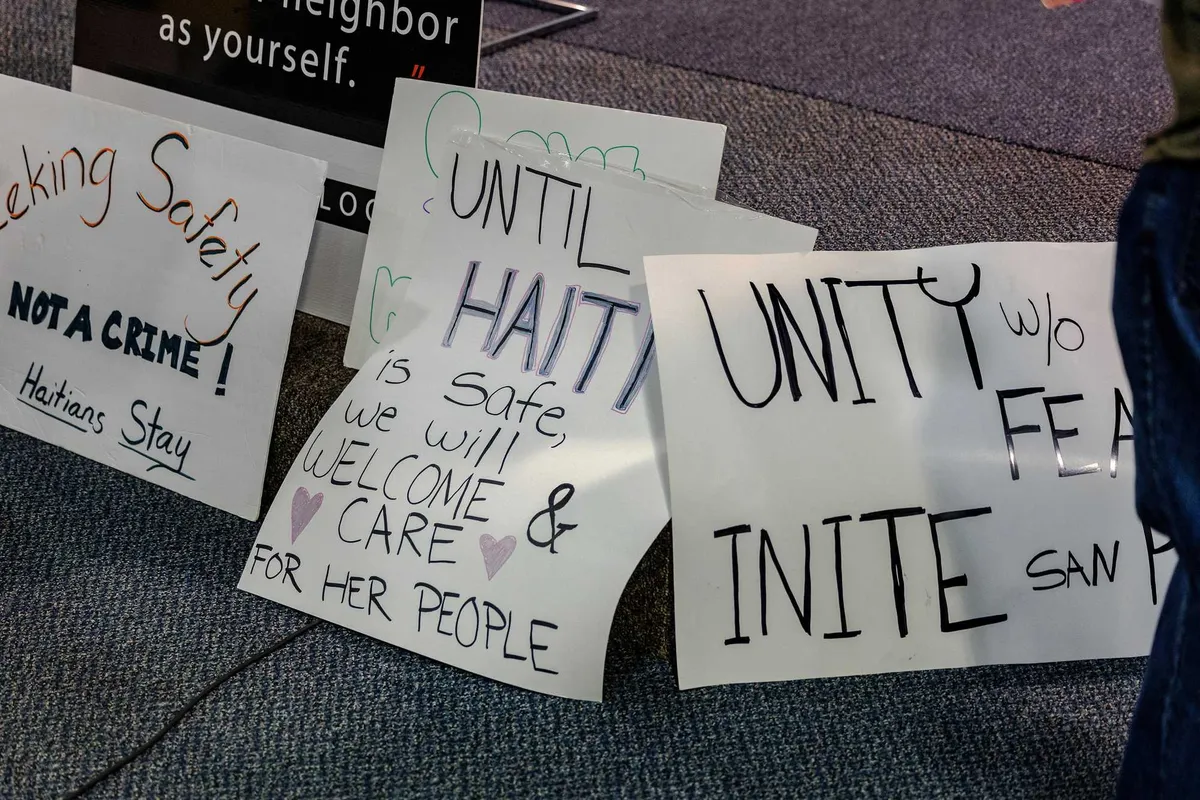
Haitian refugees in Ohio began losing their jobs this week after their Temporary Protected Status (TPS) was revoked on Monday, according to Pastor Carl Ruby, who works closely with Springfield's Haitian community. Many of these workers had filled manufacturing and logistics positions in a city that had experienced years of population decline and labor shortages before their arrival. Without legal status, their work permits are now invalid, and they face potential deportation to a country the International Rescue Committee describes as being "in the grip of an overwhelming humanitarian crisis."
Gangs currently control much of Haiti, with kidnapping, murder, and rape widespread. Ruby recounted the case of a 12-year-old Springfield resident who faces return to a country where, at age five, he witnessed animals feeding on murdered corpses.
"They're just terrified for their physical safety," Ruby said during a virtual press conference on Tuesday. "Many of them have already been traumatized… Some of them have been in prison. Some of them have been tortured. Some have been beaten. Some had been raped. Nearly all of them have seen friends or family members killed."
Families who have had children since arriving in the United States now confront an agonizing decision: whether to bring their children into the violent instability of Haiti or leave them behind in the United States, where their children's citizenship grants them the right to remain.
More than 330,000 Haitians have received temporary protected status since a devastating earthquake struck the impoverished Caribbean nation in 2010. Congress created the TPS program in 1990 to allow foreign nationals from countries affected by armed conflict, natural disasters, or other extraordinary conditions to live and work in the United States temporarily. For many Haitian beneficiaries, that temporary protection has lasted over a decade and a half—long enough to build careers, raise U.S.-citizen children, and establish deep community ties. Their status had been periodically renewed as conditions in Haiti continued to deteriorate.
The revocation follows a letter sent early last year by then-Ohio Attorney General Dave Yost and 27 other Republican state attorneys general to the Trump administration, emphasizing the word "temporary" in Temporary Protected Status. The letter claimed, without providing evidence, that it was safe for some TPS holders to return to their home countries and called for a review.
In November, then-Homeland Security Secretary Kristi Noem announced the termination of protected status for qualifying Haitians, affecting approximately 45,000 individuals in Ohio and roughly 15,000 in Springfield. Lawyers representing the Haitian community sued, arguing that Noem had failed to comply with the 1990 law that established TPS, which requires the government to conduct a mandatory review of conditions in a beneficiary's home country to certify safety before compelling their return.
Lower courts initially blocked the termination. However, in June, the U.S. Supreme Court reversed those rulings in a 6-3 decision, holding that the TPS statute itself barred most court challenges regarding how its provisions were applied. The decision effectively closed the primary legal avenue for hundreds of thousands of TPS holders nationwide, not only Haitians, who now face similar terminations under the administration's broader push to wind down the program. The Court did not bar constitutional challenges, and SCOTUS Blog reported on Tuesday that several such challenges are in development.
Meanwhile, an attempt to halt imminent deportations of Haitians and Syrians was blocked in the U.S. Senate.
For Haitians in Ohio, the remaining legal avenues offer limited reassurance. Many are bracing for mass deportation operations similar to those conducted by U.S. Immigration and Customs Enforcement (ICE) in other regions.
Ruby said no such operation has occurred in Springfield yet but warned it could be imminent. "It could happen as soon as this week," he said. "What we're hearing from other reporting is that they're planning on deporting them directly back to Haiti. There have been cases in the community where they have been picked up one day. Sent to a detention center the next day. And on the third or the fourth day they're back in Haiti. It's obviously not safe for them to go there."
He added that jobs and support services are virtually nonexistent for deportees upon arrival in Haiti.
Ruby also noted that he and his colleagues have spent the past 18 months building "a very large coalition of faith leaders not only here in Springfield, but across the state of Ohio and across the nation who will stand with us if we have anything like what took place in Minneapolis." He was referring to a mass enforcement operation last winter in which masked ICE officers shot and killed two protesters, both of whom were U.S. citizens. Video analysis of the scene showed that neither protester posed the threat that Trump administration officials alleged after the shootings.
Ruby emphasized that faith leaders want any protests to remain peaceful and that participants should be prepared for the consequences of civil disobedience, including potential arrest.
Ohio Governor Mike DeWine has previously criticized some fellow Republicans for falsely demonizing Springfield's Haitian immigrants. On Tuesday, his spokesman reiterated a statement DeWine issued last month following the Supreme Court ruling that effectively revoked their protected status.
"Today's decision is a legal decision," DeWine said. "As I have stated in the past, the policy to remove these individuals from this country is a mistake." He later added: "The situation in Haiti could hardly be much worse. The violent gangs run most of the country. The government barely functions. And, the economy is in shambles."
Lynn Tramonte, founder of the Ohio Immigrant Alliance, questioned whether DeWine would direct the Ohio Highway Patrol not to assist ICE in enforcement operations. According to the American Immigration Council, the Highway Patrol has previously collaborated with U.S. Border Patrol to apprehend undocumented immigrants.
Dan Tierney, DeWine's press secretary, did not directly answer when asked whether the Highway Patrol would assist ICE with enforcement operations in Springfield.
Tramonte argued that DeWine could take additional steps to help Haitians who have suddenly lost their legal status. "The governor might claim he is powerless to do anything in the face of federal agents invading our state to take our people, but here are two things he can do," she said in a text message. "He can instruct the Highway Patrol not to assist ICE in the enforcement of civil immigration laws. That's not their job and they shouldn't have to get involved. He can also underscore the same point for local police who often seem to think they should be on the hunt for immigrants instead of focusing on crime."

