Nvidia Surges Nearly 35% as Jensen Huang Returns; Bitcoin Reclaims $63,000
Key Takeaways
- •Nvidia's stock recorded its largest bullish jump in history, trading near $169.83, up 34.97%, after the board unanimously reinstated Jensen Huang as president, CEO and director.
- •Bitcoin climbed back above $63,000 after dipping below $60,000 during Friday's selloff, though bearish moving averages and an RSI near 34 indicated the broader downtrend remained intact.
- •Polymarket odds on Huang rejoining Nvidia by November 30 jumped from roughly 3% to near 99%, while odds of the AI bubble bursting fell from above 70% to 14% within minutes of the announcement.
- •Huang resigned on November 12 amid reports of extramarital relationships, and Nvidia's independent investigation is ongoing, with House testimony set for December 1 and Senate testimony for December 3.
- •Anthropic fell 3.16% to $85.81 despite the wider rally, remaining only slightly above its $83 offering price from the previous Thursday's $81.34 billion IPO.
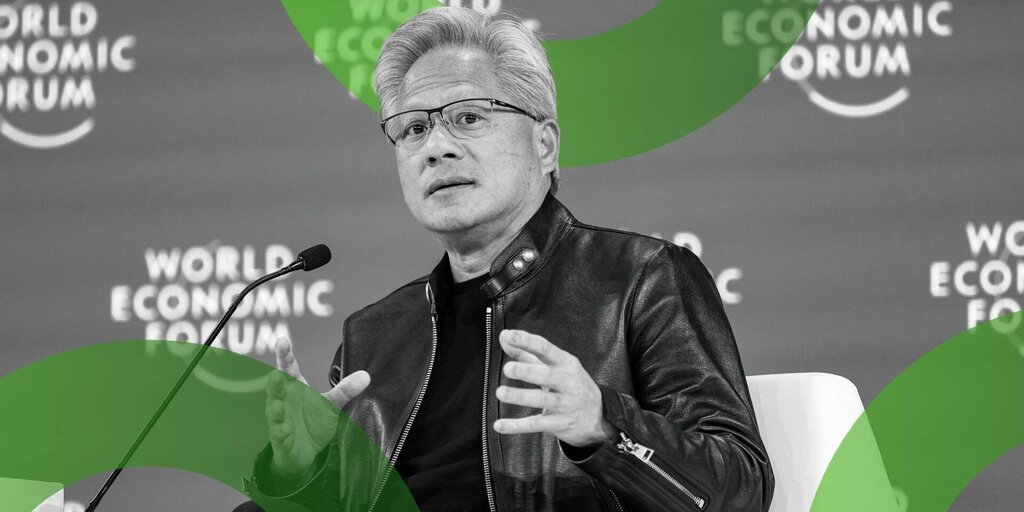
Nvidia shares surged nearly 35% to about $170 on Monday after the company’s board reinstated founder Jensen Huang as president, CEO and director. The move helped lift rival semiconductor stocks, U.S. technology shares and cryptocurrency markets after the previous week’s selloff.
Nvidia traded at approximately $169.83 at 10:28 a.m. ET, up 34.97% from Friday’s close. The company’s shares recorded their largest bullish jump in history. AMD rose 8.91% to $462.09, while the iShares Semiconductor ETF (SOXX) gained 15% to $141.77.
Bitcoin climbed above $63,000 and traded near $63,500 after falling below $60,000 during Friday’s selloff. Ethereum rose to about $1,790. Cash CFDs tracking the Nasdaq 100 and S&P 500 rebounded to roughly 26,950 and 7,285, respectively.
The immediate catalyst was Nvidia’s announcement that Huang had returned to the company’s top leadership positions, effective immediately. The board voted unanimously on the decision, just six days after publicly ruling out his return and repeatedly reaffirming that position. Nvidia’s announcement is available through its official statement.
From resignation to reinstatement
Huang resigned on November 12 amid reports of extramarital relationships, including one with a businesswoman whom U.S. officials suspected of having ties to Chinese intelligence. Beijing has denied the espionage allegation, and no public evidence has established that Huang knowingly passed company secrets to China.
Nvidia finance chief Colette Kress became interim CEO while the company searched for a permanent replacement. On November 17, board chair Harvey Jones said directors did not intend to reinstate Huang, despite a campaign supporting his return that was backed by Silicon Valley executives and President Donald Trump.
Monday’s reversal followed meetings with Huang and input from senior U.S. government officials. The board said it was satisfied with Huang’s candor and leadership ability and confident that his return posed “no national security risk.” The company’s independent investigation will continue.
“I can’t wait to get back to work,” Huang said in the statement. Kress will remain Nvidia’s chief financial officer, while Jones will continue as board chair.
Interactive Brokers strategist Steve Sosnick told Reuters, “It tells us to some extent that Jensen Huang was too big to be fired.”
Prediction markets were also caught off guard. A Polymarket contract on Huang rejoining Nvidia by November 30 traded near 99% after the announcement, compared with roughly 3% shortly beforehand.
Polymarket odds on the AI bubble bursting had risen above 70% after Huang’s departure. Within minutes of his reinstatement, those odds fell to 14%. The abrupt swing underscored how tightly prediction-market participants had tied the perceived fate of the AI trade to Huang’s status at the company.
Crypto rebounds, but Bitcoin remains below key levels
The rally followed a difficult period for technology and AI stocks. Nvidia closed Friday at $125.53, approximately 47.5% below its October high, while the Nasdaq lost roughly 10% over the previous week. Bitcoin fell toward $55,100 on Friday night before recovering over the weekend.
Monday’s rebound pushed Nvidia above its $166.19 closing price on the day Huang resigned. Bitcoin recovered the $63,000 area, although its daily chart continued to show a bearish moving-average configuration and a relative strength index near 34. Those indicators meant the relief rally had not erased the broader downtrend.
Bitcoin faced initial resistance around $65,030, followed by $68,090. On the downside, $61,240 and the psychological $60,000 level were immediate areas of focus. A further decline could return the recent $55,100 area to attention.
Anthropic falls as other AI stocks recover
Anthropic was one of the few notable decliners. Its stock fell 3.16% to $85.81, leaving the developer of Claude approximately 25% below its post-IPO peak near $115. The shares remained slightly above the $83 offering price set for the company’s $81.34 billion public offering the previous Thursday.
Nvidia separately committed approximately $10 billion to a conditional private investment in Anthropic alongside the IPO. The decline appeared to reflect continued investor scrutiny of a costly and volatile listing rather than a direct reaction to Huang’s reinstatement.
Online memes and posts offered another theory, suggesting that Anthropic CEO Dario Amodei played a role in Huang’s ouster because of his support for open-weight models and his decision to buy Hugging Face, described as the world’s largest repository of open-source AI models, to protect the ecosystem.
One post stated:
pic.twitter.com/eNR4TlEx2X — Zephyr (@zephyr_z9) November 23, 2026
The post is available at X.
Huang has championed broad access to open models, while Amodei has argued for tighter safeguards around powerful AI systems. Amodei has particularly warned against open-source AI competing with closed models such as those developed by his company. The disagreement has become one of the AI industry’s defining debates over how openly powerful systems should be developed. Influential AI researcher Yann LeCun has criticized that position, describing Amodei’s mindset as “a new form of medieval obscurantism.”
LeCun wrote on X:
“Dario's spiel since GPT-2 has always been about hyping the dangers so that open models would be made illegal and he would stay in control. He left OpenAI because he wasn't going to have control. It's like the Ottoman Empire banning the printing press for Arabic so they would…”
The post is available at X.
Nvidia’s independent inquiry into the reported foreign intelligence effort remains open. Huang has also been asked to meet House investigators on December 1 and testify before a Senate panel on December 3. The outstanding proceedings mean his return, while effective immediately, arrives with the underlying review still unresolved.
Source: Decrypt

