Nvidia Stock Forecast: Kioxia Warning and OpenAI Fundraising Shortfall Cloud the AI Outlook
Key Takeaways
- •Nvidia stock closed Friday at $204.64, roughly 16% below its October peak of $243, as investor concerns over AI infrastructure spending intensified.
- •OpenAI reportedly raised only $11 billion of a targeted $30 billion from venture capital firms, accepting a $1.25 trillion valuation after postponing its IPO to next year.
- •Nvidia's close ties to OpenAI, including a sizable equity stake, chip demand, and a guarantee of OpenAI's Ohio data center, make the fundraising shortfall a direct risk for Nvidia shareholders.
- •Kioxia lowered its profit forecast to approximately $12.5 billion for the quarter, citing customers pushing orders into the March quarter, while management said the company is sold out for 2027.
- •Nvidia is scheduled to report earnings on Nov. 17, following upcoming results from AMD, Arm Holdings, and Qualcomm, which investors view as barometers of the AI sector.
Nvidia (NVDA) shares came under renewed pressure on Nov. 2 as reports of a fundraising shortfall at OpenAI and a weaker profit outlook from Japanese memory maker Kioxia deepened investor doubts about the sustainability of artificial intelligence infrastructure spending. The caution followed a sharp decline in technology shares, with market participants weighing how much further the sector's buildout can extend.
The stock closed Friday at $204.64, roughly 16% below its October peak. The correction has brought technical support near the $200 level into focus ahead of the chipmaker's upcoming earnings report.
OpenAI Fundraising Shortfall Weighs on Nvidia
Nvidia and OpenAI maintain a close commercial relationship. OpenAI ranks among the largest consumers of Nvidia chips, both directly and indirectly through partners such as CoreWeave. Nvidia has also taken a sizable equity stake in the company and is guaranteeing its data center in Ohio. That entanglement is why OpenAI's access to capital matters to Nvidia shareholders: demand from AI labs and their cloud partners feeds the data center segment that generates the bulk of Nvidia's revenue, and the Ohio guarantee ties the chipmaker directly to one customer's buildout.
OpenAI's most recent challenge centers on access to capital. The company had been seeking to raise $30 billion from venture capital firms after postponing its initial public offering (IPO) to next year, pitching investors on a valuation that had jumped to $1.4 trillion.
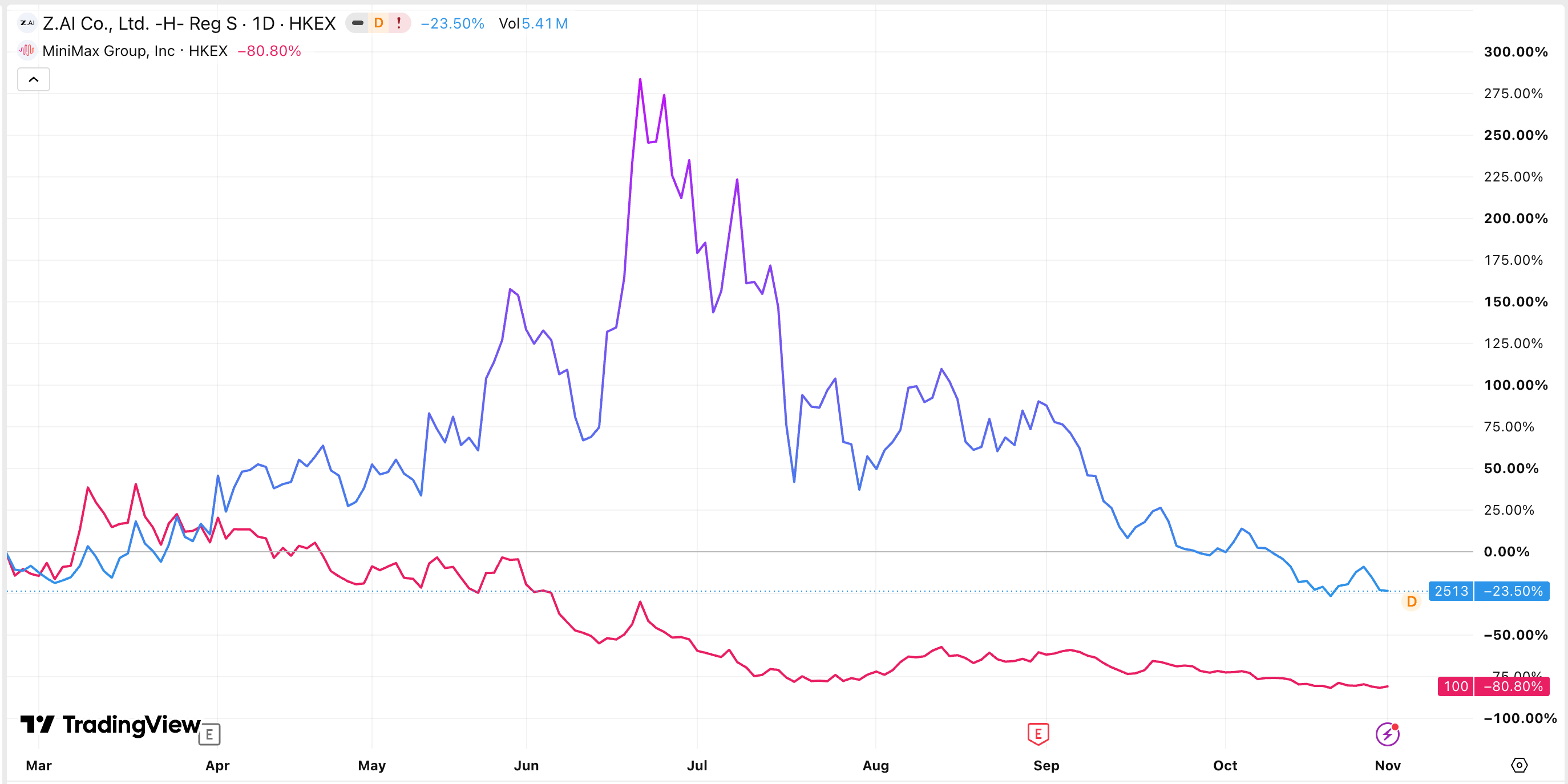
Investors balked, however, and the company reportedly secured just $11 billion in commitments at a $1.25 trillion valuation. The financing difficulties surfaced at a time when bond yields have jumped and most AI-related companies have declined. Higher yields raise borrowing costs for capital-intensive data center projects and typically compress valuations for growth-oriented technology companies. Chinese competitors Z.ai and MiniMax, for example, have plunged more than 80% from their all-time highs.
OpenAI also faces substantial competition, particularly from open-weight AI developers such as DeepSeek and Moonshot. That weakness could affect its investors, including Nvidia. SoftBank, another top investor in the company, has dropped more than 50% from its year-to-date high.
Kioxia Guidance Points to Slowing Growth
Kioxia, one of the world's largest producers of NAND flash memory — the storage chips used across data centers, smartphones, and other devices — lowered its profit forecast for the year, adding to concerns about AI hardware spending more broadly. The company now expects to generate approximately $12.5 billion in profits this quarter, a figure well below what analysts were expecting and one that points to a slowdown in its business.
In justifying the lowered profit target, the company cited delivery schedules, noting that some customers had pushed their orders into the March quarter. Management also insisted that Kioxia is already sold out for 2027, with certain customers placing orders for 2029.
The results arrived at a time when most memory companies have slumped, including large names such as Micron, SanDisk, and Samsung Electronics.
Earnings Calendar in Focus
Looking ahead, Nvidia's stock is likely to react to results from some of the top companies in the technology industry. The most notable is Advanced Micro Devices (AMD), which will release its numbers on Tuesday and whose results investors view as barometers of the AI space.
Arm Holdings, a company that Nvidia attempted to acquire, will also publish its results, on Wednesday. Qualcomm will release its figures as well.
Nvidia is usually the last big-tech company to publish its earnings. It is scheduled to release its numbers on Nov. 17, with analysts expecting another solid “beat and raise.” Attention will center on whether its guidance comes in well above expectations.
Nvidia Stock Price Technical Analysis
The daily chart shows the NVDA stock price has slumped over the past few weeks. It dropped from a high of $243 in October to a low of $200 on Friday. Along the way, it has fallen below the important support level of $209.75, its lowest point on Aug. 26 and Sept. 14.
The stock has also dropped below its 50-day Exponential Moving Average (EMA) and slipped beneath the Supertrend indicator, two widely followed technical signals.
As a result, there is a risk that the stock will drop further following the OpenAI issues and slowing Kioxia sales. If the decline extends, NVDA could fall to $189.90, its lowest level in July.
This article provides market information, not investment advice. Stock investments carry volatility and potential losses.
Originally published by The Market Periodical.

