Why Nvidia Stock Is Falling Despite Strong Earnings and Guidance
Key Takeaways
- •Nvidia reported second-quarter revenue of $96 billion and guided third-quarter revenue to $106 billion, well above analyst expectations.
- •Multiple analysts raised their price targets after the results, with Raymond James lifting its target from $352 to $515.
- •The stock's decline coincided with hawkish comments from Fed Chair Kevin Warsh at the Jackson Hole Symposium that prompted selling of risky assets.
- •OpenAI claimed its new Jalapeno chip beats Nvidia's Blackwell on key metrics, raising concerns about future GPU demand from one of Nvidia's largest customers.
- •Microsoft, Google, and Amazon are developing their own chips as major cloud and AI firms seek to reduce reliance on a single supplier.
Key Insights
Nvidia stock dropped sharply on Friday, even after the company released strong financial results.
The retreat comes amid concerns about competition in the GPU industry.
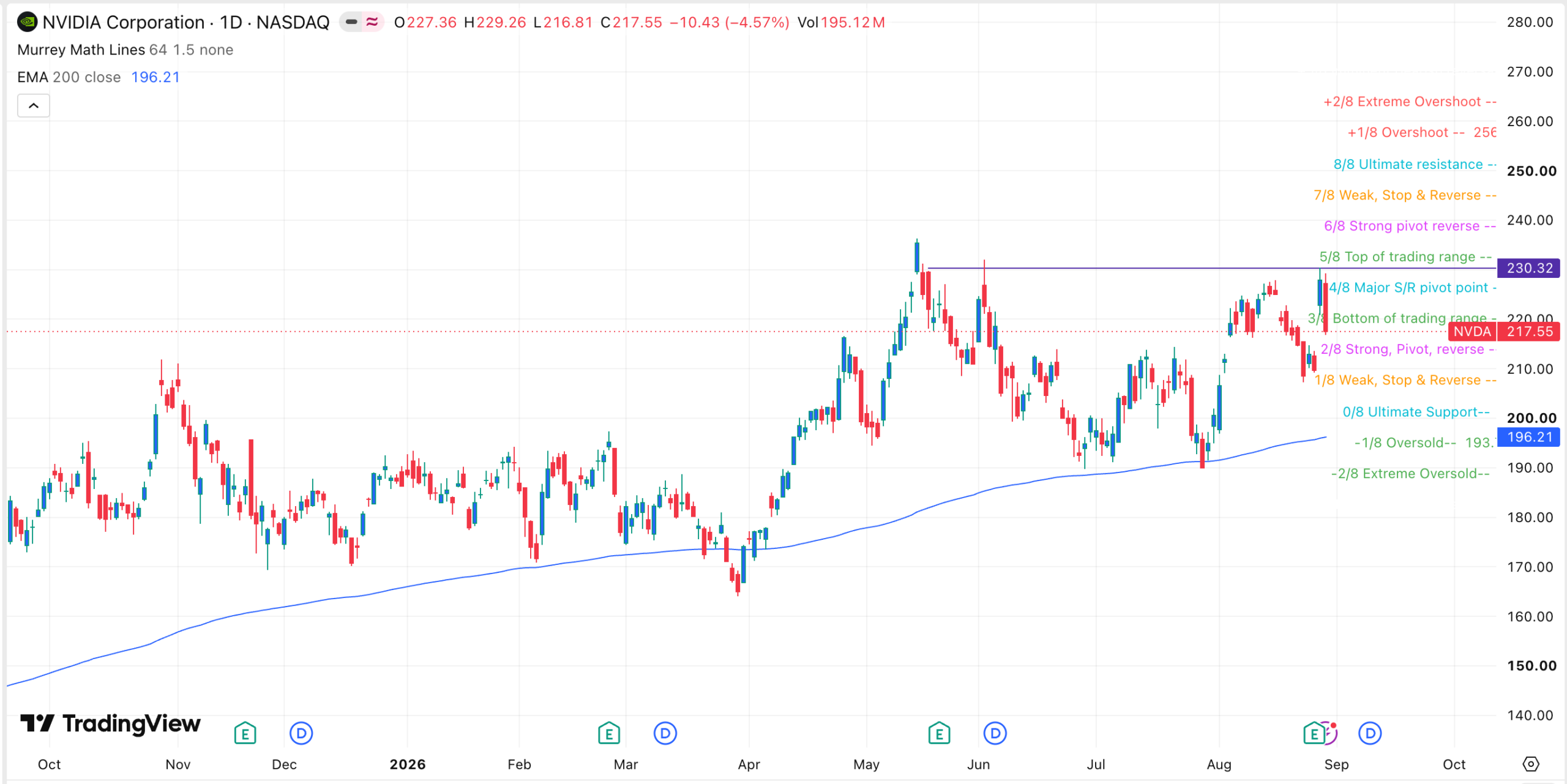
After publishing its results, Nvidia shares surged to their highest level since June 2. The stock then lost momentum and fell to $217, its lowest level since August 21.
This article examines the main reasons why the stock plunged on Friday despite strong earnings.
Nvidia Published Strong Financial Results and Guidance
Nvidia delivered strong financial results and issued some of the best forward guidance metrics of any company. Revenue rose to $96 billion in the second quarter, exceeding the guidance the company had provided alongside its first-quarter report.
Most notably, Nvidia's outlook came in well above even the most bullish analyst estimates. The company now expects third-quarter revenue to reach $106 billion. It also projects that next year's revenue growth will exceed 70%, whereas analysts had anticipated growth of 44%. Historically, Nvidia has been highly conservative with its forecasts, meaning actual results have typically exceeded its guidance.
As a result, analysts raised their price targets. Evercore's Mark Lipacis lifted his target to $465, while Raymond James' Simon Leopold raised his from $352 to $515. UBS raised its target from $280 to $300, and Oppenheimer, Citigroup, and Morgan Stanley each raised theirs to $315.
Why the NVDA Stock Dropped
Several factors explain the decline despite the strong results. First, the drop coincided with a hawkish statement from Federal Reserve Chair Kevin Warsh at the Jackson Hole Symposium. Warsh said inflation remained elevated and that the Fed would do its best to bring it down to 2%. In response, American investors sold risky assets such as stocks and crypto. Higher-rate expectations tend to weigh most heavily on richly valued growth stocks, and Nvidia, as one of the largest companies in the market by capitalization, exerts outsized influence on major indexes, making it a frequent target when broad risk sentiment shifts.
Nvidia also fell as investors "sold the news." It is common for assets to rally ahead of a major event and then pare back some of those gains once the event has passed. In this case, Nvidia shares popped to $230, near their all-time high, before pulling back. The pattern is familiar for Nvidia: the stock has also pulled back after some previous earnings reports even when results beat expectations, as expectations for the company have run especially high during the AI spending boom.
Most importantly, there are concerns about rising competition in the chip industry. OpenAI has released its own chip, known as Jalapeno. In a statement this week, the company said its chip was beating Nvidia's Blackwell in key metrics. This matters because OpenAI is one of the largest consumers of Nvidia GPUs; the success of its chip means it may not need to spend as much on Nvidia's products in the future. The one risk for OpenAI is that Nvidia is a major investor. Nvidia also recently announced a financial backstop for a large data center in Ohio that will use its GPUs.
Beyond OpenAI, other companies including Microsoft, Google, and Amazon are developing their own GPUs. Google recently announced it would expand its deal with Marvell to boost production of its TPU chip. The push reflects a broader industry shift in which the biggest cloud and AI companies, which collectively spend tens of billions of dollars a quarter on AI infrastructure, are working to reduce their dependence on a single chip supplier and lower their costs through custom silicon. Even so, Nvidia retains advantages through its CUDA software ecosystem, annual product cadence, and deep relationships with the same customers now building rival chips. Investors will be watching whether Nvidia's data center growth and gross margins hold up as these alternative chips scale.
Nvidia Stock Price Technical Analysis
The daily chart shows that NVDA was in a downtrend before the earnings report. The stock then formed a large up-gap after its results, reaching a high of $230, and is now attempting to fill that fair value gap.
On the positive side, the shares sit above the 100-day moving average, a sign that bulls remain in control. The stock also fell below the Major S/R pivot of the Murrey Math Lines tool.
Given this setup, the stock is likely to remain highly volatile before resuming its bullish trend. It may drop to ultimate support and then rebound toward the all-time high of $236 and above.
The post Here's Why Nvidia Stock is Falling Despite Strong Earnings and Guidance appeared first on The Market Periodical.
