Nvidia Shares Fall 8% as Board Weighs CEO Jensen Huang's Future; Chinese GPU Rivals Rally
Key Takeaways
- •Nvidia's stock fell 8% in after-hours trading on November 12, 2026, after reports that its board discussed CEO Jensen Huang's future.
- •The allegations against Huang, including claimed extramarital affairs and links to a purported Chinese intelligence asset, remain unverified reports.
- •Nvidia has disclosed approximately $164.5 billion in financial commitments across the AI ecosystem, and analysts warn its vendor-financing approach could overstate demand and unwind rapidly if support is withdrawn.
- •Shares of Chinese GPU makers Moore Threads, MetaX, and Cambricon jumped nearly 10% on November 13, 2026, as traders bet Nvidia's turmoil could shift demand toward domestic suppliers.
- •Key factors to watch include the board's decision on Huang's role, possible changes to the financing commitments, and Washington's posture on chip exports to China.
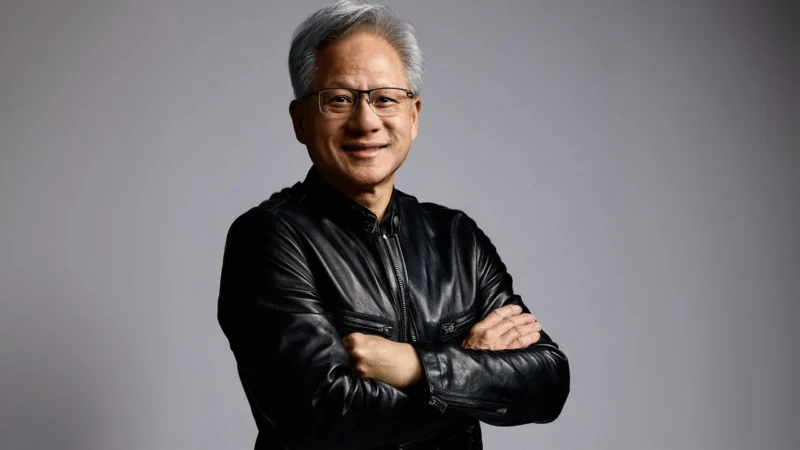
The AI boom has many moving parts: data centers, power grids, model labs, cloud giants. Investors are increasingly asking whether all of it leans on one company and, more pointedly, one man. This week, that question moved from the abstract to the concrete, as Nvidia shares fell 8% in after-hours trading on November 12, 2026, after a board meeting reportedly weighed the future of CEO Jensen Huang.
The selloff has turned a long-running concentration worry into a live stress test for the market's most crowded trade.
What Happened at Nvidia
The scrutiny follows reports of alleged personal misconduct by Huang, including claims of extramarital affairs and alleged links to a purported Chinese intelligence asset. None of these allegations have been established, and they remain unverified reports at this stage.
The market did not wait for clarity. News of the board's deliberation over Huang's position was enough to knock 8% off the stock after the closing bell.
The damage spread beyond a single ticker. Nasdaq 100 futures also slipped as broader fears rippled through the technology sector, underscoring how closely the broader AI trade is keyed to the chipmaker's leadership. The linkage is partly mechanical: Nvidia is one of the largest constituents of the index, so a sharp move in the stock feeds directly into futures prices and into the portfolios of the funds that track it.
The Financing Loop Under the Microscope
Nvidia has disclosed financial commitments of approximately $164.5 billion tied to the AI ecosystem. That figure helps explain why a governance question turned into a market question so quickly.
Analysts have flagged potential vulnerabilities in Nvidia's customer-financing strategy, which has helped fuel growth across the sector. In plainer terms, some of the demand for Nvidia hardware has been supported by Nvidia's own capital. The practice, often called vendor financing, has a long pedigree in earlier technology cycles, and analysts watch it closely because it can flatter reported demand in strong markets and unwind quickly if the support is ever pulled back.
Analysts have also stressed Huang's role in identifying where computing is headed and in managing those customer-financing relationships. That combination — setting the technical roadmap while holding the deal-making relationships — is a textbook illustration of what investors call key-person risk. Replacing a founder-CEO who sets both the technical roadmap and the deal-making posture would be a challenge for any company.
China's Chipmakers Catch a Bid
While Nvidia wobbled, its would-be rivals in China rallied. Shares of Chinese GPU makers Moore Threads, MetaX, and Cambricon jumped nearly 10% on November 13, 2026.
The logic from traders was straightforward: turmoil at the market leader could open the door for domestic suppliers to grab a larger slice of China's AI chip demand.
Renewed political pressure in the United States has put fresh scrutiny on China's access to Nvidia chips, landing just as the leadership questions emerged. US export controls had already shaped how much advanced hardware Chinese buyers could obtain, and the companies catching the bid are the visible edge of Beijing's long-running drive for semiconductor self-sufficiency, an effort that has gained urgency as those controls tightened.
For Chinese chipmakers, two headwinds facing Nvidia arrived at once. One is internal: who runs the company. The other is external: how much Washington will let it sell into China.
Why This Matters Beyond One Stock
Three things are worth watching closely.
First, the board. Any decision about Huang's role, or a clear statement of continuity, would likely set the tone for the stock in the near term.
Second, the financing commitments. With approximately $164.5 billion tied up across the AI ecosystem, any hint that Nvidia might slow or restructure that support would matter to the companies on the receiving end.
Third, Washington's posture on China. Tighter limits on chip access would sharpen the opportunity for Moore Threads, MetaX, and Cambricon, though a sentiment-driven rally of nearly 10% is not the same as winning durable market share — and none of the domestic challengers yet matches Nvidia's scale in advanced accelerators.
Source: CryptoBriefing

