Nvidia's 30% Rally May Be Just a Dead Cat Bounce as Board Oversight Tightens
Key Takeaways
- •Nvidia's shares surged 31.5% on 23 November 2026 following Jensen Huang's reinstatement as chief executive, easing immediate leadership uncertainty at the chipmaker.
- •Nvidia's board has formed a National Security & Export Control Committee and is recruiting a Chief Compliance Officer, which could constrain Huang's discretion over export controls and financing across the AI ecosystem.
- •Huang is scheduled to testify behind closed doors before three US House committees on 1 December 2026 and publicly before the Senate Banking Committee at a hearing tentatively set for 3 December 2026.
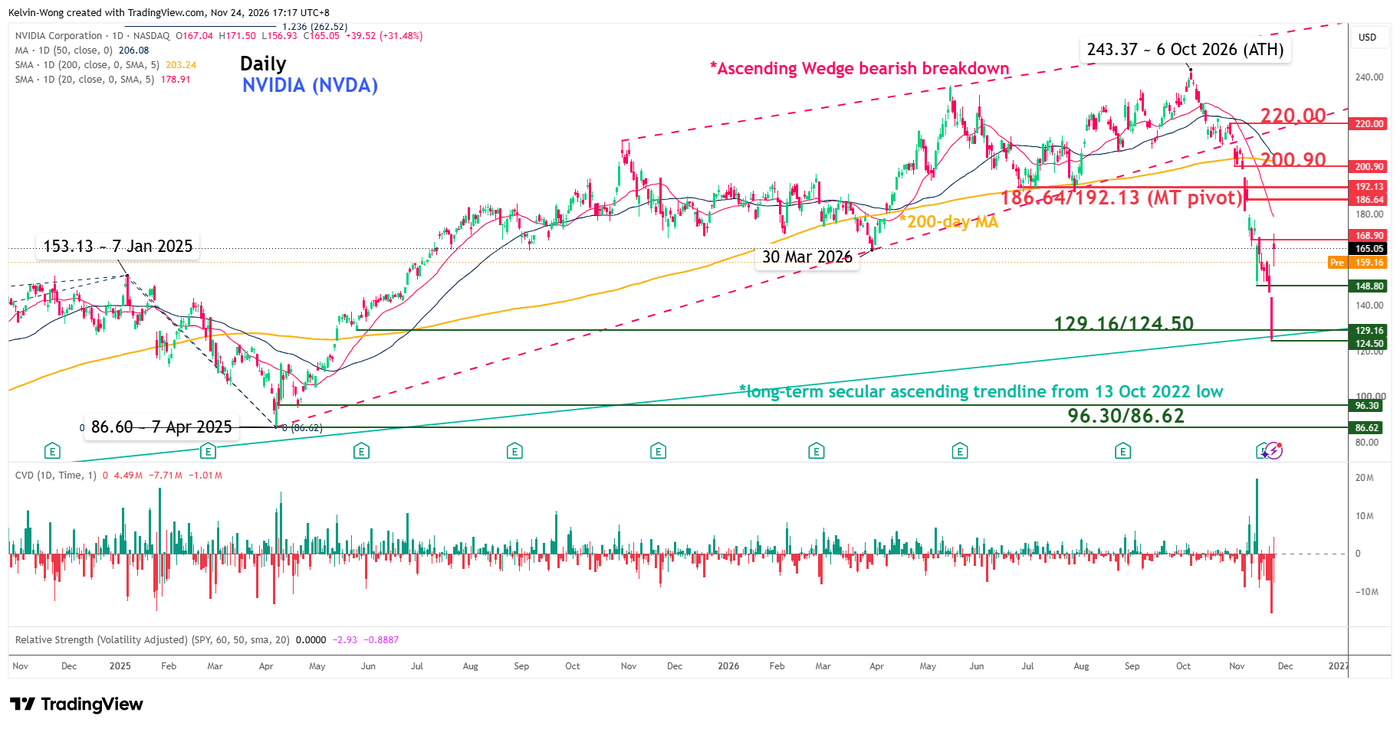
- •Despite the rally, NVDA remains below its 20-, 50- and 200-day moving averages, and the analysis concludes the stock's medium-term downtrend is still intact.
- •With Democrats taking control of Congress in January 2027, tougher national-security-driven oversight could lead to tighter limits on Nvidia's chip sales or customer financing.
Nvidia's shares surged more than 30% on Monday, 23 November 2026, after Jensen Huang returned as chief executive, a reinstatement that eases immediate leadership uncertainty at the chipmaker. Nvidia is one of the largest constituents of US equity benchmarks such as the S&P 500, which is why its regulatory outlook is followed well beyond the semiconductor sector. The boardroom drama may be starting to look almost as intriguing as Marvel's upcoming Avengers: Doomsday, but an analysis published on MarketPulse argues the monster rally may be just a dead cat bounce — trader shorthand for a short-lived rebound within an ongoing downtrend — with tighter board oversight and a series of December congressional hearings posing fresh downside risks.
The medium-term question, according to the analysis, is whether tighter oversight will change how Nvidia sells its chips and helps finance demand for them. Here are the three factors traders may want to pay attention to that could cap Monday's rally.
Jensen Huang may return with less room to manoeuvre
Nvidia's board has formed a National Security & Export Control Committee and is recruiting a Chief Compliance Officer. US export controls on advanced AI chips have tightened in several rounds in recent years, making compliance with those rules a core operational issue for US chipmakers. The new oversight structure could constrain Huang's discretion over how the company enforces chip export controls and indirectly finances companies across the AI ecosystem — meaning his return may not change the underlying fundamentals. In other words, Huang may be coming back to the chief executive's office with less room to manoeuvre than before.
The December hearings are the next catalyst
Huang is due to testify behind closed doors before three US House committees on 1 December 2026 over a potential national security breach — a format congressional committees routinely use for sensitive national-security matters ahead of any public sessions. He has also agreed to appear before the Senate Banking Committee at a public hearing tentatively set for 3 December 2026. The public session could reveal which business practices lawmakers want Nvidia to change, and the congressional scrutiny could lead to tighter regulatory oversight weighing on Nvidia's medium-term outlook. Alongside the hearings themselves, the board's recruitment of a Chief Compliance Officer is a development to monitor, since the role typically owns a company's export-control and compliance programme.
US congressional pressure could build in January
Senior US officials advised Nvidia to reinstate Huang, according to the analysis. When Democrats take control of Congress in January 2027, they may push for tougher oversight of the company on national security grounds. Tougher congressional oversight may in turn point to tighter limits on chip sales or on the financing that supports customer purchases.
Medium-term downtrend remains intact
Turning to the technical picture for Nvidia (NVDA): despite Monday's monster rally of 31.5%, the stock is still trading below its 20-, 50- and 200-day moving averages, with the 200-day line widely used as a rough gauge of long-term trend health.
By the end of Monday's regular US session, the price action failed to break above the 168.90 intermediate resistance after a test of it, forming a daily “Spinning Top” candlestick pattern that suggests potential bullish exhaustion.
In addition, cumulative volume data, with a daily anchoring period of one day, ended the 23 November session with a negative reading of 1.01 million from a high of +4.49 million — suggesting that buyers initially stepped in, but aggressive sellers absorbed the rally and regained intraday control.
The 30%+ rally in NVDA may therefore be a dead cat bounce, with potential late short-covering activity, rather than a bullish reversal, the analysis concluded. NVDA's bearish trend remains intact.
A break below the 148.80 intermediate support is likely to trigger a bullish-exhaustion move, with a potential drop to retest the first major support zone of 129.16/124.50 in a first step, before exposing the next major support zone of 96.30/86.62.
On the flip side, the analysis notes that a daily close above 192.13 — the medium-term pivotal resistance — would damage the downtrend, setting up a squeeze up toward the next medium-term resistances at 200.90 and 220.00.
Opinions expressed are the author's and not necessarily those of OANDA Business Information & Services, Inc. or any of its affiliates, subsidiaries, officers or directors. The publication is for informational and educational purposes only. © 2026 OANDA Business Information & Services, Inc.

