Nvidia's Jensen Huang Tells US Policymakers That AI Doomsday Fears Are 'Complete Nonsense'
Key Takeaways
- •Nvidia CEO Jensen Huang cautioned Washington that basing AI policy on exaggerated doomsday scenarios rather than evidence could harm American competitiveness more than the technology itself.
- •Treasury Secretary Scott Bessent threatened sanctions against Chinese AI models on the same day Huang spoke, reflecting an ongoing escalation in US restrictions on China's access to advanced AI capabilities.
- •Huang projected global chip demand of approximately one trillion dollars by 2027, driven by surging needs across AI training, inference, and deployment in nearly every industry.
- •Chinese companies such as Moonshot AI have released competitive open-source AI models, undercutting the assumption that export controls alone can maintain US technological superiority.
- •Huang has consistently advocated for a single unified federal AI regulatory framework, arguing that a patchwork of state-level rules creates unnecessary compliance complexity for companies operating nationally.
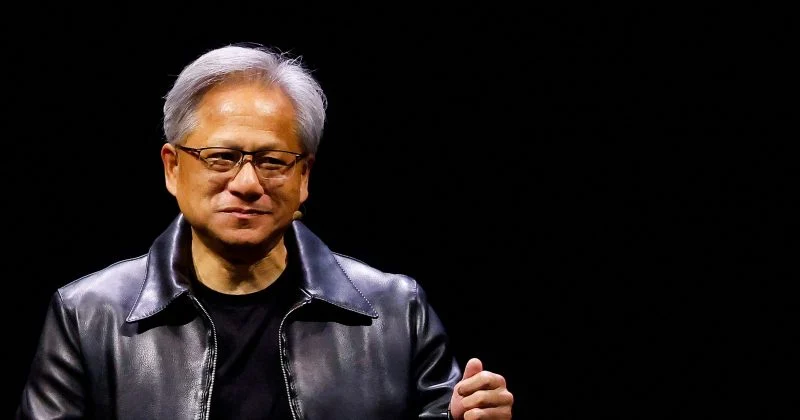
Nvidia CEO Jensen Huang delivered a blunt message to Washington on July 23: stop basing artificial intelligence policy on science fiction rather than science.
Speaking in what amounted to a public lobbying session directed at US policymakers, Huang argued that exaggerated fears about AI are inflicting greater damage on American competitiveness than the technology itself ever could. The people warning that AI will end civilization, he said, are drawing from Hollywood scripts — not evidence. His comments come amid an intensifying policy debate in Washington, where lawmakers have held multiple hearings on AI safety and competitiveness, often hearing testimony from a small circle of prominent tech executives.
Pushback Against Panic-Driven Regulation
Huang did not mince words about the doomsday crowd.
"The fact that this is going to be the end of humanity, it's complete nonsense."
His frustration extended beyond philosophy. He specifically cautioned that the Trump administration risks an "overcorrect" on AI policy — creating a regulatory environment where competitors could weaponize safety rhetoric to their advantage.
The timing was pointed. On the same day Huang spoke, Treasury Secretary Scott Bessent issued threats of sanctions against Chinese AI models. The move reflects a broader escalation in US efforts to restrict China's access to advanced AI capabilities, building on semiconductor export controls first imposed in 2022 and tightened in subsequent rounds. Huang argued that Washington should consult a broader range of stakeholders rather than relying on the perspectives of a handful of CEOs.
The Trillion-Dollar Backdrop
In March 2026, Huang projected demand of roughly $1 trillion in chips by 2027, reflecting the surging appetite for compute power across AI training, inference, and deployment in virtually every industry.
Nvidia has faced heightened scrutiny over its chip exports to Chinese companies, with potential investigations looming. The scrutiny places the company at the center of a tension between commercial opportunity and national security imperatives, as US policymakers weigh whether restricting sales to China meaningfully slows Chinese AI development or simply redirects demand to alternative suppliers. At the same time, Chinese firms such as Moonshot AI have released competitive open-source AI models, undercutting the assumption that export controls alone can preserve US technological superiority.
Huang has consistently advocated for a unified federal AI regulatory framework rather than a patchwork of state-level rules. Several states, including California, have advanced their own AI safety legislation, creating compliance complexity for companies operating nationally. A coherent federal approach, he contends, would provide companies with a single, clear set of rules to follow.

