Nvidia CEO Jensen Huang Declares AGI Has Arrived With OpenAI's GPT-6 Astra
Key Takeaways
- •Jensen Huang stated that AGI has arrived, pointing to OpenAI's GPT-6 Astra as a milestone in advanced AI development.
- •OpenAI launched GPT-6 Astra on September 3, calling it its most intelligent and aligned model, trained in its largest-ever run of more than 100,000 GPUs at the Stargate facility in Texas.
- •OpenAI reported benchmark scores of 98% on FrontierMath Tier 4, 99.9% on ARC-AGI-3, and 100% on ExploitBench.
- •Huang said an additional 400,000 Nvidia GPUs are coming online, indicating continued expansion of AI computing capacity.
- •Huang's AGI claim is not an independently established technical conclusion, as no universally accepted definition or benchmark for AGI exists.
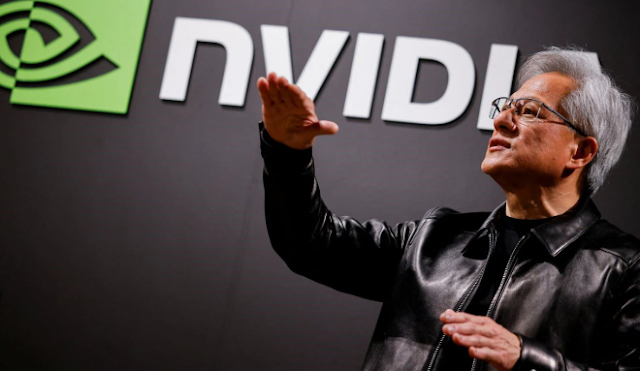
Nvidia CEO Jensen Huang has declared that artificial general intelligence has arrived, pointing to OpenAI's newly released GPT-6 Astra as a milestone in the development of advanced AI systems.
According to information shared by Coin Bureau, Huang said Astra was trained using more than 100,000 NVIDIA Grace Blackwell NVLink72 systems, and added that another 400,000 Nvidia GPUs are coming online. His comments highlight the extraordinary computing scale increasingly required to develop frontier AI models, a scale that only a handful of operators can currently marshal.
GPT-6 Astra Raises the Bar for AI Computing
OpenAI introduced GPT-6 Astra on September 3, describing it as its most intelligent and aligned model to date. The system is designed for complex reasoning, computer use, software engineering, cybersecurity, scientific research, and professional work.
The company said Astra was trained in its largest-ever training run, involving more than 100,000 GPUs at its Stargate facility in Texas. OpenAI also reported scores of 98% on FrontierMath Tier 4 and 99.9% on ARC-AGI-3, alongside a 100% result on ExploitBench. Those benchmarks are among the yardsticks researchers use to gauge progress toward general-purpose reasoning: FrontierMath measures performance on exceptionally difficult mathematical problems, ARC-AGI-3 is designed to test abstract reasoning on novel puzzles, and ExploitBench evaluates cybersecurity capabilities, which is why the reported scores have drawn attention as evidence of advancement beyond prior models.
Huang's remarks add an important infrastructure dimension to the release. His reference to another 400,000 GPUs coming online points to continued expansion of the computing capacity being deployed for advanced AI development and inference.
The scale of that investment also underscores Nvidia's central position in the AI infrastructure market. Demand for accelerated computing has expanded rapidly as technology companies compete to build increasingly capable models, while the availability of data-center capacity and advanced chips has become a strategic constraint, with the Stargate facility in Texas representing one of the largest purpose-built deployments to date.
AGI Claim Remains Open to Debate
Huang's statement that "AGI has arrived" is a significant industry claim, but it is not an independently established technical conclusion. There is no universally accepted benchmark or definition that determines precisely when an AI system qualifies as AGI, and researchers and markets continue to debate the threshold.
OpenAI itself has framed Astra as a major step into the AGI era, rather than providing a universally binding declaration that the technical debate is settled.
For Nvidia, the next milestone may be measured not only by model capability but by the scale of infrastructure required to support it. With the 400,000 additional GPUs cited by Huang coming online, the industry's next financial question is where that capacity will be deployed and what level of AI capability it enables.
