Nvidia Probe to Examine Jensen Huang’s Statements Over Relationship With Suspected Chinese Spy
Key Takeaways
- •Nvidia's board launched an independent investigation into CEO Jensen Huang's ties with Megaspeed executive Alice Huang, suspected of being a Chinese spy, and the probe will also review statements made by Huang and the company since 2025.
- •Nvidia shares fell 4.24% in overnight trading following the announcement, though the S&P 500 recovered Friday after a 4.3% peak-to-trough decline the previous week.
- •KBRA analysts estimated that major AI hyperscalers had approximately $3.2 trillion in off-balance-sheet commitments at the end of the second quarter, which could hold financial risk not captured in existing debt figures.
- •The U.S. added 165,000 nonfarm payroll jobs in October, above expectations, pushing the CME FedWatch probability of a December rate hike to 80%.
- •Canva announced a restructuring affecting 1,271 employees, or 22% of its workforce, with departing staff receiving at least six months' salary, 12 months of health-care coverage where offered, and eligibility for $10,000 project grants.
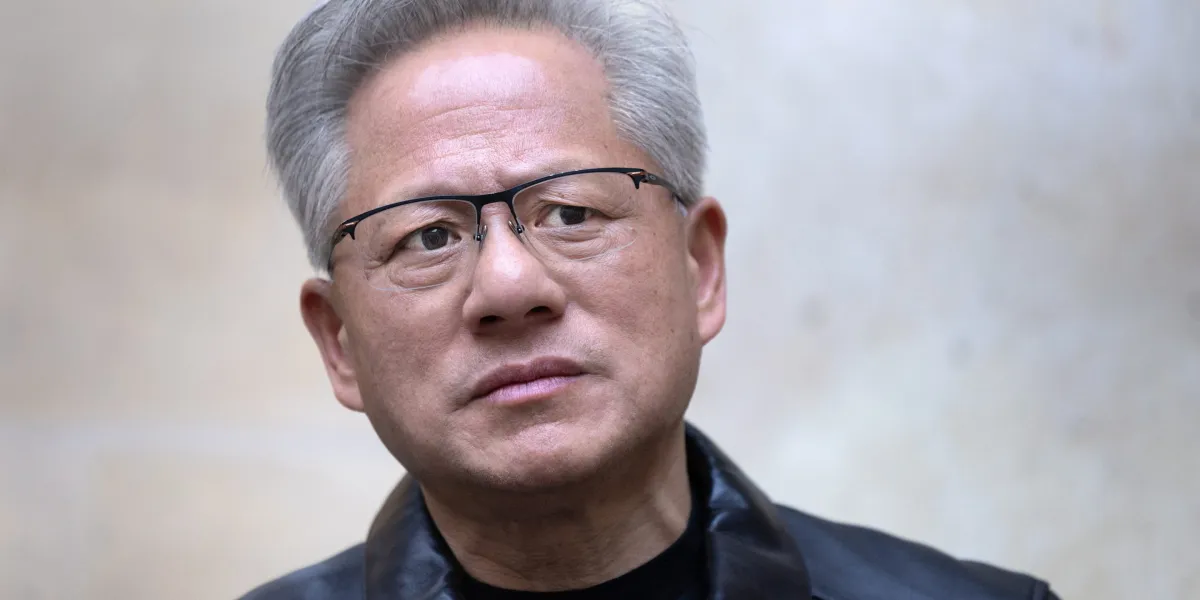
Nvidia probe will examine statements about Jensen Huang’s relationship with Megaspeed executive
Nvidia’s board said Sunday that it would launch an “independent investigation” into CEO Jensen Huang’s relationship with Megaspeed executive Alice Huang, who is suspected of being a Chinese spy. The two are not related.
The inquiry may focus not only on the relationship but also on statements made by Jensen Huang and Nvidia since reporters began asking questions about the ties between Megaspeed and Nvidia in 2025. That scope makes the review relevant to both corporate governance and the company’s public handling of questions about a business relationship tied to export-control scrutiny.
In October 2025, The New York Times reported that Jensen Huang and Alice Huang had been seen drinking together at an industry event in 2024. A company spokesperson said at the time that the meeting was routine: “When Jensen is available, [customers] may ask him to visit to provide updates on the market.”
In December 2025, Bloomberg reported that the U.S. government was investigating Megaspeed over whether it had illegally diverted Nvidia chips to China in violation of an export ban. Megaspeed denied that its relationship with Nvidia was improper, describing itself as “a cloud service permitted under the export control rules.”
In October 2026, Jensen Huang again addressed his relationship with Alice Huang in an on-the-record statement: “Our relationship, our interactions, have been related to Megaspeed, and it was all completely normal and not unusual.”
Nvidia told CNBC on October 29, 2026, that allegations that Megaspeed had evaded export controls were unfounded. “The diversion allegations against this regional cloud were thoroughly investigated and debunked last year,” a spokesperson said.
Jensen Huang has since acknowledged in an email to employees: “I was unfaithful to my wife.” His admission has raised potential national security concerns because of his frequent contact with President Trump. “While the Board has no reason to believe that either national security or Nvidia secrets were compromised, the board's inquiry will examine all available information,” Nvidia said.
Nvidia shares fell 4.24% in overnight trading. The company’s board statement and Jensen Huang’s email to staff were reported publicly. The Wall Street Journal also reported that Huang’s children are on his staff.
AI companies have $3.2 trillion in off-balance-sheet commitments
Technology stocks stabilized Friday, but the Nasdaq remains down 10.18% over the past 30 days. Some Wall Street analysts are concerned that further declines may follow.
“There are lingering issues, including leverage that's now as big as the Telecom cycle [in the dotcom bubble] that keep us cautious on the AI infra trade. We expect continued choppiness,” Wells Fargo’s Ohsung Kwon wrote in a note last week.
Credit ratings firm KBRA sought to estimate the scale of that leverage by examining commitments for data-center leases, chip purchases and other expenses made by major AI spenders that have not yet appeared on their balance sheets. Doug Colandrea and Andrew Giudici estimated that hyperscalers had approximately $3.2 trillion in off-balance-sheet commitments at the end of the second quarter.
Because these obligations are off the balance sheet, investors have less visibility into their quality. “This off-balance-sheet debt could hold financial risk that existing debt figures alone don't fully capture. Since these companies have committed a substantial amount of their future spending, there's less room for them to change course later on,” KBRA told Fortune in a statement.
Markets absorb Nvidia controversy
The S\u0026P 500 lost 4.3% from peak to trough last week before recovering somewhat Friday. Nasdaq 100 futures were up 0.2% before the New York open after briefly falling 1% on news of Nvidia’s investigation. U.S. futures rose as markets in Asia and Europe broadly advanced.
S\u0026P 500 futures were up 0.39% in morning trading, while the index gained 0.31% Friday. In Europe, the Stoxx 600 rose 0.64% in early trading and the U.K.’s FTSE 100 gained 0.57% before midday.
South Korea’s KOSPI fell 0.81%, while Japan’s Nikkei 225 rose 2.33%. India’s Nifty 50 gained 0.23%, and China’s CSI 300 rose 0.05%. Brent crude traded at $97 per barrel, and Bitcoin declined to $74,074.
“Despite the turbulence this week, the total market cap of the U.S. stock market is still up $5 trillion since the beginning of the year, see chart below,” Apollo Global Management’s Torsten Sløk said.
Strong jobs report supports December rate hike expectations
The U.S. added 165,000 nonfarm payroll jobs in October, according to Friday’s jobs report. The result was above expectations and increased expectations that the Federal Reserve will raise interest rates again in December. If the labor market does not require additional support, the Fed may focus more closely on inflation.
The CME FedWatch futures index priced in an 80% probability that the benchmark rate would rise to 4%, compared with roughly even odds before the jobs report. “The strong labor market certainly helps the case for a December Federal Reserve interest rate hike, expectations for which had slipped in recent days to make it close to a 50:50 call at one point,” ING’s James Knightley said in an email.
Samuel Tombs of Pantheon Macroeconomics said the Fed may not be deterred by stock-market volatility. His analysis showed that large stock-market selloffs can precede steep job losses, but “the 5% peak-to-date decline in the S\u0026P 500 is too small to suggest overall payrolls will decline,” Tombs said via email.
AI investment approaches dotcom-boom levels
The current surge in AI investment has exceeded comparable stages of the 1970s oil and 2010s shale booms, leaving only the 1990s technology cycle ahead of it, according to Liz Everett Krisberg and David Tinsley of the Bank of America Institute.
They said AI-related capital spending represents approximately 1.2% of U.S. GDP, compared with about 1.5% during the 1990s technology boom.
Other headlines
- Apple saves $2.7 billion in taxes by booking profits in Singapore — Financial Times
- Threats ranging from supermarket refrigerators to passenger flights test Europe’s defenses — CNBC
- Republicans consider Florida’s “alligator people” for 2028 — Axios
- Five takeaways from Trump’s “60 Minutes” interview — The Wall Street Journal
- Nvidia’s data-center strategy drives a race to reinvent electric transformers — Bloomberg
- Trump was “only kidding” when asking Dana White to be his press secretary — The New York Times
- Biden gives an update on cancer ahead of memoir release — New York Post
Canva restructuring affects 1,271 employees
Canva co-founder and CEO Melanie Perkins announced that a restructuring would affect 1,271 employees, or 22% of the Sydney-based design company’s workforce. Her message to staff, which she also shared on LinkedIn, drew attention because of the severance package offered to departing workers.
Employees will receive at least six months’ salary, including statutory entitlements, regardless of location. They will also receive 12 months of continued health-care coverage in countries where Canva already provides it.
Additional support includes career-transition services, one-on-one coaching, interview preparation and one year of LinkedIn Premium. Departing employees may keep their company MacBooks, and Canva is removing the one-year vesting cliff for employees who joined during the past year.
Eligible employees may also apply for $10,000 grants to pursue an idea, start a business or launch a project. Canva will not take equity or ownership in those projects.

