NVIDIA Alpamayo 2 Super: Open Reasoning Model for Robotaxis and Autonomous Vehicles Now Available Commercially
Key Takeaways
- •NVIDIA Alpamayo 2 Super is available for commercial deployment under the Linux Foundation's OpenMDW-1.1 license, which permits fine-tuning, derivative model creation, and commercial redistribution without additional permissions.
- •The model ranks first on the LingoQA autonomous driving reasoning benchmark among nearly 40 evaluated models, outperforming GPT-4o by 23.2 points and Gemini 2.5 Pro by 15.1 points in NVIDIA testing.
- •Alpamayo 2 Super produces five outputs per driving situation including trajectories, chain-of-causation reasoning traces, and visual question answering with 2D grounding, enabling developers to inspect and validate AV decisions.
- •The Alpamayo model family has surpassed 500,000 downloads on Hugging Face, making it the most widely adopted open reasoning model family for autonomous driving on the platform.
- •Built on NVIDIA Cosmos 3 Super Reasoner, Alpamayo 2 Super is three times the scale of the earlier 10-billion-parameter Alpamayo 1.5 and Alpamayo 1 models and reasons over full 360-degree camera coverage.
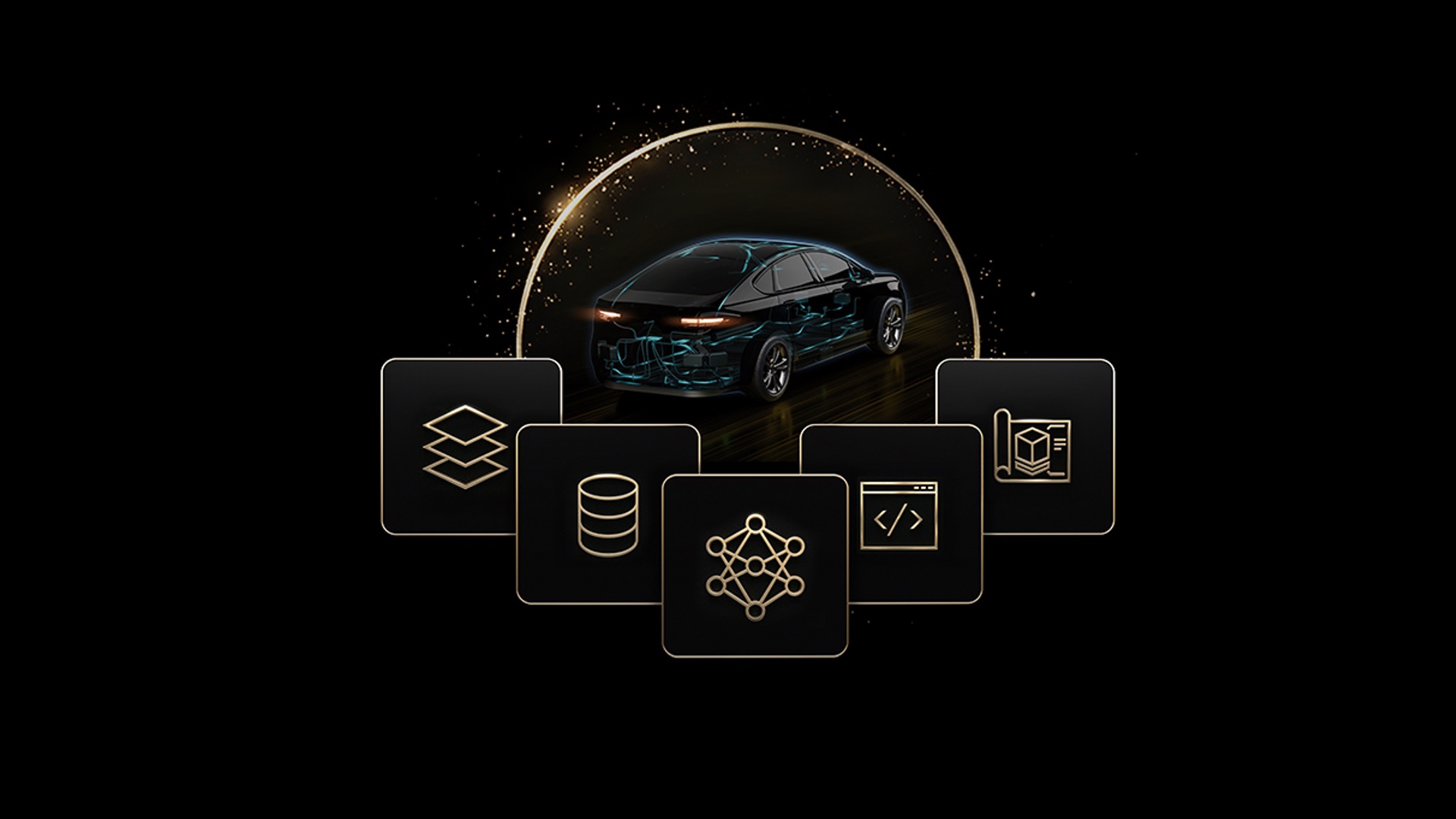
For robotaxis and other autonomous vehicles (AVs), the greatest challenges are not the routine scenarios encountered every day. They are the rare, complex situations that are inherently difficult to anticipate and train for.
Handling these long-tail events requires far more than object detection and motion prediction. AVs must comprehend the situation, reason about cause and effect, select the appropriate action, and translate that decision into a safe, comfortable path — all in real time, and in a manner that developers can inspect, validate, and trust. That combination matters because AV programs are judged not only on whether a vehicle can move, but on whether its decisions can be traced, tested, and improved across large fleets and changing road conditions.
NVIDIA Alpamayo 2 Super, available now for commercial use, belongs to the Alpamayo family — the most widely adopted open reasoning models for autonomous driving on Hugging Face. The model supports a broad range of AV-relevant capabilities within a single foundation model.
Built on NVIDIA Cosmos 3 Super Reasoner and post-trained with reinforcement learning, Alpamayo 2 Super advances the AV ecosystem on two fronts: open commercial licensing and leading multitask capabilities for autonomous driving. It is part of NVIDIA's expanding collection of open models, datasets, and tools for autonomous driving, broadening access, strengthening competition, giving developers greater control, and supporting safer, more transparent AV deployment.
Open Licensing for Production AVs
Alpamayo 2 Super is available on Hugging Face under OpenMDW-1.1, the Linux Foundation's permissive license for open AI model distributions. The license covers fine-tuning, derivative models, and commercial redistribution, enabling AV developers, automakers, truckmakers, and suppliers to adapt Alpamayo to their own data, driving policies, and deployment strategies.
This openness allows AV researchers and companies to retain control of their own data and infrastructure, as well as ownership of the value they create through specialized models and accumulated expertise. Such control is essential for workflows involving proprietary fleets and safety-critical systems.
Earlier Alpamayo releases were initially introduced for research and development. The OpenMDW license is now being applied across the entire Alpamayo model family, allowing developers to deploy any of the models commercially without requiring additional permissions. This establishes a direct path from adaptation to deployment.
Open weights make that path economically viable. Teams can build on advanced reasoning without re-training every foundation capability from scratch or paying frontier-model costs for each task, matching the right model to the right job at the appropriate cost.
Alpamayo 2 Super enables frontier-scale reasoning in cloud-based development workflows, where developers can generate high-quality reasoning traces, synthetic training data, and teacher outputs for model distillation. Within the Alpamayo model family, Alpamayo 2 Super delivers the highest reasoning and driving performance for multimodal autonomous driving development, while Alpamayo 1.5 and Alpamayo 1 provide more cost-efficient options for cloud-based development and model distillation.
The resulting distilled models can then be optimized for efficient, real-time inference in production vehicles. Together, the Alpamayo model family provides a cloud-to-car workflow that combines frontier-scale reasoning with scalable deployment across commercial AV fleets. For AV programs, that translates to frontier-scale reasoning in the cloud and efficient, specialized models in the vehicle — a more sustainable approach to scaling safe autonomy into commercial fleets.
Benchmark-Leading Reasoning at Frontier Scale
Alpamayo 2 Super ranks first on LingoQA, an autonomous driving reasoning benchmark, among nearly 40 models evaluated. In NVIDIA testing using the Lingo-Judge metric, it outperformed Qwen2.5-VL 72B by 17.0 points, Gemini 2.5 Pro by 15.1 points, and GPT-4o by 23.2 points, demonstrating state-of-the-art reasoning for driving-centric scenarios. Alpamayo 2 Super also ranks first across all autonomous driving benchmarks evaluated by NVIDIA, underscoring its leading performance across a broad range of AV capabilities.
Alpamayo 2 Super offers 3x the scale of the 10-billion-parameter NVIDIA Alpamayo 1.5 and Alpamayo 1 models. The added capacity helps the model better generalize reasoning from sparse examples — a critical capability for the rare, multi-agent interactions where conventional systems frequently struggle.
The model reasons over full-surround camera coverage, fusing views from the vehicle's front, sides, and rear. This 360-degree context enables a richer understanding of lane changes, merges, unprotected turns, and complex intersections — the situations where risks most commonly arise.
A Multitask Foundation Model for Robotaxis and Autonomous Driving
For each driving situation, Alpamayo 2 Super can produce five tightly coupled outputs:
- A trajectory describing the vehicle's planned path.
- A chain-of-causation (CoC) trace that explains the reasoning behind the decision.
- A meta-action (e.g., yield, lane change, stop) that captures the model's intent.
- Reasoning auto-labels that generate CoC annotations for training and validation data.
- Visual question answering responses with 2D visual grounding that link the model's answers to specific regions in camera images.
Together, these outputs offer insight into the model's decision-making process. Developers can connect what the model observed to the action it selected, making decisions easier to understand, critique, and validate.
CoC traces integrate with NVIDIA Halos safety-validation workflows and support AI safety aligned with ISO/PAS 8800 requirements, providing a stronger foundation for AV safety engineering.
Alpamayo 2 Super can also be deployed as an autolabeler to generate CoC labels and perform visual question answering with 2D grounding on proprietary fleet data. By linking its reasoning to specific regions in camera images, the model can transform raw driving clips into richer training data, compressing annotation cycles from months to days.
Beyond planning and auto-labeling, Alpamayo 2 Super supports scene understanding, model critiquing, and knowledge distillation. These multitask capabilities enable developers to use a single foundation model across more of the development stack, simplifying tooling and accelerating iteration.
An Open Ecosystem for Reasoning-Based AVs
Alpamayo 2 Super is part of a broader family of open models, frameworks, and datasets for AV development. Other tools in the family include:
- NVIDIA AlpaSim, which provides closed-loop simulation.
- NVIDIA AlpaGym, which enables high-throughput reinforcement learning.
- NVIDIA Physical AI Open Datasets, which supply data for training and testing.
- Open training recipes and an autolabeling pipeline to accelerate model development, training, and validation.
Alpamayo has already surpassed 500,000 downloads on Hugging Face, reinforcing its position as the most-adopted open reasoning model family for autonomous driving on the platform.
NVIDIA Alpamayo 2 Super is available on Hugging Face for developers to explore the model, evaluate its reasoning capabilities, and begin building the next generation of robotaxis and autonomous vehicles.

