Global Nuclear Power Hits Record High in 2025 as China Drives All Net Growth
Key Takeaways
- •Global nuclear generation set a new record of 2,845 terawatt-hours in 2025, exceeding the previous 2006 peak by approximately 1.5%.
- •China contributed more than the entire net global increase, meaning worldwide output excluding China has declined over the past decade.
- •The United States remained the largest nuclear producer at 826 terawatt-hours, but its output has stayed largely unchanged since 2015.
- •Nuclear energy's share of total global energy supply edged down from 5.19% to 5.17%, as overall energy demand grew faster than nuclear generation.
- •Europe's nuclear output contracted by nearly 22% over the past decade, while Asia-Pacific more than doubled its generation to nearly 845 terawatt-hours.
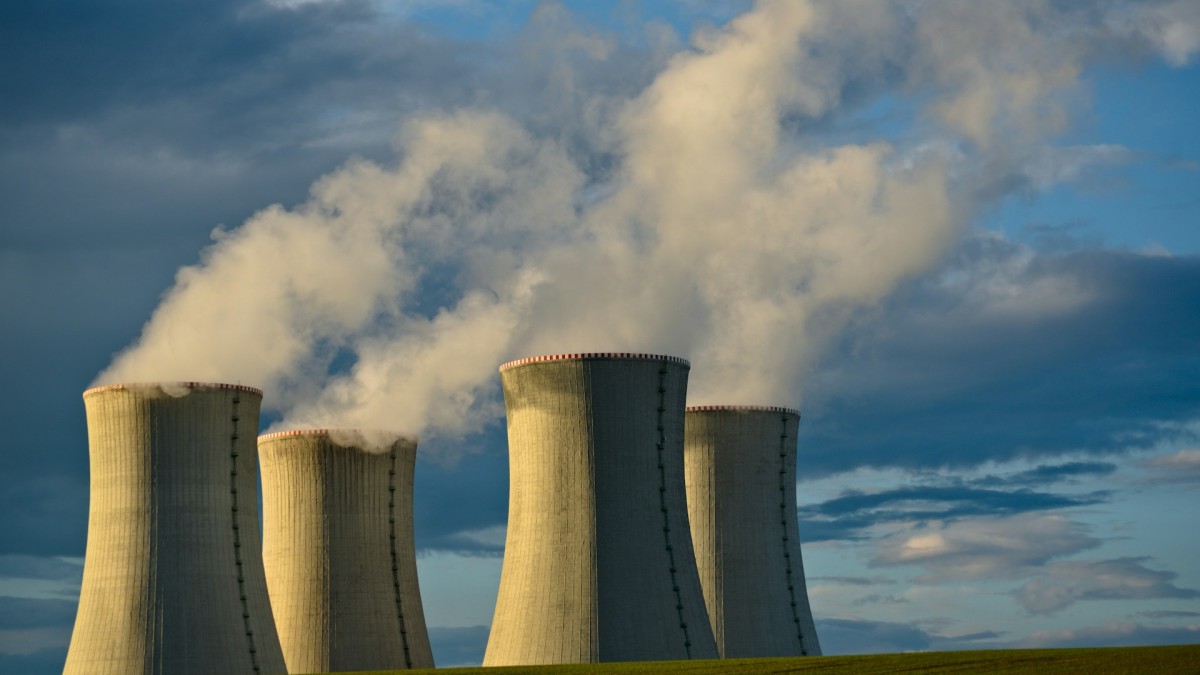
Global nuclear power generation climbed to an all-time high in 2025, with China accounting for the entirety of net worldwide growth, according to the latest Statistical Review of World Energy. Nuclear plants produced 2,845 terawatt-hours globally last year, an increase of 30 terawatt-hours, or 1.3%, over 2024. China alone boosted its output by more than 34 terawatt-hours, meaning that without China's contribution, global nuclear generation would have contracted.
These figures offer a clearer picture of the industry than broad assertions of a worldwide nuclear renaissance. While output is indeed rising, expansion remains heavily concentrated in a handful of countries. The United States continues to operate the world's largest nuclear fleet, with China rapidly narrowing the lead. Japan is steadily restoring generation capacity, but much of Europe still trails the levels achieved a decade earlier.
A Record Nearly Two Decades in the Making
The new milestone requires context. Global nuclear generation previously peaked at 2,803 terawatt-hours in 2006, meaning the 2025 total exceeded that mark by only about 1.5% despite the intervening 19 years. Nuclear power has finally surpassed its prior record, though the period has hardly been one of rapid worldwide expansion.
Over the more recent decade, output rose from 2,576 terawatt-hours in 2015 to 2,845 terawatt-hours in 2025 — growth of 10.5%, or roughly 1% per year. China single-handedly accounted for more than the entire global increase, lifting its nuclear generation from 171 terawatt-hours in 2015 to 485 terawatt-hours in 2025. Worldwide output grew by approximately 270 terawatt-hours during the same span, while China alone contributed nearly 314 terawatt-hours.
Excluding China from the calculations, the rest of the world produced roughly 44 terawatt-hours less nuclear electricity in 2025 than it did a decade prior. This does not diminish the global record, but it underscores how reliant the headline figure has become on growth from a single nation.
The United States Maintains Its Lead
The United States generated 826 terawatt-hours of nuclear electricity in 2025, representing 29% of the worldwide total — more than any other country and nearly 70% greater than China's output. China ranked second with 485 terawatt-hours, or 17.1% of global generation, followed by France at 390 terawatt-hours, or 13.7%.
Russia produced 219 terawatt-hours, South Korea generated 185 terawatt-hours, and Japan output 94 terawatt-hours. Canada came next at nearly 85 terawatt-hours. Together, these nations account for the overwhelming majority of global nuclear production, reflecting the substantial capital investment and extended development timelines that effectively confine nuclear power to a relatively small group of countries.
The U.S. fleet remains highly productive, but output has remained largely static. American nuclear generation stood at 839 terawatt-hours in 2015, marginally above the 2025 figure. Over the same decade, China nearly tripled its nuclear output at an average annual growth rate approaching 11%.
The United States remains comfortably in front, yet the gap continues to close. Should recent growth rates for both nations persist, China is projected to overtake the U.S. as the world's leading nuclear power producer within approximately five years.
France and Japan Contribute to Gains
While China drove the majority of the 2025 increase, several other nations also posted gains. French nuclear generation rose by 9.6 terawatt-hours to reach 390 terawatt-hours. France has rebounded from the unusually low output recorded earlier in the decade, though generation still trails its 2015 level by about 47 terawatt-hours.
Japan added 9.2 terawatt-hours, an 11.1% increase that brought its total to 94 terawatt-hours. Japanese output has recovered substantially from the depths that followed the Fukushima accident and the resulting shutdown of the country's reactor fleet, but it remains well below pre-Fukushima levels. Japan produced approximately 292 terawatt-hours of nuclear electricity in 2010 — more than three times its 2025 total. The pace of Japan's further recovery is tied to the number of reactors passing restart approvals under the safety framework established after Fukushima, meaning the gap between current output and historical levels is likely to close only gradually.
The United States added about 3.1 terawatt-hours last year, while Russia gained 2.9 terawatt-hours. Smaller increases were recorded in South Africa, the Czech Republic, Belarus, Ukraine, Slovakia, and Pakistan. Those advances were partially offset by declines elsewhere: Taiwan's nuclear output dropped by nearly 9 terawatt-hours, Belgium lost 7.5 terawatt-hours, and the United Kingdom, Switzerland, South Korea, and Sweden also registered notable decreases.
Nuclear Growth Shifts Toward Asia
Regional data illustrate how decisively the center of nuclear expansion has migrated. Asia-Pacific nuclear generation climbed from approximately 420 terawatt-hours in 2015 to nearly 845 terawatt-hours in 2025. The region more than doubled its output and now accounts for almost 30% of global nuclear electricity.
North America remains slightly larger, generating 921 terawatt-hours last year, but that figure is down from 952 terawatt-hours in 2015. Europe experienced a steeper contraction, with nuclear generation falling from 968 terawatt-hours in 2015 to 759 terawatt-hours in 2025 — a decline of nearly 22%.
The divergence between developed and developing economies is equally pronounced. Nuclear generation across OECD nations fell by approximately 96 terawatt-hours over the decade, while non-OECD generation surged by nearly 366 terawatt-hours. OECD countries still represent roughly two-thirds of worldwide nuclear production thanks to their large existing fleets, but they are no longer the source of growth.
Record Output, but No Advance in Energy Share
The record appears less remarkable when nuclear power is measured against the total global energy system. Nuclear energy supplied 31.0 exajoules in 2025, up marginally from 30.7 exajoules the previous year. Total global energy supply increased at a faster pace, rising from 592.2 exajoules to 600.3 exajoules.
Consequently, nuclear's share of global energy supply slipped slightly from 5.19% to 5.17%. The industry generated more electricity than ever before, yet failed to make headway against oil, natural gas, coal, hydropower, and renewables. With global energy demand continuing to expand, nuclear's flat share means the incremental growth in energy supply is being absorbed by other sources, limiting the technology's contribution to shifts in the overall energy mix.
National figures vary considerably. Nuclear power supplied roughly 47% of France's total energy in 2025. Its share was approximately 33% in Finland, 31% in Sweden, 25% in Ukraine, and 23% in the Czech Republic. In the United States, nuclear accounted for about 9.6% of total energy supply.
In China, despite the country's rapid buildout and status as the world's second-largest nuclear generator, nuclear energy represented only about 3.3% of total supply. China's nuclear industry is already large enough to set the direction of global totals, yet it still constitutes a comparatively small component of the country's vast energy system — leaving substantial room for further expansion if reactor construction continues at its recent pace.
The Big Picture
The 2025 record confirms that nuclear power is once again on an upward trajectory, though it does not yet amount to a broad-based global surge. The United States still produces more nuclear electricity than any other nation, but its output has been essentially flat for a decade. France and Japan posted meaningful gains last year, yet European production remains far below 2015 levels. Nuclear's share of the global energy mix is likewise virtually unchanged.
China stands as the clear exception. Over the past decade, it added more nuclear generation capacity than the world's total net increase, and its 2025 gain surpassed the global uptick. For now, the nuclear record is less a testament to a worldwide construction boom than evidence of China's rapid expansion at a time when much of the developed world continues to depend on reactors built years or decades ago.
By Robert Rapier
