NSA Outage Caps Week of US Tech Failures as Lawmakers Demand Answers
Key Takeaways
- •The NSA's classified internal network went down, and the agency attributed the failure to a glitch connected to scheduled maintenance.
- •The outage followed a week of failures including a Chase banking bug, hackers inserting malicious code into 178 organizations' websites, a nationwide FAA departure freeze, and a global Microsoft email outage affecting Apple, Wells Fargo and Schwab.
- •President Trump responded to the cascading outages by calling them 'life,' while Senator Josh Hawley said random coincidence would be the 'greatest coincidence in the history of the world' and questioned the router explanation for the air traffic meltdown.
- •According to the essay, DOGE-driven cuts removed roughly a third of CISA's employees, the agency's Red Team was dissolved, and Republicans have proposed a further $707 million cut to CISA's budget.
- •Senator Hawley and House Democratic Leader Hakeem Jeffries are demanding answers, with the author calling for immediate public hearings and pointing to NSA disclosure and the CISA budget cut's progress as markers to watch.
The National Security Agency's (NSA) internal, highly classified network — the system its employees use to pass secrets to one another — went down yesterday, with the agency attributing the outage to a glitch tied to scheduled maintenance.
The failure came one day after a "software bug" locked customers of banking giant Chase out of their money while hackers slipped malicious code into the websites of 178 major organizations. It came four days after the Federal Aviation Administration (FAA) froze every airline departure in the United States, and less than a week after Microsoft's entire email system went dark worldwide. Apple, Wells Fargo and Schwab have been hit as well. Taken together, the week's failures touched systems most Americans rarely think about until they stop working — classified defense communications, consumer banking, commercial aviation, and the email platforms businesses run on — a measure of how much of daily life now depends on software that can fail.
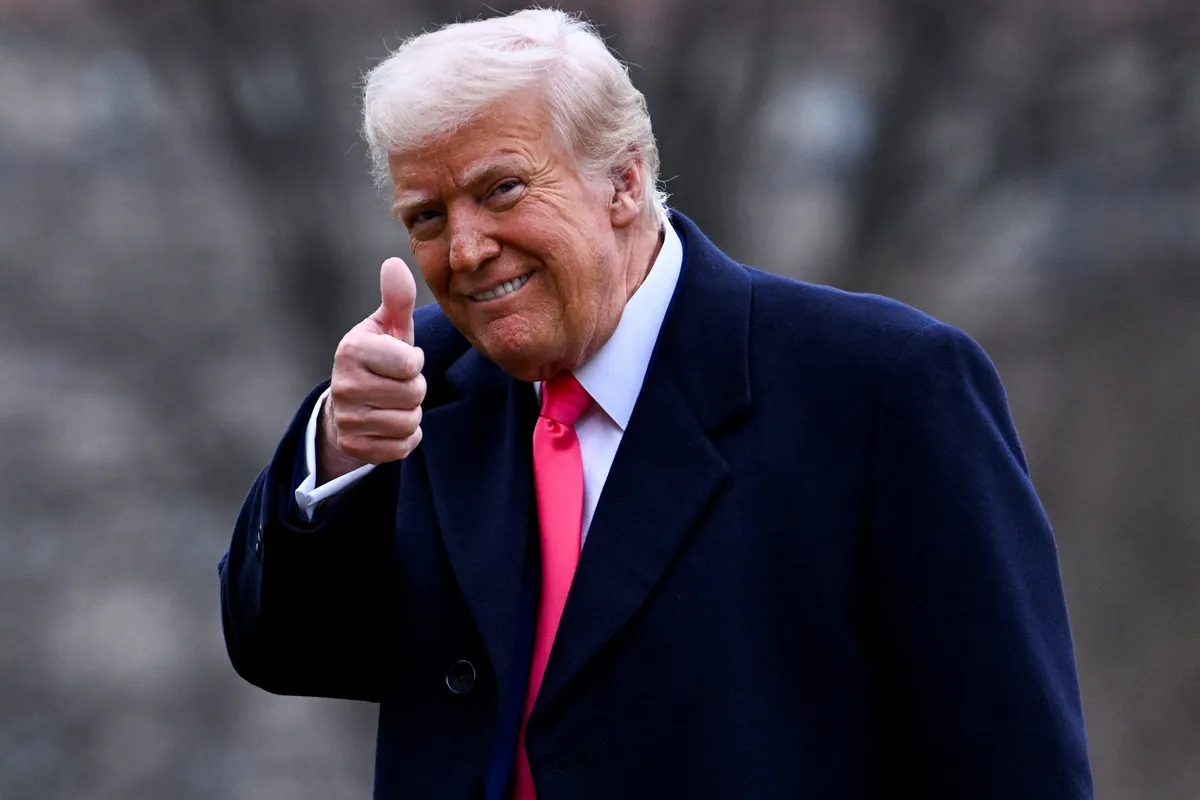
Asked about the cascading outages while visiting Manila, President Donald Trump shrugged. "It's life," he said.
Republican Senator Josh Hawley is unwilling to chalk the cluster up to chance. If these events really are random, he told reporters, it would be "the greatest coincidence in the history of the world." A misbehaving router taking down the entire nation's air traffic system, he added, is "a little hard to believe."
The remarks amount to a serious Republican senator openly saying that he no longer trusts or believes the explanations coming from the president's own cabinet and senior officials. In the author's view, something has gone badly wrong with America's relationship to the truth.
Echoes of Radio Moscow
The author writes from personal experience with state disinformation. At age 13, he earned a general-class Amateur Radio license and spent nights in the early 1960s listening on a Hallicrafters S-40 shortwave receiver to Radio Moscow, fascinated by the way it spun the news and quite often simply lied about world events.
Two decades later, living near the East/West German border, he practiced his German by listening to broadcasts from the communist side — and heard that country doing the same to its own citizens, often quoting the two major Soviet newspapers, Pravda ("Truth") and Izvestia ("News"). A young KGB officer named Vladimir Putin was stationed in Dresden at the time, working on propaganda with the East German secret police, the Stasi.
One joke the author says he heard more than once while living there: "There's no Pravda in Izvestia, and no Izvestia in Pravda."
People in Russia and East Germany, he recounts, simply assumed their government was constantly lying to them. They lived on rumors — often true ones — rather than trusting radio and television channels or government officials.
The author argues that this dynamic has now taken hold in the United States, and that it is a dangerous sign for the future of American democracy — a system of government that, as Thomas Jefferson famously pointed out, requires a well- and truthfully-informed populace to function correctly.
A pattern of disputed statements
The essay lays out a series of examples to support that claim:
-
The Washington Post documented 30,573 lies during Trump's first administration. Trump now lies daily to reporters, the author writes, and lying has become "normal" — even required — among people in his second administration. Not one of the federal judges or senior officials Trump has sent to the Senate for confirmation has been willing to say that Joe Biden won the 2020 election.
-
After ICE killed Alex Pretti, a 37-year-old intensive care nurse at a VA hospital — a death the essay flatly calls a murder — top administration officials called him a "domestic terrorist," and Vice President Vance called him an "assassin." None of those characterizations, the author notes, has been retracted.
-
Pentagon officials, including the one the author dubs "Pretty Pete," have been consistently lying to the public and hiding information, according to reporting in The New York Times, about the damage and deaths that Iranian strikes — guided by Russian intelligence and using Chinese technology — inflicted on American troops and facilities. The Intercept found that the official casualty count runs well short of the more than 900 service members killed or wounded.
The same officials, the author observes, are now attributing the air traffic meltdown to a router, the banking failures to accidents, and Microsoft's email outage to a bug. They may be telling the truth — artificial intelligence is now finding software vulnerabilities at lightning speed — but the administration's record of untruthfulness gives many people pause.
Three "fact-based chapters"
A lifelong reader of spy novels who admits to having written a few terrible ones himself, the author says the past week or so practically plots itself. If he were writing one now, he would begin with three fact-based chapters:
First, Trump and Musk, through DOGE, have driven out roughly a third of the employees of the Cybersecurity and Infrastructure Security Agency (CISA), created by Congress in 2018 to coordinate the federal government's civilian cyber defense, whose job is to be "on the front lines of our cyber defense." Trump totally dissolved CISA's "Red Team" — the elite hackers hired to find America's weaknesses before its enemies did — and Republicans, following the dictates of Project 2025, now want to cut another $707 million from what remains of the agency's budget.
Second, the story would open in Shenzhen, with Trump sitting down alongside Putin and Xi, described in the essay as two of the most serious, competent and ruthless dictators in modern history. Just two years ago, US intelligence agencies warned that Chinese government hackers had burrowed into American communications, energy, transportation and water systems so they could disrupt them in a crisis. As far as anybody can tell, Trump simply ignored the warnings.
Third, the story would pick up what the author calls the oldest plot in the authoritarian playbook — one he says he warned about 23 years ago in his article "When Democracy Failed," arguing that Bush might use 9/11 to lie the country into wars and begin building an authoritarian police state through the PATRIOT Act, in a fashion similar to Hitler's response to the burning of the Reichstag building. A leader in political trouble, he writes, weakens the watchmen, waits for a crisis, and then uses it to assume "emergency" powers that never go away.
That pattern, the essay contends, is now visible in National Security Presidential Memorandum 7 (NSPM-7), which has already been used to sentence protestors to decades in prison and is organizing task forces to "investigate" groups, nonprofits, individuals and writers the administration deems "anti-capitalist, anti-Christian, and anti-American."
A darker variation on the novel, the author suggests, could have Putin and Xi telling Trump that the past week was merely a "little demonstration" of what they can do to America — "just a beginning" — and ordering him to let them take Ukraine and Taiwan, with the rest of Europe and Asia soon to follow. The United States would get to keep Venezuela, per the deal Putin offered Trump a few years ago in exchange for Ukraine, and the Trump family, like Putin, could continue to make billions every few months. Otherwise, the warning would go, it will not stop at a four-hour air traffic shutdown or refrigerators in France cooking food: every nuclear power plant in America could become a dirty bomb.
Sunlight as the cure
The remedy for rumor and paranoia — if that is what this is — has always been sunlight, the author argues. Both Senator Hawley and House Democratic Leader Hakeem Jeffries are demanding answers, and the hearings, he writes, should be both immediate and public. For readers, the markers to watch are concrete: whether those hearings are actually convened, whether the NSA discloses anything more than the maintenance-glitch explanation, and whether the proposed $707 million cut to CISA advances.
CISA, in his view, needs to be rebuilt now.
The essay calls for an end to what it describes as two years of cowardly, corrupt deference by Republican legislators to Trump; Democrats, meanwhile, must show resolve and open serious, hard investigations into the corruption, crimes and double-dealing — including whatever is going on with Trump and Putin, and between Lutnick and China — among other matters.
A free people, the author concludes, can survive bad routers — but not "a government nobody believes and openly betrays its own founding principles."

