Novogratz Urges AI Investment Despite Calling Sector the Biggest Bubble of His Lifetime
Key Takeaways
- •Michael Novogratz, CEO of Galaxy Digital, described the AI boom as the largest bubble of his lifetime while still urging investors to maintain their exposure to the sector.
- •Speaking at the Greenwich Economic Forum in Connecticut, Novogratz argued that AI-linked stocks remain inexpensive relative to earnings and that the rally has further to run.
- •AI-related share gains helped the S&P 500 hit a record high on Tuesday, while Nvidia's market capitalization approached $6 trillion, a level no company has yet reached, and major technology firms are projected to spend more than $1 trillion on AI capital expenditure next year.
- •Ray Dalio of Bridgewater Associates said rising interest rates and investors' need to convert wealth into cash were pushing an AI bubble closer to bursting, while DBS chief investment officer Hou Wey Fook rejected the bubble label, citing Nvidia's earnings multiple near its lowest level since 2016 and projected 70% earnings growth next year.
- •Novogratz also claimed that competition between the United States and China would make it difficult for regulators and companies to slow AI development, even as developers themselves push for greater caution.
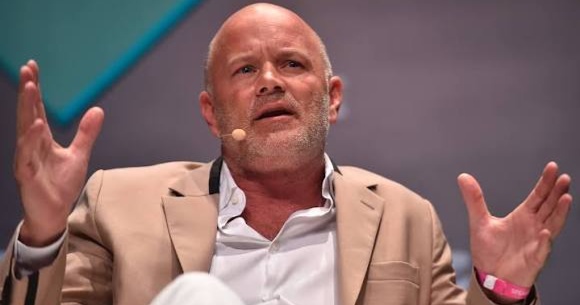
Galaxy Digital CEO Michael Novogratz urged investors to retain exposure to artificial intelligence even as he described the sector's speculative boom as the largest bubble of his lifetime, Bloomberg reported. The pairing — a bubble warning alongside a case for staying invested — underscores the tension running through assessments of the AI rally across the financial industry.
Speaking this week at the Greenwich Economic Forum, an annual investor conference held in Greenwich, Connecticut, Novogratz argued that the rally still had further to run. He said AI-linked stocks continued to appear inexpensive relative to earnings. Galaxy Digital is the digital-asset financial services firm founded by Novogratz in 2018.
The remarks landed during a landmark stretch for AI equities. Gains in AI-related shares helped the S&P 500, the benchmark index of large U.S. companies, reach a record high on Tuesday, while Nvidia, the leading designer of AI chips, saw its market capitalization approach $6 trillion, a level no company has yet reached. Bloomberg reported projections that major technology companies will spend more than $1 trillion on AI capital expenditure next year — long-term infrastructure spending on data centers and computing hardware that underpins the sector's buildout.
Not every prominent investor shares that view. Ray Dalio, founder of Bridgewater Associates, one of the world's largest hedge funds, offered a more cautious assessment at a conference in Singapore on Wednesday. Dalio said rising interest rates and investors' need to convert wealth into cash were bringing an AI bubble closer to bursting. In market terms, a bubble describes asset prices that detach from fundamentals such as earnings and cash flows — the pattern that preceded the dot-com bust of 2000 and the 2008 financial crisis.
Bank of America strategists suggested on Tuesday that equity derivatives could allow investors to participate in the rally while hedging against potential losses.
Hou Wey Fook, chief investment officer at Singapore-based bank DBS, disputed the bubble characterization, pointing to Nvidia's earnings multiple trading near its lowest level since 2016 and projected earnings growth of 70% next year. Taken together, the positions staked out by Novogratz, Dalio, Bank of America, and DBS show how the same market backdrop is producing sharply different conclusions across the industry.
Novogratz also argued that competition between the United States and China would make it difficult for regulators and companies to slow AI development, even as developers themselves seek more caution. Those earnings and spending projections now on record give the bubble debate its most concrete benchmarks to be measured against in the year ahead.

