North Korea Preparing Further Troop Deployments to Russia, No Sign Move Is Imminent, Seoul Says
Key Takeaways
- •South Korea's Defence Ministry assessed that North Korea is still preparing for an additional troop deployment to Russia but has detected no signs that such a deployment is imminent.
- •North Korea is estimated to have supplied Russia with more than 15 million artillery rounds, measured in 152-millimetre shell equivalents, along with weapons systems including short-range ballistic missiles.
- •A South Korean Defense Intelligence Agency assessment indicates North Korean missiles used in the Ukraine war may have improved in accuracy through battlefield data combined with Russian technical advice and component support.
- •The ministry said North Korea's Hwasong-12 missile, capable of reaching Guam, is being prepared for operational deployment, while its ICBM warhead re-entry technology remains unverified because all tests used lofted trajectories.
- •The roughly 11,000 North Korean troops deployed to Russia's Kursk region under a June 2024 mutual defence treaty suffered heavy casualties, and the scale of any further deployment could influence whether Seoul provides lethal military aid to Ukraine.
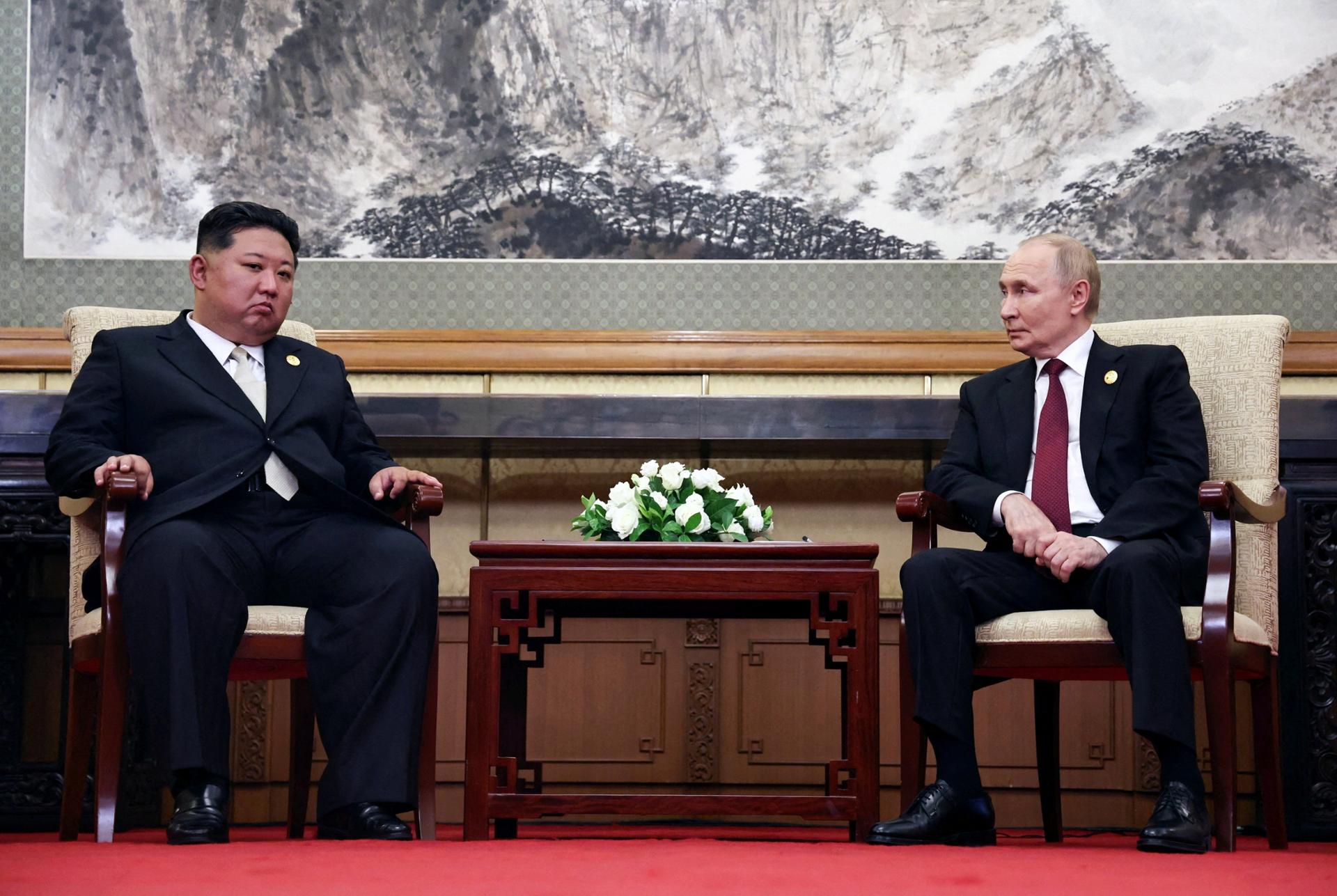
South Korea's Defence Ministry assessed that North Korea is continuing preparations for an additional troop deployment to Russia, but it has detected no signs that such a deployment is imminent, according to the office of South Korean lawmaker Yu Yong-weon.
The assessment came after Kim Yo-jong, the sister of North Korean leader Kim Jong-un, last week denied a claim by Ukrainian President Volodymyr Zelenskyy that Pyongyang planned to send up to 50,000 more troops to Russia to fight for its ally.
In a statement to Yu, the ministry said North Korea had continued to supply Russia with weapons systems, including short-range ballistic missiles, according to the lawmaker's office. North Korea is estimated to have supplied Russia with more than 15 million rounds of artillery ammunition, measured in 152-millimetre shell equivalents, the statement said. Such transfers are barred by United Nations Security Council resolutions, though enforcement monitoring has weakened since Russia in March 2024 vetoed renewing the U.N. panel that tracked sanctions on Pyongyang, prompting 11 states including South Korea, the United States and Japan to form their own monitoring team later that year.
Citing a South Korean Defense Intelligence Agency assessment, the lawmaker's office said North Korean missiles used in the war may have improved in accuracy through battlefield data, alongside Russian technical advice and component support.
The ministry also said the development of some North Korean ballistic missiles and multiple rocket launchers assessed as being intended for use in a conflict with South Korea was nearing completion, according to Yu's office.
The ministry further said that North Korea's Hwasong-12 intermediate-range ballistic missile, which is capable of reaching the U.S. territory of Guam, was being prepared for operational deployment.
North Korea's intercontinental ballistic missiles have the flight capability to reach the U.S. mainland, the ministry said. However, key technologies, including warhead re-entry, have not been verified because all test launches have been conducted on lofted trajectories.
North Korea and Russia have deepened military cooperation since Moscow's invasion of Ukraine in 2022. According to South Korean, Ukrainian and Western assessments, Pyongyang has been supplying artillery ammunition and missiles to Russia since 2023 and began deploying troops from 2024. A treaty signed by the two countries in June 2024, which includes a mutual defence clause, was cited by both sides as the basis for the first deployment of roughly 11,000 North Korean troops, sent to Russia's Kursk region after Ukrainian forces staged a cross-border incursion there in August 2024. South Korean intelligence estimated those forces suffered heavy casualties, with hundreds of North Korean troops reported killed. In April 2025, Russian military chief Valery Gerasimov publicly confirmed that North Korean troops had fought in the Kursk operation, and Kim Jong-un subsequently acknowledged and honoured the units.
Moscow and Pyongyang have previously denied arms transfers. South Korean officials have previously tied any decision to send lethal weapons directly to Ukraine to the scale of North Korea's involvement in the war, and Seoul's military assistance to Kyiv has so far been limited to non-lethal aid, leaving the scale of any further North Korean deployment a key variable in that debate.

