ACLU and Advocacy Groups Urge New Jersey Governor to Reject Voter ID After She Signals Support
Key Takeaways
- •Governor Mikie Sherrill stated during a News 12 appearance that she would sign a voter ID law if one reached her desk.
- •New Jersey currently does not require voters to present identification at the polls, unlike 36 states that have some form of voter ID requirement.
- •Multiple Republican-sponsored voter ID bills have been introduced since 2022 but have never received a committee hearing.
- •The governor's comments follow disclosures that approximately 6,600 people identifying as noncitizens were inadvertently registered to vote through the state Motor Vehicle Commission, with fewer than 400 actually casting ballots.
- •Seven advocacy groups, including the ACLU of New Jersey and the League of Women Voters, sent a letter urging Sherrill to reject any voter ID legislation.
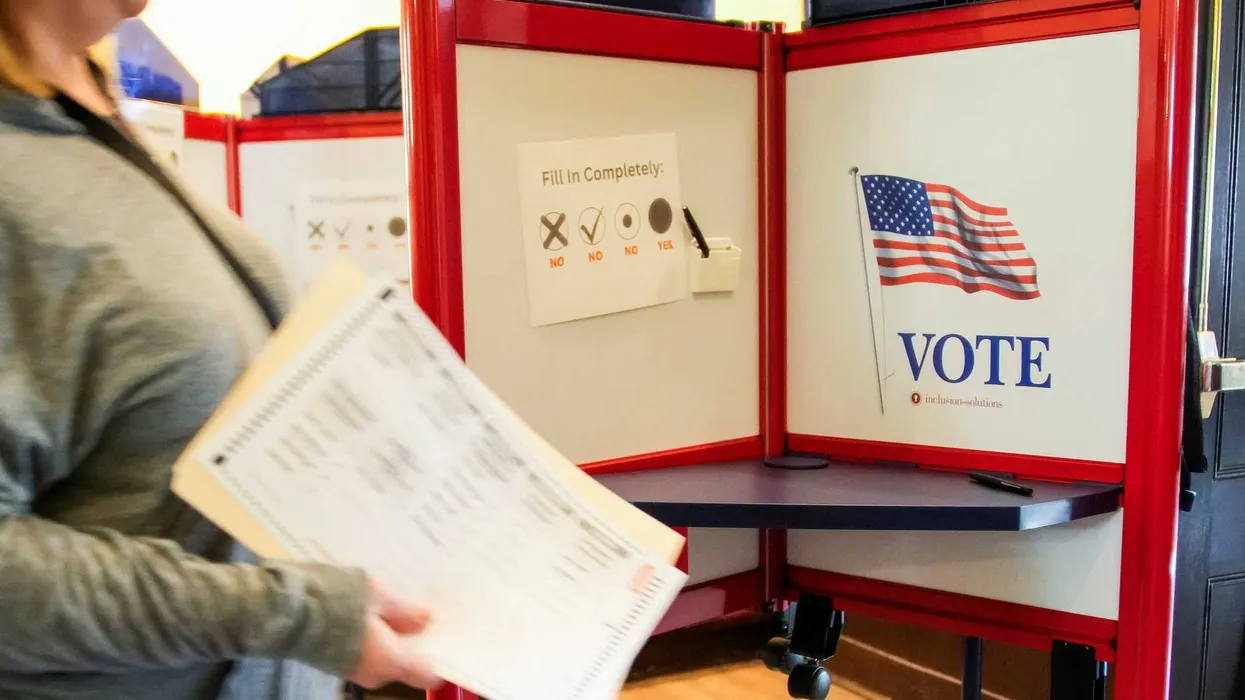
Republican lawmakers in New Jersey are expressing optimism that Governor Mikie Sherrill's recent remarks endorsing voter ID legislation could revive long-stalled bills when the Legislature reconvenes in Trenton this fall.
"I absolutely think this should be one of the top priorities when we come back into session," said Sen. Michael Testa (R-Cumberland). "There absolutely needs to be a discussion, and the people of New Jersey deserve that discussion to be had."
Sherrill, a Democrat, stated during a News 12 appearance last week that she would sign a voter ID law if one reached her desk.
"Certainly if that was the law passed here, I would support that," she said in response to a viewer's question. "I don't have a problem with voter ID."
New Jersey currently does not require voters to present identification at the polls under existing state law, placing it among the minority of states without such a requirement.
Her comments follow her disclosure that thousands of noncitizens were inadvertently registered to vote through the state Motor Vehicle Commission, with fewer than 400 of them actually casting ballots. The revelation prompted renewed allegations of voter fraud from Republicans in New Jersey and across the country, while the Trump administration requested information about the affected voters. Sherrill has declined to release that data, saying the state is conducting an independent investigation. (New Jersey Monitor)
Sen. Parker Space (R-Sussex) is the sponsor of S1733, a bill that would require voters to present identification at the polls. Acceptable forms include a driver's license, a Real ID, or a U.S. passport. Voters lacking those documents could instead present a utility bill in their name, a mortgage or rental statement, or two pieces of mail from a government agency or utility company. Anyone unable to produce any of these would be subject to a formal challenge.
The bill has been introduced three times since 2022 but has never received a committee hearing. Space said he was encouraged by the governor's remarks and hopeful his legislation might finally advance.
"Hopefully she stands by her word and we can get the Legislature on board," he said, noting that the issue has not historically been a priority for Democratic legislative leadership, which controls which bills move forward. Democrats hold majorities in both chambers of the Legislature, meaning any voter ID bill would need bipartisan support or a shift in leadership's posture to reach a floor vote.
Assemblyman Gerry Scharfenberger (R-Monmouth) has carried companion legislation in the lower chamber since 2022. He said he intentionally included multiple ID options beyond photo identification in hopes of drawing Democratic support, though he acknowledged that strategy has not yielded results.
The voter registration controversy, Scharfenberger said, signals that the "walls are closing in, as far as the Democrats being able to avoid this issue."
"There's no way they can avoid addressing this. If I could be a little bit of a forecaster here, I think the more information they find out about the motor vehicle issue, the more those numbers are going to grow," he said. "It's become too much with the public psyche, and I think we're going to have to address it with solid legislation, and not just token tweaks here or there."
Testa, a co-sponsor of S68, said he was "pretty shocked" but "pleasantly surprised" by Sherrill's stance. His bill would require voters to present one of four forms of photo ID: a driver's license, a Real ID, an identification-only card issued by the Motor Vehicle Commission, or a U.S. passport. He argued that limiting the acceptable forms to these four makes it easier to train poll workers on validation.
"We've done everything in this state to be able to allow individuals to vote by mail, to expand the time period for vote by mail, to give people more locations to go vote — and I don't necessarily have a major problem with any of these modalities for people to vote — but if you're going to vote on Election Day, you should have a photo ID," Testa said.
A spokesman for Senate President Nicholas Scutari (D-Union) did not respond to a request for comment. A spokesperson for Assembly Speaker Craig Coughlin (D-Middlesex) declined to comment.
According to the National Conference of State Legislatures, 36 states have laws requiring voters to present some form of identification at the polls, with eight states strictly requiring photo ID.
Voting rights organizations counter that decades of research show certain communities are less likely to possess photo ID. Liza Weisberg, supervising attorney at the ACLU of New Jersey, said individuals experiencing homelessness, young voters, and communities of color are the "most likely to face disenfranchisement."
She characterized Sherrill's voter ID comments as a "moment of concern."
Seven advocacy groups — including the ACLU, the New Jersey Institute for Social Justice, and the League of Women Voters — sent Sherrill a letter on Friday urging her to reject any voter ID legislation. They pointed out that state law already requires individuals to provide a driver's license number or Social Security number when registering to vote.
Weisberg argued that the recent registration controversy does not justify implementing voter ID requirements. She noted that the noncitizens in question represent a "small fraction" of the state's electorate, with an even smaller number actually casting ballots. (New Jersey Monitor)
Sherrill initially stated that approximately 6,600 people who identified themselves as noncitizens at the Motor Vehicle Commission had been added to the voter rolls. She later said about 2,000 of them may in fact be citizens. New Jersey has approximately 6.7 million registered voters.
"I really hope that there is not an effort to continue using this event to justify voter suppression efforts that really don't have anything to do with it," Weisberg said.
Republican lawmakers dismissed concerns that voter ID laws disproportionately affect low-income, elderly, minority, and young voters, noting that photo ID is already required for many everyday activities such as renting a car or applying for food stamps.
Testa called the disenfranchisement argument "very, very pompous," saying it implies voters could be "ill-equipped or too stupid" to obtain a photo ID. Scharfenberger called it "the most racist position I've ever heard," and Space said such arguments "pander to the far left and liberal media."

