NIN verification glitch blocks Nigerians from applying to National Skilling Project
Key Takeaways
- •Applicants must complete NIN verification with a phone number before they can continue the application process or receive an OTP.
- •Technext reported that three separate test attempts with different NINs each returned an “unable to verify NIN” message.
- •The National Skilling Project is a free federal programme delivered with Coursera and is designed to improve digital and professional skills.
- •The portal says the programme will train 36,000 Nigerians across more than 10 skill areas in all 36 states.
- •Social media users have urged the government to fix the verification problem quickly and consider extending the application deadline.
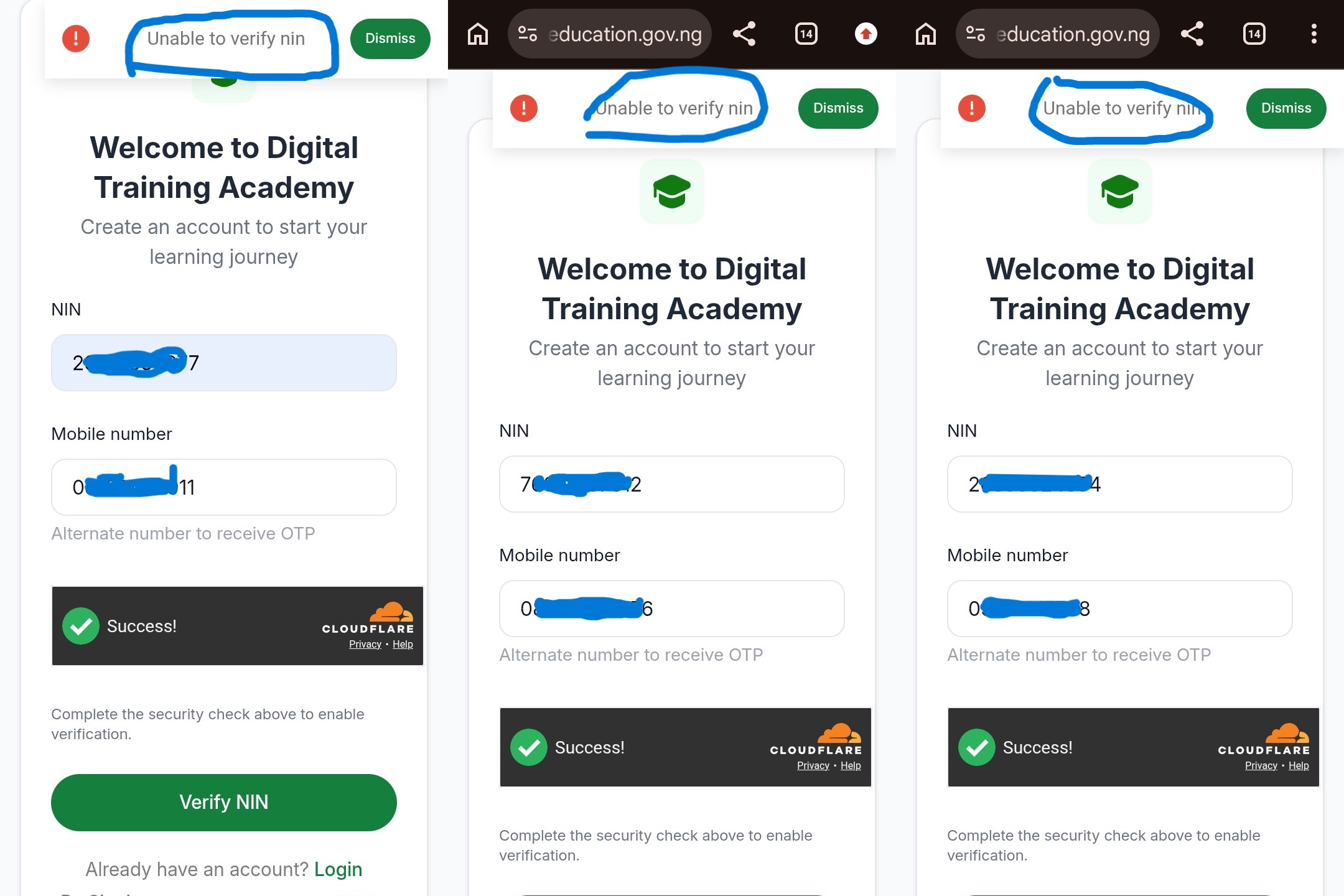
Applicants for the Federal Government’s National Skilling Project have encountered problems with National Identification Number (NIN) verification on the application portal, three days after the government opened applications through the Digital Training Academy.
Multiple complaints indicate that thousands of Nigerians hoping to benefit from the free digital empowerment programme have been unable to complete their applications. The backlash has centered on users being unable to access their dashboards after being locked out by a technical issue on the portal.
The glitch appears to affect NIN verification during the sign-up process. Applicants are required to provide their NIN and phone number for screening and to receive a one-time password (OTP). If that first step is not completed, applicants cannot continue with their applications or access their dashboards.
To verify the reports, Technext tested the portal with three different NINs and phone numbers, one after the other. Each attempt returned an “unable to verify NIN” notification.
The Federal Government’s National Skilling Project depends heavily on real-time database checks with the National Identity Management Commission (NIMC) to screen applicants. NIMC has issued more than 100 million National Identification Numbers, and the NIN is now a standard requirement across a range of Nigerian services, from SIM registration to bank account verification. While NIN verification is an important part of the application process, the system’s reliability is equally critical.
With thousands of Nigerian youths affected, social media users have called on the Federal Government, especially the Ministry of Communications, Innovation and Digital Economy, as well as project coordinators, to urgently fix the verification problem.
There have also been calls to extend the application window and introduce background verification queues so that qualified Nigerians are not shut out of the national empowerment scheme. Supporters of that approach say it would help ensure that eligible applicants are not denied the opportunity to gain digital skills and experience.
The Federal Government launched the National Skilling Project to help Nigerians build digital and professional skills through a free programme delivered in partnership with Coursera. The initiative is intended to improve the employability of Nigerian youths and expand their opportunities in the digital economy. It also runs alongside other federal skilling drives, including the Ministry of Communications, Innovation and Digital Economy’s 3 Million Technical Talent (3MTT) programme, which was set up to build Nigeria’s technical workforce.
Information on the application portal’s homepage says the project will enrol 36,000 Nigerians, with training spread across more than 10 skill areas in all 36 states. The places are limited relative to Nigeria’s youth population, one of the largest in the world.
The National Skilling Project includes high-demand digital fields such as software development, cloud technologies, cybersecurity, IT automation, AI and machine learning, and connected technologies. Other areas listed include fintech, parallel computing, quantum computing and natural language processing (NLP).
Young Nigerians aged at least 18 years who want to acquire or improve digital and professional skills are eligible to apply. Students, job seekers and working professionals seeking to enter the technology industry or improve existing skills are also eligible.
The application process was designed to be straightforward. Applicants are expected to register on the official portal, complete NIN verification and fill out their user profile. They must then take a mandatory online pre-assessment test. Successful applicants who pass or complete the assessment will then unlock their learning track. For now, NIN verification is the first gate, and whether it is fixed quickly — along with any decision on extending the application window — remains the open question for the thousands of applicants unable to get past the first step.

