Nigeria's Power Crisis: The Overlooked Barrier to CBN's Zero Failed Transactions Target by 2028
Key Takeaways
- •Only one of 40 surveyed payment professionals identified Nigeria's electricity crisis as a factor in transaction failures, despite the issue being absent from the survey's official checklist of fixes.
- •Sixteen respondents cited NIBSS switching overload as the leading cause of failed transactions, followed by bank downtime and telecom network outages.
- •Nigeria's power instability predates all other payment infrastructure issues, with national grid collapses still occurring multiple times per year more than a decade after the 2013 privatization of the power sector.
- •The 2023 removal of petrol subsidies sharply increased diesel costs, raising operational expenses for banks, fintechs, and telecom operators that rely heavily on generators to maintain payment system uptime.
- •The Central Bank's 2028 zero-failed-transaction target focuses on visible infrastructure upgrades but does not address the power supply chain that underpins every digital payment in the country.
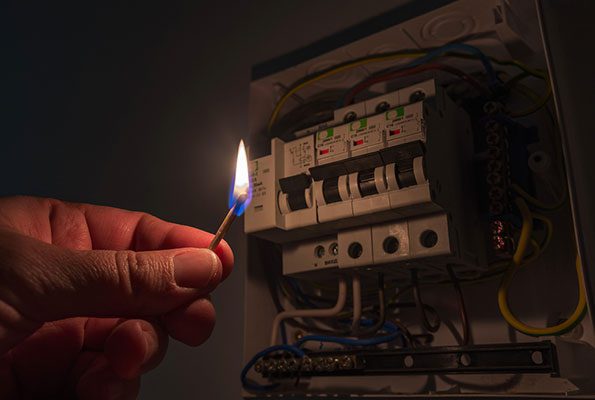
A single line, buried near the end of a survey response, read almost like an afterthought. A fintech developer had already catalogued the usual suspects behind Nigeria's failed transactions — aging banking systems, overloaded switches, fragile telecom networks, weak enforcement — before raising an issue no one else mentioned: the country's power crisis.
"Power infrastructure remains an overlooked issue. Every diesel generator that fails, every power cut affecting a data centre or telecom site, increases the risk of payment disruptions. Reliable electricity is payment infrastructure."
He was the only one of 40 survey respondents to raise the issue. Not because the other 39 disagreed, but because none of them was given the option. When the survey asked what changes were needed to bring Nigeria to zero failed transactions, the checklist included upgrading NIBSS, mandatory API standards, cloud-native banking, improved telecom infrastructure, and smarter fraud detection. Reliable electricity was absent. The developer who raised it had to write it in manually.
That omission has a history predating every piece of infrastructure the other respondents identified. Nigeria's power crisis has been visible since before most of today's fintech developers were born, cycling through the National Electric Power Authority — an agency Nigerians famously nicknamed "Never Expect Power Always" — long before it was privatised into today's Discos and Gencos in 2013. More than a decade after that privatisation, the country still generates a fraction of its installed capacity, and national grid collapses — sometimes multiple times in a single year — remain recurring events that ripple through every sector dependent on continuous power, banking and telecoms included.
The diesel generator ceased being a backup sometime in the 1980s and 1990s, becoming instead standard equipment in homes, shops, banks, and now data centres — budgeted for the same way rent or vehicle fuel is. The federal government's removal of petrol subsidies in 2023 sent diesel prices sharply higher, raising the cost of running those generators for the banks, fintechs, and telecom operators whose uptime underpins every payment in the country. A problem that old and that constant stops registering as a distinct infrastructure category and becomes background weather: a fact of doing business in Nigeria rather than a line item anyone names when asked what is broken. That is precisely why, given a checklist of fixes, not one of 40 payment professionals reached for electricity. It had been filed away decades ago as something to route around, not something to fix.
Everything else on the list is comparatively young, which is exactly why people can still imagine solving it. NIBSS only launched its instant transfer rail in 2011, years before Nigeria's cashless policy and the subsequent fintech boom pushed transaction volumes beyond what that architecture was designed to handle. Nigeria Inter-Bank Settlement System data shows electronic payment volumes have since climbed into the billions of transactions annually, multiplying the strain on every layer that depends on uninterrupted power — from bank data centres to the cell towers carrying each USSD session and OTP delivery.
Nigeria's telecom networks — the base stations carrying the USSD codes and OTPs behind every transfer — have failed publicly and frequently enough in the past decade that outages are still treated as news rather than weather. Those base stations, like the bank data centres they connect customers to, rely heavily on diesel generators for the same reason the rest of the country does: the grid cannot be trusted to stay up.
Bank downtime is newer still, tied to a wave of digital channels most Nigerian banks only began building out seriously in the last 10 to 15 years. Each of these failure modes is recent and specific enough to feel solvable with money, policy, or better code — largely why the survey's blame clustered there.
16 of the 40 respondents, by far the largest group, named NIBSS and switching overload as the single biggest cause of failed transactions, with bank downtime and telecom outages following close behind.
"There is something called FASTER PAYMENTS in the western world," one fintech developer wrote, comparing Nigeria's rails to markets with stable infrastructure and telecom networks. "I believe Nigeria is still lacking this. For example, if you try to initiate payment in a Nigerian bank, it could take you hours to get OTP."
Notably absent from even that comparison is any mention of power. The developer reached for telecom stability, not electricity, because in his own frame of reference the generator problem is too old and too settled to count as part of the infrastructure conversation — even while he implicitly described its downstream effects.
Those who observe the system from outside rather than build it also gravitated toward a newer villain. 8 respondents, including 6 journalists, named network and telecom downtime as the primary cause, describing "shaky telecom connectivity killing transactions mid-flight" and warning that fixing it "doesn't happen without sustained investment, not just a press release."
That framing treats the fix as a matter of will and money — the same way people discuss NIBSS or bank infrastructure — because unlike the power grid, telecom failure in Nigeria is still covered as a scandal rather than absorbed as a condition. Power, by contrast, has been a condition for so long that it has slipped out of the vocabulary people reach for when asked what is broken, even as it underpins every other answer on the list.
A diesel generator failing at a bank's data centre and a diesel generator failing at a telecom base station produce the exact same downstream symptom: a failed transaction. Yet only one gets named, because only that one still feels like news.
The Central Bank's target of zero failed transactions by 2028 is aimed almost entirely at the layer people can still see: upgraded switches, API standards, cloud-native banking. None of that touches the generator humming in the back room of a bank branch or at the base of a telecom tower, because nobody wrote it into the target — the same way nobody wrote it into the survey's checklist. The stakes extend beyond consumer convenience: Nigeria's financial inclusion drive and the broader push toward a cashless economy depend on payment reliability holding up across millions of transactions per day, each one sitting atop a power supply chain that, more often than not, runs on diesel.
"Reliable electricity is payment infrastructure," one developer said, unprompted, in the only line across 40 responses that named it. Everyone else had already stopped seeing it.
