10 Nigerian Creators Turning Social Media Influence Industry Power
Key Takeaways
- •Opeyemi Famakin has built an audience of roughly 1.2 million Instagram followers through restaurant reviews that cover taste, pricing, portions and service, meaning a single visit can now shape public perception of a Nigerian restaurant at unprecedented scale.
- •Victoire Mahounou was named Selar's first Creator Ambassador in May 2026 as the African creator-commerce platform expanded into Francophone markets including Benin Republic, Côte d'Ivoire, Senegal and Cameroon.
- •Creators are increasingly building their own products around audience routines, exemplified by Sisi Yemmie's Nigerian Meal Plans project, which formalised meal-planning resources for Nigerian households in 2026.
- •Enioluwa Adeoluwa reversed the traditional celebrity path by building distribution first and then entering entertainment, executive producing the youth-focused web series All of Us on YouTube in 2024.
- •Trust and specialised local expertise, rather than count alone, are emerging as the decisive commercial currency in influencer marketing, as reflected in Mercy The Influencer's skincare credibility and Cologne Quest's heat-tested fragrance reviews for Nigerian conditions.
A decade ago, influencers and online creators held nothing close to the authority they command today. If a restaurant in Lagos claimed it served the city's best food, customers mostly had to take its word for it. If a phone brand promised a better camera or longer battery life, the explanation usually came from the company selling the device.
That relationship has changed. Consumers now hear about a product or business from someone who has tested it, criticised it, or built enough trust to shape how people see it. In some cases, that opinion can carry almost as much weight as the marketing campaign behind the product itself.
That is why influence today goes beyond having a large following. The creators who stand out build authority in specific industries, and their audiences expect them to know what they are talking about. For some, that authority has even become a business of its own. The ten that follow work in very different fields, from food and technology to fashion, beauty, health, fragrance, drinks and entertainment, but each has built influence on the same foundation: sustained subject knowledge that businesses in those industries now have to take into account. Here are 10 creators whose influence is moving beyond the feed and into the industries they cover.
Opeyemi Famakin: Restaurant Criticism Businesses Can No Longer Ignore
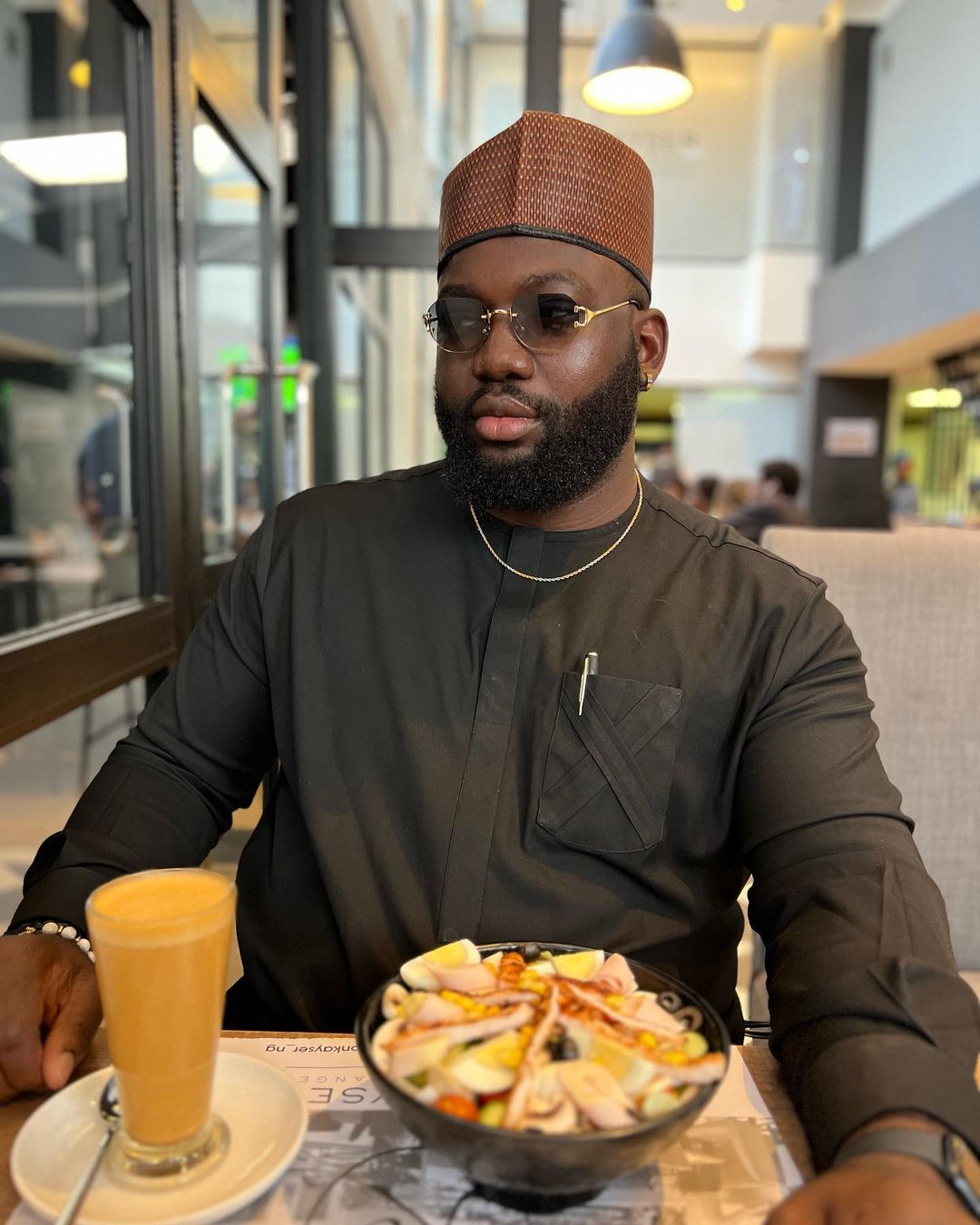
Opeyemi Famakin has helped turn restaurant criticism into something Nigerian food businesses can no longer easily ignore. With about 1.2 million followers on Instagram, he has built one of the's most recognisable food-reviewing platforms around an unusually simple proposition: he visits restaurants, eats the food and says what he thinks. His reviews routinely extend beyond taste to pricing, portions, customer service, presentation and whether the experience justifies what the restaurant charges.
It sounds straightforward, but it represents an important change in Nigeria's hospitality industry. Restaurant marketing traditionally gave businesses considerable control over how they presented themselves, and influencer marketing initially extended that model, with creators often functioning as another promotional channel. Famakin's approach introduced another layer: the creator as a critic whose assessment can shape how audiences perceive a restaurant. The result is that a restaurant can now go viral for both the right and the wrong reasons. For restaurants, the practical consequence is that a single visit can now shape public perception at a scale word of mouth alone never reached.
Tobi Ayeni, a.k.a. MissTechy: Bridging Engineers and Everyday Users
Long before artificial intelligence became an everyday social-media subject, Tobi Ayeni, better known as MissTechy, had already built her career around making complicated technology feel less complicated. She launched MissTechy in 2015 as a technology blog and gradually moved into video, gadgets, tutorials and digital tools. Today, her content reaches about 335,000 followers on Instagram.
What makes MissTechy's contribution useful is the gap she occupies between the engineers building technology and the ordinary people expected to use it. Her videos move from smartphone features to AI tools and DIY technology projects.
She has also pushed the conversation beyond simply consuming new technology. Speaking on Channels Television, Ayeni argued that Nigeria needs to localise artificial intelligence, including building applications that work with Nigerian languages and local realities. That marks an important evolution for technology influencing: the job is no longer only to unbox the newest phone. Creators such as MissTechy increasingly help audiences understand what technology does, what it can be used for and why imported technology conversations sometimes need Nigerian context.
Victoire Mahounou: Fashion Content Meets Creator Economics
For Victoire Mahounou, fashion content has become an entry point into a much bigger conversation about making a living from creativity. The Benin Republic-born, Lagos-based fashion and lifestyle creator began creating content in 2020 and has built her audience through personal storytelling, fashion, GRWM videos and creator education.
Alongside fashion and lifestyle videos, Mahounou discusses filming, storytelling, audience growth, pricing and monetisation. That has gradually moved her from simply being a fashion creator to becoming someone other creators look to for information about the business behind the aesthetic.
The shift became more pronounced in May 2026, when African creator-commerce platform Selar named her its first Creator Ambassador as the company expanded into Francophone African markets including Benin Republic, Côte d'Ivoire, Senegal and Cameroon. For platforms expanding across borders, the appointment shows how a creator with existing trust can function as the bridge into a market that does not yet know the platform. Her position at the intersection of Francophone and Anglophone creator markets is particularly notable. Fashion may be what catches the eye, but Mahounou's wider influence is in showing how personal style, content skills and digital products can sit inside the same creator business.
Oyinademii: Making Mixology Expertise Marketable
Some professions photograph naturally for Instagram, and mixology is one of them. The bottles are colourful, the glasses are beautiful and there is usually fire, smoke, ice or an elaborate garnish somewhere in the process. Oyinademii has used all of that visual appeal to do something more useful: explain what is actually happening inside the glass.
Her real name is Adesope Adedoyin Ademola Ogunruku, and her career combines content creation with professional mixology and entrepreneurship. She began making cocktail and wine content in 2022 before undergoing professional training, including a programme at Diageo Academy. By January 2026, she had grown her social audience from about 17,000 followers to 131,000 after committing to consistently producing niche drinks content, and she has since influenced for a wide range of alcoholic and non-alcoholic drinks.
Instead of bartenders remaining largely invisible behind restaurant and nightclub counters, creators such as Oyinademii are making the expertise itself marketable. Viewers learn about flavour profiles, spirits and techniques, while the creator simultaneously demonstrates the skill clients are eventually paying for.
Dr Adefunke Arowolo: Health Literacy in the Fight Against Misinformation
The competition for attention around health information no longer happens only between hospitals, newspapers and medical organisations. It also happens across social media, WhatsApp and informal networks, where medical advice can easily mix with misinformation. That is the environment in which Dr Adefunke Arowolo has built her audience.
A medical doctor and digital creator, Arowolo combines medical explanations with humour and the language of everyday social media. Her topics are often the kind people discuss privately but misunderstand publicly: periods, fibroids, pregnancy, reproductive health, cosmetic procedures and chronic illnesses.
Rather than expecting younger audiences to seek out formal medical literature, she brings health literacy into an environment they already use every day. The result is not a replacement for seeing a doctor, but a creator helping people recognise when the information circulating around them deserves more scrutiny.
Fisayo Fosudo: From Phone Reviews to Tech Economy Analysis
Fisayo Fosudo started out making technology videos, but his content now says something bigger about how Nigeria's technology industry itself has changed. Smartphones remain important, but fintech, digital banking, investments, artificial intelligence and the broader technology economy now sit beside them, and Fosudo has followed that movement.
He launched his YouTube channel in 2017, initially building his reputation around technology and visual storytelling before expanding into personal finance and economic analysis. His Instagram account had about 291,000 followers in August 2026, with his combined Instagram and YouTube audience above one million.
A specification sheet can tell you how much RAM a phone has. It cannot tell a Nigerian buyer whether the device represents sensible value after currency depreciation, whether a fintech product solves a real local problem, or why a technology story matters to the wider economy. For Nigerian technology companies, creators like him have also become part of the media infrastructure around product launches, providing access to audiences that never read a traditional technology publication while giving consumers an independent personality through whom those products can be understood.
Mercy The Influencer: Trust as the Commercial Engine
Mercy The Influencer demonstrates why follower count alone is becoming an incomplete way to understand influencer marketing. Her content spans beauty, skincare, lifestyle, fashion recommendations and creator education, and her own rise is closely connected to product trust.
Mercy has explained that she began creating more seriously after struggling with skin problems and feeling dissatisfied with some of the skincare recommendations she encountered online. Instead of presenting herself as someone who had always figured out, she documented what she was actually experiencing. That credibility has become the commercial engine behind her platform.
In August, while discussing influencer marketing, Mercy argued that a single outfit recommendation can send a follower to a fashion vendor's page, where the person may eventually buy several other products. Her point was that the transaction begins with trust in the creator rather than the size of the creator's audience.
Cologne Quest: Fragrance Reviews Built for Nigerian Heat
Perfume may be one of the strangest products to review online, because viewers cannot smell it. That means fragrance creators have to translate scent into descriptions of projection, longevity, notes, occasions and performance. Cologne Quest has added another variable that makes his work particularly relevant to Nigerian consumers: heat.
The Nigerian fragrance reviewer describes his approach around "heat-tested" reviews. Perfumes are judged not simply on what they smell like but on how they perform in weather relevant to buyers in places such as Lagos and Abuja, as well as whether the bottle offers reasonable value for money.
By asking how a perfume behaves in Nigerian heat, Cologne Quest effectively localises a global luxury category. And because his coverage moves between affordable fragrances and expensive designer bottles, he is also influencing audiences to develop a vocabulary for comparing perfumes before committing sometimes substantial amounts of money to something they cannot test through their screens.
Sisi Yemmie: From Teaching Recipes to Solving "What Are We Eating?"
Long before food Reels became one of Instagram's safest routes to hunger, Sisi Yemmie was already teaching people how to cook Nigerian meals online. Her name is Yemisi Sophie Odusanya, and over more than a decade she has built an ecosystem spanning recipes, YouTube, cookbooks, motherhood and home management.
What is particularly interesting about her current phase is that she is moving from answering "How do I cook this?" to solving "What are we eating?" In 2026, that became more formalised through her meal-planning products, built around Nigerian households that have to make that decision several times every day. Her Nigerian Meal Plans project packages meal ideas and planning resources around that problem.
Sisi Yemmie's career therefore tracks one of the most important changes in food influencing: successful creators are no longer merely teaching audiences to cook. They are beginning to build businesses around the routines that surround cooking.
Enioluwa Adeoluwa: Build the Audience First, Then Enter the Industry
Enioluwa Adeoluwa is difficult to put into a single industry, and that may be the point. Fashion, beauty, food, lifestyle, hosting and film have all become parts of the same public identity. His earlier content helped build a highly recognisable image around fashion, grooming and lifestyle at a time when male beauty influencing in Nigeria was still navigating fairly rigid ideas about how men were expected to present themselves online.
The more important development is what he has done with the audience that followed. In 2024, Enioluwa moved into long-form production with All of Us, a youth-focused web series that he executive produced and released on YouTube. His work has since continued across acting, hosting and entertainment.
That trajectory demonstrates something becoming very common in the creator economy. Traditionally, someone might first become an actor, television personality or model and then accumulate social-media influence. Creators such as Enioluwa can reverse the process: build distribution first and then use that audience to enter established entertainment industries. For brands and media companies, that changes the power relationship, because the creator does not arrive empty-handed looking for exposure. He already brings millions of potential viewers with him.
Influence That Reaches Beyond the Feed
These creators are not shaping industries simply because thousands or millions of people follow them. Their influence becomes more meaningful when those audiences begin changing what they buy, what they expect from businesses, what they understand about an industry and, sometimes, where they choose to spend their time offline.
For restaurants, technology companies, fashion labels, healthcare professionals, fragrance sellers and hospitality businesses, creators have become more than an additional marketing channel. In some cases, they are becoming part of the industry itself. The markers to watch are the ones already visible in these careers: creators building their own products, platforms appointing ambassadors from within creator communities, and creators crossing into entertainment and production on the strength of audiences they built themselves. Each suggests that the boundary between covering an industry and belonging to it is becoming harder to draw.

