A Lagos Car Crash Nearly Killed Him. A €900 Digital Nomad Visa Let Him See the World
Key Takeaways
- •A March 2023 car accident in Lagos prompted Adekomaiya and his wife to relocate to Malta under a digital nomad visa costing about €900 ($1,048) including mandatory health insurance.
- •His remote job with a US company enabled two years of travel across seven European countries, using Malta as a base with monthly rent of €900–€1,200 plus day-to-day expenses of €500–€600.
- •The nomadic lifestyle reduced their savings compared with living in Nigeria, and their visa insurance did not cover normal childbirth, which in Malta can cost €6,000–€25,000.
- •The couple encountered racism abroad, including an occasion when his wife was stopped in Malta and her digital nomad status was disbelieved.
- •After returning to Nigeria in November 2025 with their newborn son, the family plans to explore African countries such as Kenya, Rwanda and Tanzania once the child is older.
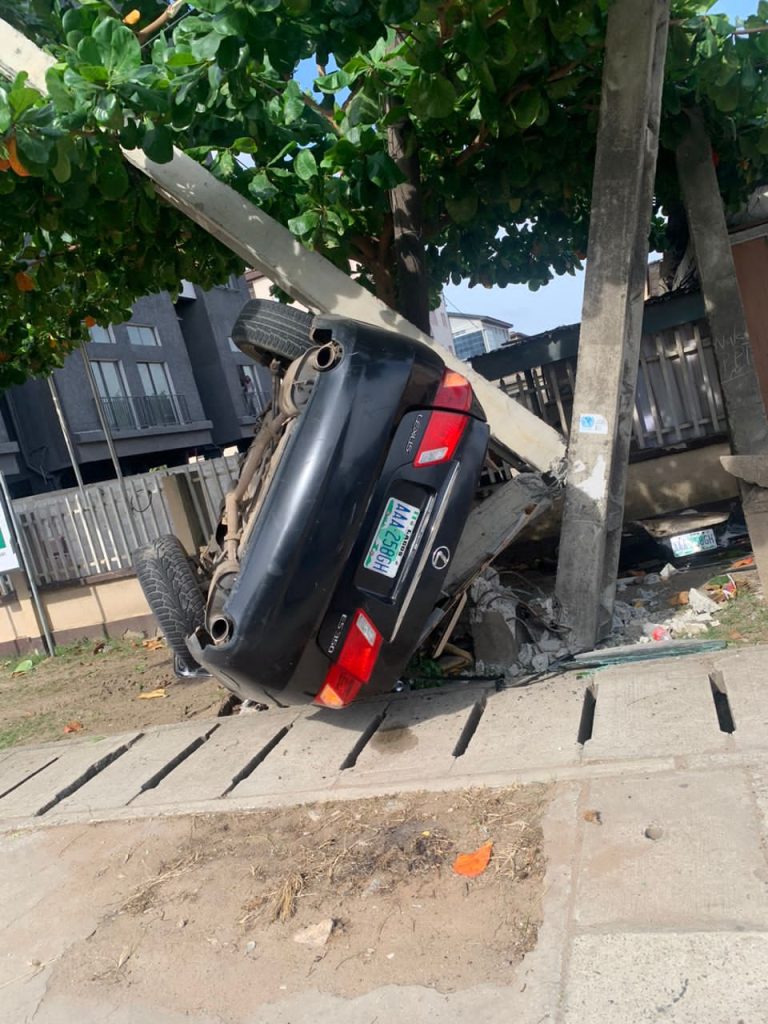
In March 2023, Adewale Adekomaiya lay trapped in a mangled car in Lagos while passersby filmed and a bystander tried to rob him. That near-death experience shattered his assumption that travel could wait for "later." Within months, the Senior QA Architect and his wife packed their lives into a €900 ($1,048) digital nomad visa to Malta, spending two years working remotely across seven European countries. Now back in Nigeria with a newborn son, Adekomaiya spoke to TechCabal's John Adoyi about the true costs of constant mobility, navigating racism abroad, and why his family's next journey will take them across Africa.
Passers-by stood around the wreckage and filmed. Adekomaiya was trapped in a car in Yaba, a neighbourhood in Lagos, Nigeria, in March 2023, just months after getting married. No one came to help. The only person who approached, he said, was trying to rob him. As he waited for help that did not seem to come, his thoughts drifted to his new wife and to all the things they had planned to do together.
"I just got married," he told TechCabal. "If I had died, I would have just gone without experiencing the world with my wife."
Until then, Adekomaiya had treated life as something to be enjoyed later. He would work and save, assuming that one day he would have the time and money to see the world. The accident made "later" feel far less certain. Within months, he and his wife had left Nigeria for Malta, where they built a life around remote work and travel. Two years later, after returning home for the birth of their son, Adekomaiya is preparing to leave again—this time with his child.
From IT support to remote work
Adekomaiya's career in tech began with helping other people use computers. He worked in IT support at Great Nigeria Insurance, an insurance underwriting and financial advisory firm, where he helped colleagues resolve computer problems, according to him. Soon after, he returned to school to earn a degree. In 2018, someone introduced him to quality assurance (QA), a field that allowed him to combine his IT experience with the programming knowledge he had picked up as a support tech specialist.
"I was able to merge that with my little knowledge of programming," he said.
He has worked in QA ever since, eventually becoming a senior engineer and today a QA architect. By the time he and his wife decided to leave Nigeria, he was working for a US company, which meant he could take his job with him. That flexibility became central when the couple began turning their idea of travelling into an actual life outside Nigeria. His path reflects a broader shift: as remote work normalised after the pandemic, dozens of countries introduced digital nomad visas to attract foreign earners, giving location-independent professionals from Nigeria and elsewhere routes to live abroad that traditional work or study visas did not offer.
Why Malta?
Malta was not a long-standing bucket-list destination. Rather, the country offered an easy route for the couple to begin their nomadic life in 2023. Portugal was also on his mind, but its embassy in Lagos was closed when they were making their plans, he said. Malta, meanwhile, had a digital nomad visa he could apply for from home; the country had launched the programme in 2021, one of a wave of EU states courting remote workers.
He needed to show he met the minimum income requirement and worked for a company outside the European Union (EU). Since he was working remotely for a United States-based company, he already had the documents to support his application. The process also suited him because it avoided the repeated embassy visits he wanted to escape—no small consideration for Nigerian travellers, who face some of the world's most restricted passport mobility.
"I hate stress when it comes to all this application of trying to apply for visas and the like," he said. "But for this one, I saw that we could do the whole application from the comfort of the house."
Adekomaiya said the Malta application cost about €300 ($350) per person—for himself and his wife—in 2023. A dependent attracted an additional €300 ($350), putting the couple's application costs at €600 ($700). Additional costs, including primary health insurance, a mandatory requirement, took the total package to €900 ($1,048), according to Adekomaiya. Applicants also had to meet a minimum income requirement, which he said was about an additional €2,000 ($2,330) at the time.
Insurance was another requirement: applicants had to provide an insurance contract covering a year and renew it annually. The couple opted for coverage including outpatient treatment, which does not require hospital admission, and inpatient treatment, which covers care requiring a hospital stay. The plan also included Schengen coverage in case they needed medical attention while travelling to another country, he said.
Adekomaiya found a step-by-step guide online that simplified the application and helped him assemble the required documents. In 2023, the application succeeded, and the couple moved to Malta.
They spent about $2,400 on flights from Nigeria to Malta, partly because they booked late, he said. On arrival, they initially rented an Airbnb short-let apartment for about two weeks, paying between €100 ($116.50) and €120 ($140) a night, before moving into a three-bedroom apartment costing between €900 ($1,048) and €1,200 ($1,400) a month, with one room serving as his workspace.
Two years on the move
Malta became the couple's home base, but they did not spend all of the two years between 2023 and 2025 there. Using the island as a base, they explored Europe, travelling to Hungary, Portugal, Spain, Italy, France and the UK, and visiting cities including Milan, Barcelona and Madrid. They also went to Tenerife, the most populous island in Spain's Canary Islands. For the newly married couple, the appeal was seeing new places and experiencing how people lived beyond Nigeria.
"We were just travelling. We were just moving around, trying to understand different cultures," Adekomaiya said.
Their travels were often guided by personal interests rather than a fixed list of destinations. His wife had studied in Hungary and spent years talking about the country, making a return visit an obvious choice. Barcelona appealed to her interest in architecture and history.
"My wife is very big on travelling and big on architecture and the likes," he said. "For me, I just want to have fun."
The United Kingdom became the place they spent the most time outside Malta, partly because they had built a community of friends there. They travelled between London, Bradford and Manchester, using the trips to catch up with people they knew. Paris was another regular stop, while Budapest became Adekomaiya's favourite city.
His work made the lifestyle possible. As long as he had an Internet connection, he could work, allowing the couple to leave Malta for another city or country without taking time off or pausing his career. They could spend weeks or even months elsewhere before returning to the Maltese apartment that remained their base.
The freedom to move did not mean every part of travelling came easily. In countries where English was not widely spoken, including Spain and Hungary, Adekomaiya used Google Translate to communicate—speaking into his phone in English, converting his words into the local language, and playing the translation back. He also used the app's text feature when it was easier. Over time, he found that even a small effort to speak the local language helped.
"When you go into a different country, learn how to say hello. Learn how to say bye. Learn how to say yes," he said.
But no matter how much new food and culture they encountered, he still looked for one familiar thing wherever they travelled: Nigerian food. Before visiting a new city, he would often search TikTok for Nigerian restaurants nearby. His wife cooked Nigerian meals at home, but travelling made him appreciate being able to walk into a restaurant, scan the menu, and order something familiar.
"If you want me to enjoy my trip, my wife knows that already," he said. "And once I get my Nigerian food, then we can experience any other culture."
The cost of freedom
The freedom the couple built came with trade-offs. They still had to maintain their home in Malta while travelling. Rent ran between €900 ($1,048) and €1,200 ($1,400) a month, while day-to-day expenses could add another €500 ($582) to €600 ($700).
Travelling around Europe could nonetheless be cheap. Adekomaiya said they sometimes found flights between countries for as little as €20 ($23) to €50 ($58). But the low fares covered only the journey: they still paid for accommodation, food and other expenses, while rent in Malta continued to run up even when they were away.
They still saved and invested while living in Malta, but at a slower pace than they might have if they had stayed in Nigeria, he said.
"You will save, but you will not save money as much as you used to while you were in Nigeria and not travelling," he said. "You are spending money on flight tickets, accommodation, food."
They always had a budget, but it did not stop them from having experiences they valued. "We move as we see or we have," he said. "Definitely, there's always a budget, but I don't let that limit me."
On black tax as a digital nomad
Adekomaiya also had family responsibilities in Nigeria, a financial burden he described as the "black tax" that often comes with being an African man. Living abroad changed how he thought about the money he sent home.
"When I was outside, I didn't know what was ongoing in the country," he said. "So, if I give ₦50,000 [$37.21], in my head, it is a lot because that was what I was giving back in 2023."
From Malta, sending home €100 ($116) or €200 ($233) was often enough to meet his monthly financial obligations, according to him. Returning to Nigeria later gave him a clearer sense of what that money could buy—what had felt modest abroad stretched much further at home.
Their biggest expense came when they decided to have a child. Their visa health insurance covered outpatient and inpatient treatment as well as pregnancy complications, but not the cost of a normal delivery. In Malta, childbirth could cost between €6,000 ($6,990) and €25,000 ($29,121), depending on whether complications arose, he said.
"We planned ahead because we've heard a lot of stories," Adekomaiya said. "We were lucky we didn't pay as much as everybody was paying, but it was still a lot of expense."
The limitations of their life on the move were not only financial. Adekomaiya enjoyed travelling, but the uncertainty of a nomadic life made it harder to plan for the future. Malta was home, yet they knew they would not stay there permanently.
"You cannot say, okay, I want to buy a house because you know that you are not there to stay," he said. "So we could not make a great commitment in any country."
"The three years we spent outside were just three years of no plan. We were just enjoying. We were making our money and all that. But we could not do any major commitment apart from buying stocks."
Then there was the reality of being Black abroad. Their freedom to move and the money they earned did not shield them from the assumptions some people made, Adekomaiya said. His wife was once stopped on the street in Malta and asked what she was doing there. When she said she was a digital nomad, the people questioning her refused to believe her and suggested she had arrived by boat.
"As a Black man, you will always be a Black man," Adekomaiya said. "Regardless of how much you earn."
Coming home, then leaving again
In November 2025, after two years of moving across Europe, Adekomaiya and his wife returned to Nigeria when caring for their newborn became difficult without adequate support.
Coming home did not mean he had stopped thinking about life abroad. He still valued the people he met along the way—friendships that began on a beach, on a plane, or in a passing conversation with someone he might otherwise never have met.
"One thing people don't get to say about the lifestyle is the networking," Adekomaiya said. "You get to meet people at the beach. In planes. You will talk to them, and you guys will exchange contacts, and you will become friends."
Travelling exposed him to ways of life far removed from what he had known in Nigeria. He met people from different backgrounds and experienced how other societies lived, worked and organised their daily lives.
"I could tell you for a fact that my mentality three years ago and now is way different," he said. "I have travelled, I have seen things that are making me push for more. I want to be better and all that."
The next time, however, he wants to look closer to home. Adekomaiya is planning to explore Africa with his wife and son, starting with countries such as Kenya, Rwanda and Tanzania, grouping nearby countries into single trips to make travel from one country to another easier. It is an itinerary that reflects a growing interest among African travellers in exploring the continent itself, aided in recent years by initiatives such as the African Continental Free Trade Area and Kenya's visa-free entry for African visitors, both introduced in 2024.
"If I'm going to East Africa, I will go to Kenya, then Rwanda, and then Tanzania," he said. "[I'll] try to put them together, so that when I'm moving from one country to the other, it's not too difficult for me in terms of the expenses."
Travelling with a child will require different planning from the life the couple had when it was just the two of them. Accommodation and reliable internet will still matter because he plans to keep working wherever they go, but every decision will now have to account for their son. For now, Adekomaiya is waiting for his son to grow a little older before the family starts moving again.
He already has a clear picture of what that next chapter will look like.
"I used to see myself on a yacht, [on the] Mediterranean blue sea, with my son in my [arms]," Adekomaiya said. "So, I just don't want it to be a dream. I also want it to be my reality."

