U.S. investors contributed about $5 billion to Nigeria’s tech ecosystem from 2015 to 2025, consul general says
Key Takeaways
- •The United States contributed about 60% of venture-capital equity funding to Nigeria's technology ecosystem between 2015 and 2025, totaling roughly $5 billion, according to U.S. Consul General Brandon Hudspeth.
- •Nigeria hosts approximately 430 fintech companies, representing about 30% of all fintech firms in Africa, with Flutterwave and Paystack cited as examples of locally built startups that expanded internationally.
- •About 70% of Nigerian startups have incorporated in the United States, a pattern attributed to access to corporate structures, capital markets, and intellectual-property systems.
- •Two-way trade between the United States and Nigeria reached approximately $14.7 billion in 2025, an increase of 13.3% from the previous year, according to U.S. government data.
- •Dealroom's 2025 Global Tech Ecosystem Index ranked Lagos first among the world's Rising Stars, citing an 11.6-fold increase in ecosystem valuation since 2017 and the creation of five unicorns.
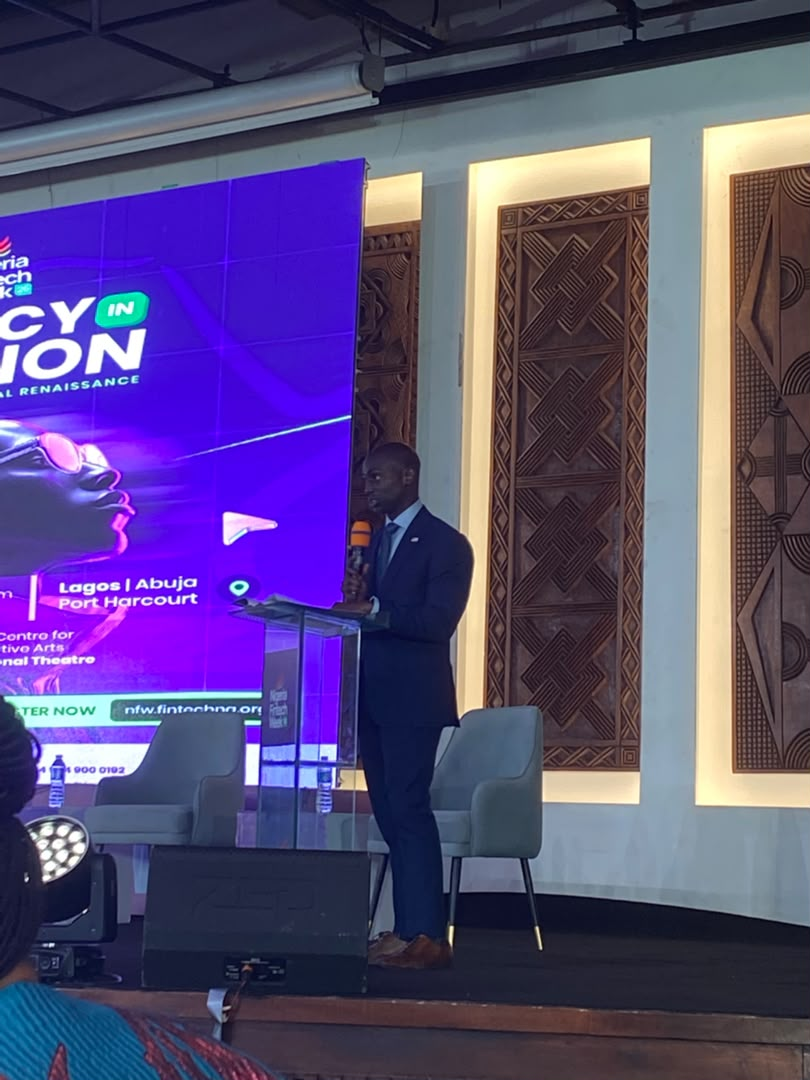
The United States was the largest source of venture-capital equity funding — capital invested in young companies in exchange for ownership stakes — for Nigeria’s technology ecosystem between 2015 and 2025, contributing about 60%, or roughly $5 billion, U.S. Consul General Brandon Hudspeth said at Nigeria Fintech Week 2026 in Lagos, with other investors accounting for the remaining share.
Hudspeth said American capital, infrastructure and technical expertise had helped transform Nigeria’s fintech industry from an emerging sector into a foundation of a digital economy extending beyond the country’s borders.
“You are not merely processing payments or writing code; you are propelling the African digital renaissance,” Hudspeth told founders, investors and other industry participants at the event.
Nigeria is home to roughly 430 fintech firms, representing about 30% of all fintech companies in Africa. The sector has become an important part of the expanding economic relationship between Abuja and Washington.
“For the past 10 years, U.S.-based investors have consistently been the largest source of external capital in the Nigerian tech ecosystem,” Hudspeth said.
The approximately $5 billion figure applies to Nigeria’s broader technology ecosystem rather than fintech alone. However, fintech companies remain central to the sector’s development, with Lagos-based Flutterwave and Paystack among the companies Hudspeth cited as examples of Nigerian startups that built products locally and expanded into international markets.
“Lagos is the birthplace of Africa’s leading tech giants: Flutterwave, Paystack, Moove,” he said. “They built and market-tested solutions right here, right down the road, and scaled them to the entire world.”
Hudspeth’s remarks presented Nigeria’s fintech industry as part of an international technology and commercial ecosystem rather than a market driven solely by local activity. For startups seeking to expand beyond Nigeria, access to capital is only one requirement. Companies also need international investors, suitable legal structures, payment networks, cloud infrastructure and other technology services — a mix that helps explain why so many Nigerian founders formalize their companies abroad.
According to Hudspeth, about 70% of Nigerian startups have incorporated in the United States. He attributed that pattern to access to corporate structures, capital markets and intellectual-property systems that can support international fundraising and global expansion.
The relationship also provides U.S. companies with access to one of Africa’s largest markets and its growing technology workforce. Nigerian startups, meanwhile, gain access to capital, infrastructure and broader markets.
Hudspeth pointed to Google, Starlink, Equinix and Digital Realty as examples of U.S. companies investing in Nigeria’s physical and digital technology foundations, including data centres and talent development.
“U.S. tech leaders are not passive observers here in Nigeria,” he said. “They are active, they are enthusiastic partners, investing directly in the physical and digital foundations of tech growth in this country.”
The fintech industry is one part of a wider commercial relationship between the United States and Nigeria. Hudspeth said the two countries trade about $15 billion in goods and services each year, with technology and finance contributing to that activity. U.S. government data puts total two-way trade at approximately $14.7 billion in 2025, an increase of 13.3% from the previous year.
Hudspeth said the next phase of the relationship would place greater emphasis on private-sector trade and investment than on aid.
“The approach is very straightforward: it is about trade over aid, opportunity over dependency, and investment over assistance,” he said.
The United States and Nigeria will continue using the U.S.-Nigeria Commercial and Investment Partnership to deepen bilateral ties, with a ministerial meeting expected later this year to advance the agenda.
Lagos has also strengthened its position as a leading African technology hub. Dealroom, a research platform that tracks global startup ecosystems, ranked the city first among the world’s Rising Stars in its 2025 Global Tech Ecosystem Index. The ranking cited an 11.6-fold increase in ecosystem valuation since 2017 and the creation of five unicorns — privately held technology companies valued at $1 billion more.
Fintech has been a major part of that growth. Flutterwave and Paystack developed products focused on financial challenges in Nigeria before expanding across Africa and into other markets.
Hudspeth said that record had positioned Nigerian technology companies as potential international partners rather than simply recipients of foreign funding.
“The financial and tech solutions you’re engineering here in Lagos are not just solving challenges locally, but they’re building models across the entire world,” he said.
At Nigeria Fintech Week, Hudspeth described the commercial relationship as one in which U.S. companies provide infrastructure and investment while Nigerian startups develop products for international markets. He said both sides stood to pursue opportunities beyond Nigeria’s borders.
“Nigeria benefits from doing business with U.S. companies, and U.S. companies benefit from Nigeria,” Hudspeth concluded.
The U.S. Embassy provides information about Consul General Brandon Hudspeth at
Source: https://technext24.com/fintech/nigeria-fintechs-drew-5b-from-u-s-investors/

