Nigerians Moved ₦18.78 Trillion Through POS Terminals in Q1 2026, Up 79% Year-on-Year
Key Takeaways
- •POS transaction value reached ₦18.78 trillion between January and March 2026, compared with ₦10.49 trillion a year earlier.
- •February recorded the highest monthly POS value at ₦6.58 trillion, while January and March registered ₦6.08 trillion and ₦6.12 trillion respectively.
- •NIBSS reported 5.56 million deployed POS terminals by December 2024, up from 2.45 million the previous year.
- •The public NIBSS-linked data does not disclose how the total was divided among withdrawals, transfers, payments and other transactions.
- •The CBN’s Q1 2026 bulletin reported ₦59.33 trillion in POS transactions, a figure based on a broader or different statistical basis.
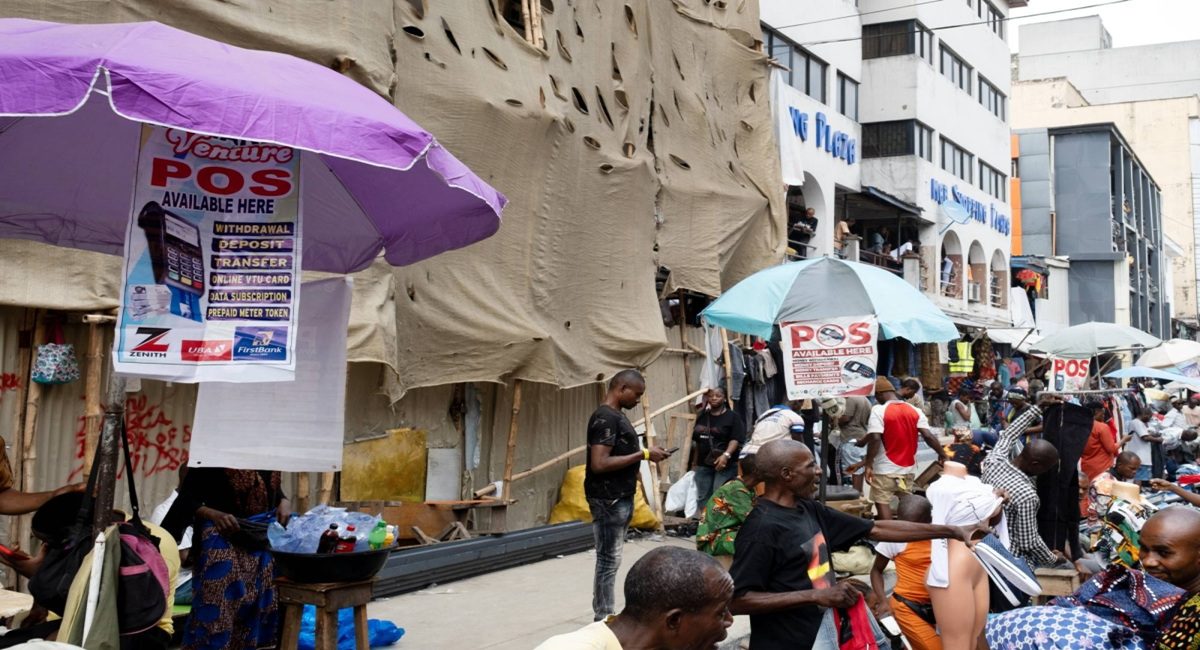
Between January and March 2026, Nigerians moved ₦18.78 trillion through Point-of-Sale (POS) terminals, according to NIBSS data. NIBSS — the Nigeria Inter-Bank Settlement System — operates the shared infrastructure through which Nigerian banks settle electronic payments with one another. The total is 79.03% higher than the ₦10.49 trillion recorded in the same period last year — roughly ₦8.3 trillion more.
Yet the numbers leave one question unanswered: where did all that money actually go?
The answer is more complicated than saying Nigerians spent ₦18.78 trillion through POS, because much of that money was simply moving from one place to another.
Consider the POS operator on a typical street. A customer walks up, requests ₦20,000 in cash, and the agent hands it over after processing the transaction. That ₦20,000 now counts toward Nigeria's POS activity, but the customer did not buy ₦20,000 worth of goods from the operator. The terminal was simply used to access the customer's own money. The same when someone sends cash through an agent or pays a bill.
That is the distinction that matters: transaction value is not the same as consumer spending. The ₦18.78 trillion represents the value of transactions that passed through the POS channel — not ₦18.78 trillion worth of goods and services Nigerians actually purchased.
A Relentless Quarterly Pace
The monthly figures show how relentless the activity was. January recorded ₦6.08 trillion, February climbed to ₦6.58 trillion, and March came in at ₦6.12 trillion, making February the quarter's biggest month, though all three months crossed the ₦6 trillion mark. On average, roughly ₦209 billion moved through POS terminals every single day.
That money was never sitting idle inside the machines. It was moving through a financial system that has quietly become part of everyday Nigerian life.
A Distinctly Nigerian Interpretation of POS
In most other countries, “POS” brings to mind one thing: the card machine at a supermarket checkout. In Nigeria, it means something far bigger. A POS agent is often the person people visit to withdraw cash when the nearest ATM is miles away, or the one who helps them send money, pay a bill, or handle a financial errand they would otherwise struggle to complete.
That is why POS has become so central to how money moves in the country. The model has formal roots, too: agent banking is recognised under Central Bank of Nigeria guidelines, which allow licensed institutions to deliver financial services through third-party agents, giving the corner-shop terminal a regulatory footing alongside the branch network.
By December 2024, the number of deployed terminals had reached 5.56 million, up from 2.45 million just a year earlier, according to NIBSS. The network has outgrown the bank branches and ATMs that once defined financial access in Nigeria.
Anyone living in a busy neighbourhood can see it: a POS operator beside a provision store, another near a bus stop, another a few streets away. The bank branch may be kilometres away, but financial access sits right someone's shop.
That is part of what the ₦18.78 trillion really represents. Nigeria has built a vast last-mile financial network — one terminal, one agent, one street at a time.
Two Datasets, Two Very Different Numbers
There is a statistical twist worth flagging. The Central Bank of Nigeria's Q1 2026 Statistical Bulletin puts POS transactions at ₦59.33 trillion, across 2.92 billion transactions for the quarter — an average of roughly ₦20,300 per transaction. That figure was actually down 16.42% in value and 19.90% in volume from Q1 2025.
So why does the NIBSS-linked data say ₦18.78 trillion while the CBN says ₦59.33 trillion?
The two figures appear to come from different statistical bases. The ₦18.78 trillion comes from data obtained by Financial Derivatives Company, a Lagos-based financial research firm, and sourced from NIBSS, while the ₦59.33 trillion comes from the CBN's quarterly reporting. Industry analyses suggest the NIBSS figure reflects transactions settled through NIBSS infrastructure, while the CBN's figure captures the broader POS channel. But the public documents available do not provide enough detail to confidently explain the entire ₦40.55 trillion gap, so the two figures should not be added together or treated as rival claims about the same dataset.
For this report, the ₦18.78 trillion figure is used because it is the NIBSS-linked number behind the headline. The gap is worth noting, however, because it shows how easily payment statistics can confuse when institutions measure the same channel from different angles.
Where the Electronic Money Actually Moves
The wider payment picture is also revealing. The CBN's Q1 data shows Nigeria's six major electronic payment channels processed ₦1.053 quadrillion during the quarter, with POS accounting for ₦59.33 trillion of that total — a little over 5% of the value that flowed through those six channels. Other channels moved far larger amounts: Web Pay, which captures internet-based payments, recorded ₦529.82 trillion, Nigeria Instant Payment (NIP), the instant account-to-account transfer rail, ₦320.76 trillion, Mobile Pay ₦112.12 trillion, and ATM ₦26.30 trillion.
POS, in other words, is not where most electronic money in Nigeria moves. Its importance lies elsewhere: it sits closer to the everyday economy. NIP can move money between accounts without either person leaving home, while POS puts financial access directly in front of people on the street. That distinction matters because a trader needing cash, a worker withdrawing money, and a customer paying a bill may all end up at the same POS stand.
The honest answer on composition is that the public NIBSS figure does not offer a neat breakdown — how much was withdrawals, how much transfers, how much purchases — and none should be invented. What the number does show is that an enormous amount of money moves through Nigeria's POS network every quarter. Some of it is withdrawn as cash. Some is transferred. Some is used for payments. Some moves between people and businesses. And some may simply pass through the system before ending up somewhere else entirely.
Why the Terminal on the Corner Matters
The more interesting question, then, is not what Nigerians spent ₦18.78 trillion on, but why the POS terminal has become so central to how Nigerians access money in the first place.
The answer has a lot to do with convenience. A POS agent can be closer than a bank branch. An agent can hand out cash when an ATM is empty or broken, and can offer basic financial services in places where traditional banking is not as easy to reach. There are now millions of these access points across the country.
That also explains why the reliability of the network matters. When a terminal stops working — or when there is poor connectivity, no power, or insufficient cash — it is not just a small machine having a bad day. For the customer standing in front of it, access to money has temporarily stopped.
There is also an interesting contradiction. Nigeria's electronic payment system is growing fast, yet POS agents remain deeply tied to the country's cash economy. The ₦18.78 trillion is not proof that Nigerians have abandoned cash; in some ways, it shows the opposite. The POS network has made it easier to move between the digital system and physical cash. A customer can transfer money digitally and withdraw it from an agent minutes later, or receive money in an account and use a terminal to get cash. The terminal sits in the middle.
That may be the real significance of the ₦18.78 trillion. Nigeria's payment revolution is not simply about abandoning cash for digital payments; it is about building more ways for money to move between people, businesses, bank accounts and cash. And with ₦18.78 trillion passing through in just three months, the little terminal on the corner has become a far bigger part of Nigeria's financial infrastructure than it first appears.
Both sets of numbers will keep coming: NIBSS publishes payment figures monthly, and the CBN lays them out in quarterly statistical bulletins, so the releases covering the following quarter will show whether this pace held — and whether the gap between the two statistical bases persists.

