Thales Alenia Space Signs Deal to Build Nigeria's Next-Generation NigComSat-2A Satellite
Key Takeaways
- •NIGCOMSAT Ltd has contracted Thales Alenia Space, a joint venture of France's Thales and Italy's Leonardo, to build the NigComSat-2A satellite on its Spacebus B2 platform.
- •NigComSat-2A is targeted for launch around 2028 and will replace the ageing NigComSat-1R satellite, which has been in service since its 2011 launch.
- •The nearly four-ton, high-throughput satellite will carry C, Ku, Ka and L bands to deliver broadband internet, television broadcasting and voice services across a region spanning West, Central and Southern Africa, with an expected in-orbit service life exceeding 15 years.
- •Nigeria is investing an estimated $2 billion in the NigComSat-2A and NigComSat-2B satellites combined, while the Federal Executive Council earmarked ₦420.97 million in the 2026 federal budget for the NigComSat-2 project.
- •Experts caution that the project's real impact will depend on execution, including affordable end-user access, partnerships with MNOs and ISPs, sufficient ground infrastructure, spectrum management and strong commercial utilisation of the satellite capacity.
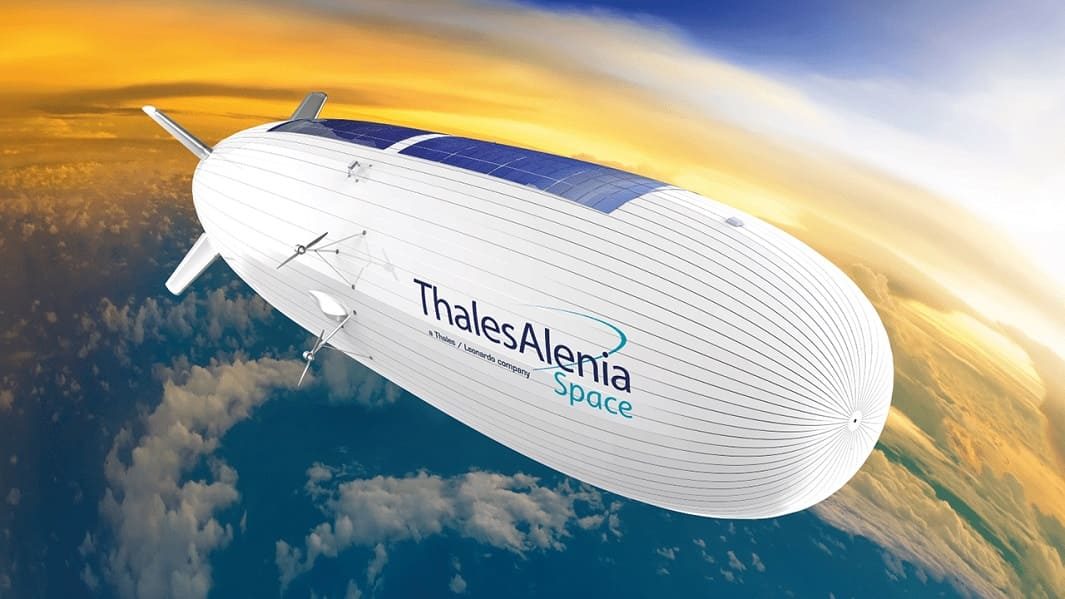
Nigeria's federal government has reached a significant milestone in the delivery of NigComSat-2A, the next-generation satellite infrastructure expected to deliver improved broadband connectivity and expand network coverage nationwide.
Through the Nigerian Communications Satellite Limited (NIGCOMSAT Ltd), the federal government has signed a deal with Thales Alenia Space to develop the new telecommunications satellite. In an email seen by Technext, the space company said the infrastructure will operate from geostationary orbit — an altitude of roughly 35,786 kilometres above the equator, where a satellite orbits in step with the Earth's rotation and can maintain continuous coverage over a fixed region.
"I would like to thank NIGCOMSAT for placing their trust in our company," said Hervé Derrey, President and CEO of Thales Alenia Space.
He added: "NigComSat-2A geostationary satellite will enable NIGCOMSAT to strengthen its competitive position by delivering reliable, high-quality services that meet the growing demand for connectivity and digital content worldwide. This announcement also underscores the success of our Spacebus B2 product line, renowned for its reliability, robustness and time-to-market efficiency."
The upgrade comes at a critical time for Nigeria's broadband penetration goals, digital connectivity and digital economy expansion. More than 195 million Nigerians are telecom users, and 81 percent of them — 158 million people — are internet users. With the pace of technology expansion, Nigeria needs an all-encompassing satellite facility that current digital demands.
NigComSat-2A is designed to deliver reliable and secure communication services, including high-quality television broadcasting and fast, stable internet. Importantly, the satellite will also expand access to digital services in underserved and remote communities, while supporting the connectivity needs of African households, businesses, public institutions and industries.
Reacting to the milestone, Nkechi Jane Egerton-Idehen, Managing Director and Chief Executive Officer of NIGCOMSAT, described the deal with Thales Alenia Space as a significant step in Nigeria's journey toward digital transformation.
"NigComSat-2A will not only strengthen our nation's satellite communications capacity but also expand access to reliable broadband and digital services for millions of Africans, especially in underserved and remote communities," she said.
"This project underscores NIGCOMSAT's commitment to driving connectivity, fostering innovation, and enabling economic growth across the continent. We are proud to partner with Thales Alenia Space in delivering a satellite that will empower Africa's digital future," she noted.
The satellite is expected to improve access to reliable broadband and communications infrastructure, meaning that residents in remote locations across Nigeria could access the same quality of network experienced by users in Lagos and the Federal Capital Territory, Abuja. That shift carries implications for digital inclusion, economic opportunity, knowledge sharing and access to information across Africa.
Olalekan Ifatimehin, Regional Manager at IPT PowerTech Group, attested to the expected gains from the new satellite. Speaking with Technext, he agreed that both NigComSat-2A and NigComSat-2B will transform Nigeria's connectivity, achieve the targeted broadband penetration and power network access for remote communities.
"The investment has the potential to significantly improve Nigeria's connectivity and broadband ecosystem, particularly in underserved and hard-to-reach areas," he said, noting that the infrastructure is not just a satellite project, "but an opportunity to strengthen Nigeria's overall digital infrastructure, broadband penetration, resilience and digital inclusion."
For Nigeria, the greatest challenge in rolling out major projects is often not solving problems or developing strategic ideas, but execution. Ifatimehin cautioned that delays or missed implementation targets threaten the achievement of desired results, noting that delivery requires coordinating multiple stakeholders for timely outcomes.
"The real impact will depend on execution: affordable end-user access, effective partnerships with MNOs/ISPs, sufficient ground infrastructure, spectrum management, and strong commercial utilisation of the satellite capacity," the telecom expert said.
The partnership with Thales Alenia Space is part of the federal government's lineup to deliver the new satellite. Ifatimehin viewed this as a welcome development, stressing that "the government can't do this without the private sector if they truly want it to be covered."
NigComSat-2A is a planned next-generation geostationary telecommunications satellite for Nigeria, with a targeted launch around 2028. It will replace the ageing NigComSat-1R satellite — in service since its 2011 launch — to boost Nigeria's satellite communications and digital infrastructure.
The satellite is designed as a high-throughput, multi-band spacecraft carrying C, Ku, Ka and L bands to deliver broadband internet, television broadcasting and voice services. With a launch mass of nearly 4 tons, NigComSat-2A will cover a region extending from West and Central Africa to Southern Africa.
The satellite is also expected to provide greater flexibility and resilience to Africa's communications infrastructure, supporting the continent's rapidly growing digital economy and the increasing demand for connectivity in areas where terrestrial networks remain limited or face operational challenges. Its expected operational in-orbit service life exceeds 15 years.
Thales Alenia Space, a joint venture between France's Thales and Italy's Leonardo and one of Europe's largest satellite manufacturers, will build the satellite on its Spacebus B2 platform.
In terms of financing, Nigeria is investing an estimated $2 billion in the NigComSat-2A and NigComSat-2B satellites combined. Separately, the Federal Executive Council (FEC) earmarked ₦420.97 million in the 2026 federal budget specifically to support the NigComSat-2 project.
Source: TechNext24

