Google Search Trends Reveal How Nigerians Are Redefining Fitness on Their Own Terms
Key Takeaways
- •Nigerians are increasingly searching for equipment-free bodyweight workouts, with the dead bug core exercise topping the dataset.
- •Searches about cancelling gym memberships now rival those about joining, reflecting cost-of-living pressures on household spending.
- •Recovery and stretching content, including yoga for beginners and stretching routines, draws as much interest as training itself.
- •Nutrition queries focus on meal prep, reading nutrition labels, and blending traditional foods like bitter kola with global trends such as chia seeds.
- •The trend signals demand shifting from paid gym facilities toward self-directed, low-cost home-based fitness routines.
A recent Google analysis of fitness search trends in Nigeria over the past year points to a significant shift in how people approach their health. Rather than chasing celebrity fitness trends or signing up for expensive gym memberships, Nigerians are searching for practical ways to stay healthy within the realities of everyday life.
The data shows that many are prioritising fitness routines that fit into busy schedules, often shaped around a Lagos commute and tight budgets. Search interest is trending toward bodyweight workouts, meal preparation ideas, recovery tips, and local health foods such as bitter kola. Notably, while gym memberships still generate queries, there are just as many searches about how to cancel them — a pattern that mirrors broader cost-of-living pressures on household spending, with fitness often among the first discretionary expenses to be reassessed.
The shift also echoes a wider global movement toward home-based training that accelerated after the COVID-19 pandemic, when gym closures pushed exercisers worldwide toward bodyweight routines, outdoor workouts, and free online programming. What distinguishes the Nigerian pattern in this dataset is how deliberately these global habits are being adapted to local conditions — cost, commute, and climate.
Taken together, the picture is clear: Nigerians are not giving up on fitness — they are redefining what being fit means in their own context.
Training without a gym
The most popular search in the dataset is the dead bug exercise, an unusual name for a foundational movement widely used in physical therapy and athletic training. Performed lying on the back with alternating arm and leg movements, the exercise strengthens the deep core muscles that stabilise the lower back. For people spending long hours in Lagos traffic or hunched over laptops, it addresses a common physical problem without requiring any equipment.
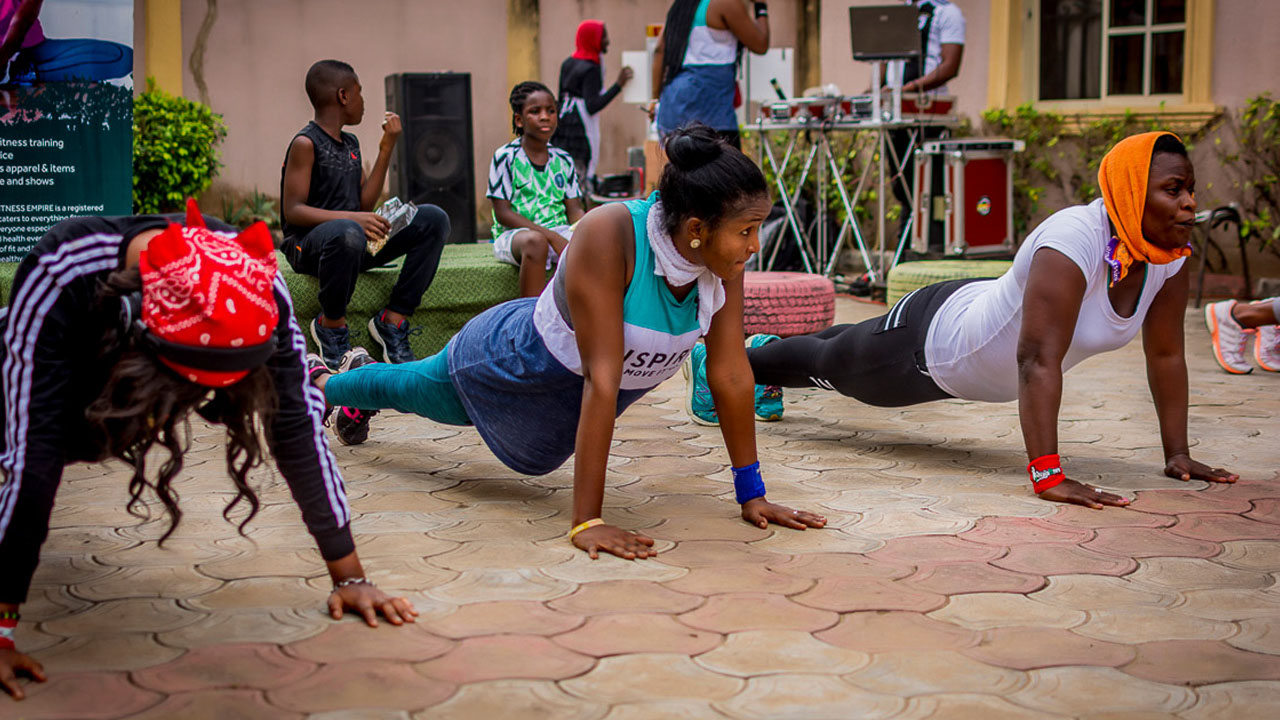
Alongside this, Nigerians are searching for military callisthenics, beginner workout routines, and the best CrossFit workouts — all signs that many are focused on building strength at home, in parks, and outdoors using only their body weight. Exercises such as pull-ups, dips, and push-ups are becoming the go-to alternatives to traditional gym machines, largely removing the need for paid equipment or dedicated facilities.
Running routes and recovery gear
One running-related search stands out in particular: "recommend running routes with a 5-mile loop." This indicates the searcher is not a beginner but a regular runner looking for a structured route. Five miles is a solid benchmark for aerobic fitness, and its popularity points to a dedicated running community that takes its sport seriously — one that has grown visibly in Nigerian cities in recent years, where informal running clubs and community events have expanded.
Searches for the best trail running shoes and winter running gear reinforce the trend. Shoppers are looking for footwear offering grip and ankle support for early morning runs during harmattan — the mark of committed runners rather than casual ones.
Stretching taken as seriously as training
Recovery and stretching are drawing as much attention as training itself. Searches for yoga for beginners, best stretching routines, and effective yoga stretches show that many people are carving out time to unwind and release tension in the hips, hamstrings, and shoulders after long days. A query about "how to clean a yoga mat" suggests home workouts have become common enough that mat hygiene now warrants attention.
Eating on a budget, eating better
On the nutrition side, the searches are equally revealing. Interest in meal prep recipes and vegetarian meal ideas shows that people are actively managing food costs, batch cooking beans, grains, and lean proteins at the start of the week instead of relying on pricey takeout. Searches about reading nutrition labels and understanding balanced diets point to a growing awareness of food beyond calories, as shoppers look to track protein intake and identify hidden sugars.
Bitter kola alongside chia seeds
Perhaps most interestingly, chia seeds and bitter kola are trending in the same searches. Chia seeds represent a global health trend, while bitter kola is a traditional West African seed Nigerians have used for generations. The pairing suggests people are blending modern and traditional wellness practices — exploring the health benefits of bitter kola much as they would research a new health supplement.
This mix of local knowledge and global health trends captures how Nigerians are approaching wellness in 2026. They are not choosing one method over another; instead, they are piecing together information from various sources to build routines that best fit their lives. For the fitness industry, search data of this kind is a leading indicator of consumer behaviour: where gym sign-ups decline but equipment-free and nutrition queries rise, demand is migrating from paid facilities toward self-directed, low-cost routines — a signal worth watching as the trend develops.
