Nigerian Telecom Operators Suffer 44,678 Fibre Cuts in First Nine Months of 2026, NCC Data Shows
Key Takeaways
- •The NCC recorded 44,678 fibre cuts between January and September 2026, with degradation causing 17,462 cases, vandalism 9,283, and cable connection issues 9,008.
- •Damage peaked in the second quarter of 2026 with 24,669 cases, and June was the worst month with 10,251 incidents.
- •Operators also faced 23,954 access denials in the same period, 73 percent of them driven by insecurity, which delayed repairs and maintenance despite telecom facilities' designation as Critical National Information Infrastructure.
- •Theft added 3,732 counts of losses, including 1,270 cases of cable theft and 1,693 cases of diesel theft.
- •The House of Representatives summoned the CEOs of MTN, Airtel, and Globacom to appear before an Ad Hoc Committee chaired by Olumide Osoba on October 28, after an early October MTN Nigeria outage disrupted voice, internet, and FibreX services across Lagos, Oyo, Rivers, Delta, and the FCT.
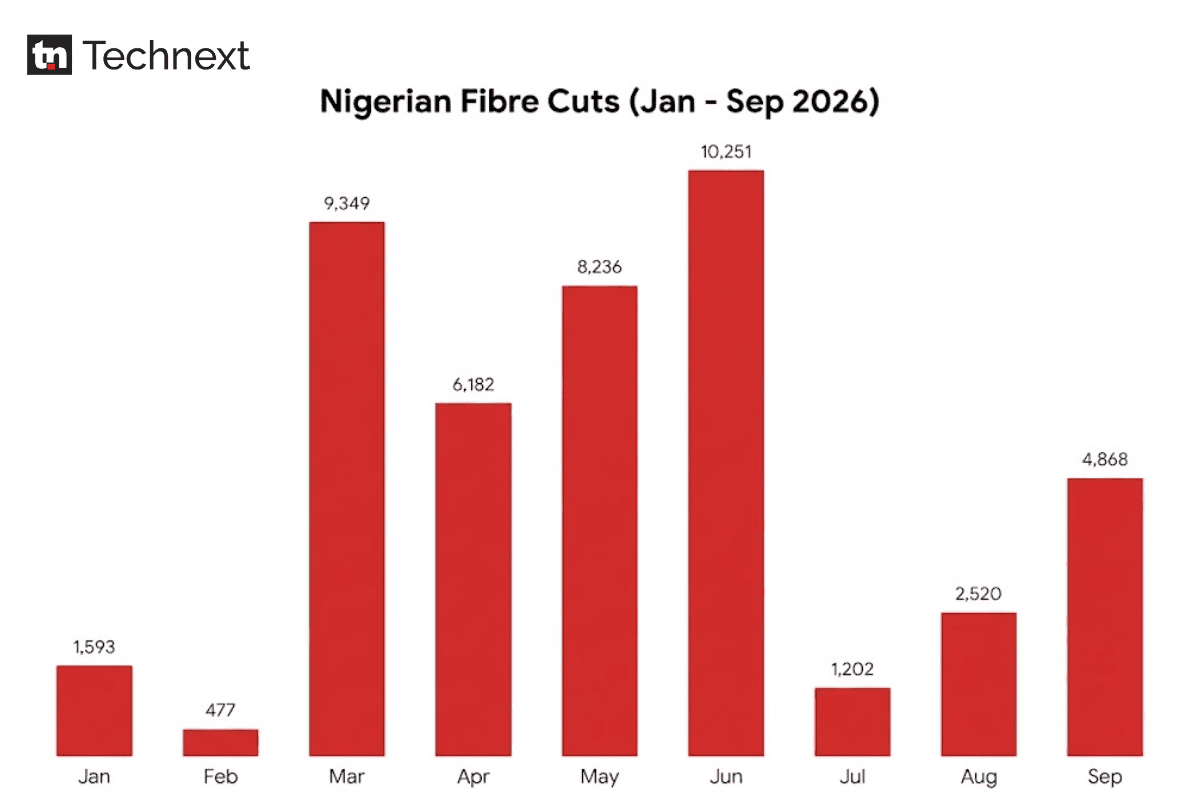
Nigeria's telecommunications operators recorded 44,678 fibre cuts between January and September 2026, according to the sector regulator, the Nigerian Communications Commission (NCC), whose Quality of Experience report underscores the scale of physical damage driving network disruption and poor internet experience across the country.
The impact of the cuts extends well beyond lost connectivity. Fibre cables form the transmission backbone that carries voice and data traffic between cell sites and core networks, so when traffic fails to reroute properly around damaged segments, subscribers experience dropped calls, degraded voice quality, and sharply reduced mobile data speeds. The consequences ripple into daily economic life: incomplete electronic funds transfers, disrupted financial services, delayed task delivery, halted online classes, and inaccessible digital platforms.
Degradation was the leading cause of outages, accounting for 17,462 cases, followed by vandalism with 9,283 cases and cable connection issues with 9,008 cases. Other identified causes include cuts during road construction, unavoidable incidents classified as force majeure, maintenance activity, infrastructure deployment issues, surface cable damage, and rodent and termite attacks.
The damage was heavily concentrated in certain periods. The second quarter of 2026 accounted for 24,669 cases—more than double the 11,419 recorded in the first quarter and well above the 8,590 cases logged in the third quarter. On a monthly basis, June recorded the highest number of fibre cut incidents at 10,251, followed by March with 9,349 and May with 8,236.
Access denials compound the problem. Nigerian operators are frequently prevented from reaching their own infrastructure when local communities, landowners, local government agents, touts, or labour unions block engineers and service providers from entering or operating network sites such as base stations and mast towers. These restrictions lengthen the time required to repair damaged equipment, refuel base stations, and carry out routine maintenance.
Between January and September 2026, 23,954 cases of access denials were recorded. Insecurity accounted for 73 percent of the total, or 17,482 cases, while June saw the highest monthly figure at 4,062 denials. Alongside fibre cuts, access denials directly cause network outages, dropped calls, slow internet speeds, and poor service delivery for millions of subscribers, illustrating how unauthorised site blockades continue to threaten digital stability and national security. The trend persisted despite the federal government's designation of telecom facilities as Critical National Information Infrastructure (CNII) under executive orders—a status that formally recognises how essential the networks are to banking, payments, and public services.
Theft added further to operators' losses, with 3,732 counts of telecom equipment stolen during the same period. The breakdown includes 397 batteries, 110 generators, 1,270 cases of cable theft, and 1,693 cases of diesel theft.
The persistent outages and mounting subscriber complaints have drawn legislative attention. At a public hearing in Abuja on Wednesday, the House of Representatives summoned the chief executive officers of MTN, Airtel, and Globacom to explain the persistent poor network services across the country. The CEOs are expected to appear before lawmakers on October 28.
The House Ad Hoc Committee, chaired by Olumide Osoba, who represents Ogun State, also directed the NCC to ensure operators comply with the directive and submit all necessary documents as requested. When the executives appear before the panel, they are expected to explain why quality of experience has declined in recent months—disrupting services for individuals and business enterprises—and to outline the measures being taken to address subscribers' complaints.
The summons followed a significant MTN Nigeria network outage in early October that affected voice and internet service availability, as well as its FibreX offering, across parts of several key states, including Lagos, Oyo, Rivers, and Delta, and the Federal Capital Territory (FCT). The disruption hit millions of subscribers, many of whom demanded compensation hours after the operator confirmed service restoration, arguing the outage eroded the value of mobile data bundles that continued to expire while services were down. Together, the NCC's figures and the lawmakers' intervention highlight the operational and security challenges weighing on Nigeria's telecom sector as pressure builds for lasting improvements in service quality.

