Nigeria's Blockchain Policy at Three Years: Stronger Rules, Unclear Government Delivery
Key Takeaways
- •The Federal Executive Council approved the National Blockchain Policy in May 2023, but steering committee chairman Chimezie Chuta only declared implementation underway in July 2024.
- •The Investments and Securities Act 2025 formally covers virtual and digital assets, and the SEC's incubation programme has admitted firms including GIGX Technologies, KuCoin Nigeria, Pisi Payments Solution, BC Access and Yellow Card with Approval-in-Principle status.
- •In July 2026, President Bola Tinubu signed an executive order creating a CBN-chaired Virtual Asset Council, a Virtual Asset Office and a regulatory sandbox covering virtual-asset and blockchain solutions, with a 30-day deadline for a Harmonised Implementation Framework.
- •There is no public government inventory showing how many federal services run on blockchain or how many envisaged projects have reached production, and the policy never publicly established benchmarks for its progress indicators.
- •The headline talent initiative, a scholarship programme to train 30,000 Nigerians announced by NITDA and Domineum Blockchain Solutions, predates the 2023 policy and lacks public data on employment or startup outcomes.
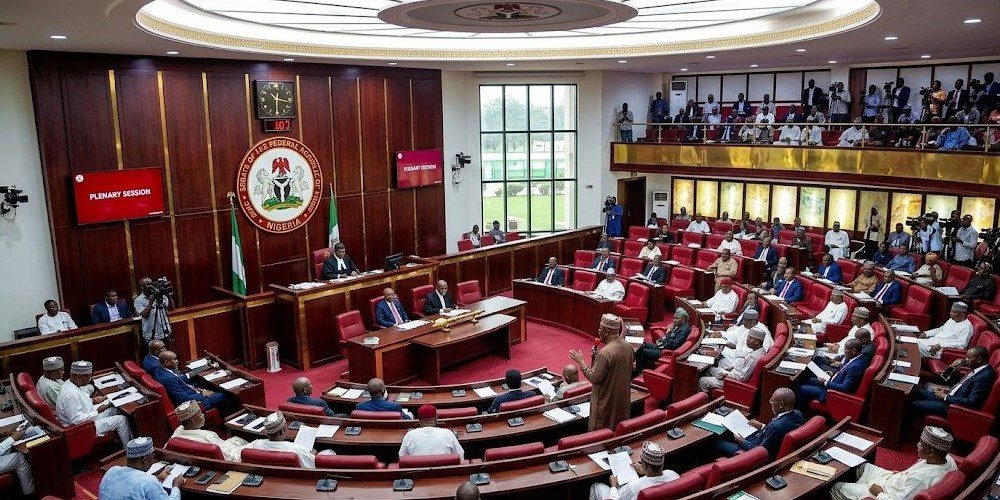
On July 17, 2024, Chimezie Chuta, chairman of the steering committee for Nigeria's National Blockchain Policy, took to X with an announcement: “The implementation work of the Nigeria Blockchain Technology Policy effectively begins today.” By then, more than a year had already passed since the policy was approved.
The Federal Government had signed off on the policy in May 2023 with a broad promise: to use blockchain beyond cryptocurrency to improve public services, create jobs, strengthen transparency and security, expand financial inclusion and drive economic growth.
Three years on, Nigeria has clearly built more rules around digital assets. The Securities and Exchange Commission (SEC) has expanded its regulatory programmes for virtual-asset businesses, the Investments and Securities Act 2025 formally covers virtual and digital assets, and President Bola Tinubu signed an executive order in July 2026 to coordinate virtual-asset regulation.
What is far harder to find is comparable evidence of blockchain being deployed at scale across government. That gap sits at the centre of Nigeria's three-year blockchain story.
What the blockchain policy promised
When the Federal Executive Council approved the National Blockchain Policy in May 2023, it framed blockchain as more than cryptocurrency. The policy sought to encourage adoption across the economy, develop local talent, promote innovation and support applications in areas including governance, finance and public services.
It directed relevant agencies to begin implementation and established a National Blockchain Implementation and Steering Committee involving government agencies, regulators, academia and private-sector stakeholders. But the document also carried a built-in measurement problem.
It identified an increase in blockchain startups and an increase in the number and scope of government blockchain projects as indicators of progress, while stating that the benchmarks for measuring those indicators were still to be established.
Three years later, there is no obvious public baseline against which to measure either indicator, making it difficult to say precisely how much of the policy has been delivered.
Why implementation took so long
The record points to a policy that took considerable time to move from approval to execution.
In May 2024, the National Information Technology Development Agency (NITDA) reconstituted the National Blockchain Policy Steering Committee and began a co-creation workshop. The agency said the exercise was intended to produce a “concrete implementation plan” and help translate the policy's aspirations into an actionable framework.
Two months later, committee chairman Chuta said the implementation work had “effectively” begun.
In May 2025, the Federal Ministry of Communications, Innovation and Digital Economy published a white paper outlining the development of a new National Blockchain Policy. The ministry said the process was building on NITDA's National Blockchain Strategy, published in 2024, and would address electronic transactions, digital identity, supply-chain transparency, financial inclusion and innovation in governance.
The ministry's current resources page, however, still lists the “National Blockchain Policy For Nigeria 2023” among its policies.
The result is a process that has moved through a 2023 policy, a reconstituted implementation committee, a 2024 strategy and a 2025 whitepaper, while the public record does not clearly show the point at which the original policy's targets were met.
Regulators filled the gap
The biggest visible change has come from regulators. It is important, though, to separate that progress from the 2023 blockchain policy, because crypto regulation in Nigeria did not begin with it.
The SEC had already established its position on digital assets in 2020. The Central Bank of Nigeria (CBN) then issued guidelines in December 2023 for banks and other financial institutions dealing with Virtual Asset Service Providers.
The Investments and Securities Act 2025 subsequently gave virtual assets, digital assets and distributed-ledger-based products a clearer place within Nigeria's capital-market framework.
The SEC's Accelerated Regulatory Incubation Programme now includes virtual-asset businesses, while its public register lists digital-asset exchanges, custody businesses and tokenisation projects. In July 2026, the commission admitted GIGX Technologies and KuCoin Nigeria into the programme, followed in August by Pisi Payments Solution, BC Access and Yellow Card. The admissions give the firms Approval-in-Principle within the programme; they are not final licences.
The latest development came in July 2026, when President Tinubu signed the Executive Order on Virtual Assets Coordination. The order created a Virtual Asset Council chaired by the CBN, established a Virtual Asset Office and provided for a CBN regulatory sandbox where eligible operators can test virtual-asset products, services and blockchain-based solutions under supervision. It also directed the council to develop a Harmonised Implementation Framework within 30 days.
The sandbox's coverage of blockchain-based solutions, alongside virtual-asset products and services, ties the new coordination structure directly to the application space the 2023 policy targeted. The framework's 30-day deadline is the nearest dated milestone in that process.
Together, these changes give digital-asset and blockchain-based financial businesses a more developed regulatory environment. But much of the rule-making has happened through the independent mandates of financial regulators, and it would therefore be difficult to attribute all of it to the 2023 blockchain policy.
Is government using blockchain at scale?
There is evidence of experimentation. NITDA's Fourth Industrial Revolution Technology Application platform supports projects involving technologies including blockchain, with selected agricultural projects eligible for funding of up to ₦10 million. The agency also continues to identify blockchain among the technology areas covered by its work on emerging technologies.
There was also the proposed Nigerium project. In 2024, NITDA announced plans to develop an indigenous blockchain intended to improve data security and national security through public-private collaboration.
A proposed network or pilot, however, is not the same as a deployed government service. There is currently no public government inventory showing how many federal services are powered by blockchain, how many Nigerians use them, or how many of the government blockchain projects envisaged by the 2023 policy have reached production.
That does not prove such deployments do not exist. It does show that their scale is difficult to establish from the public record.
What about the promised talent?
The headline figure here predates the policy. In 2022, NITDA and Domineum Blockchain Solutions announced a scholarship programme aimed at training 30,000 Nigerians in blockchain. Because that initiative was launched before the 2023 National Blockchain Policy, it should not be counted as an achievement of the policy itself.
More importantly, the public material does not establish how many of those trainees went on to secure blockchain jobs, build startups or deploy blockchain solutions. A training headcount demonstrates activity. It does not, by itself, demonstrate an economic outcome.
So, what has actually changed?
Nigeria now has a more developed regulatory structure around digital assets than it did when the National Blockchain Policy was approved in 2023: multiple formal pathways for virtual-asset businesses, a capital-market law that explicitly covers digital and virtual assets, a growing list of firms in SEC regulatory programmes, and a presidential framework for coordinating virtual-asset regulation.
There has also been continued government interest in blockchain through policy development, research and pilot projects.
What is less clear is whether those developments have produced the broader blockchain-powered public sector and economy promised in 2023. The original policy identified more blockchain startups and more government blockchain projects as indicators of progress, but the benchmarks for measuring them were never publicly established in the policy itself.
Without a public baseline or project count, it remains difficult to measure how much of the original ambition has actually been delivered. The near-term markers, at least, are identifiable: whether the Virtual Asset Council publishes its Harmonised Implementation Framework within the 30-day window, whether the 2025 white-paper process produces a published successor policy, whether pilots such as Nigerium reach production, and whether any public baseline for the policy's indicators emerges. Each would provide a measurable reference point the current public record lacks.

