Lagos Businessman Says Customers Show Bitcoin Wallets but Still Pay in Cash
Key Takeaways
- •A Lagos trader who accepts Bitcoin says most customers show him funded crypto wallets but ultimately pay in cash or through bank transfers.
- •Roughly 30 per cent of the trader's customers pay in crypto, with many drawn by curiosity sparked by his signboard announcing Bitcoin acceptance.
- •Nigeria's digital asset sector faces strict rules, including a one per cent withholding tax on approved exchange transactions and profit taxes that can reach 25 per cent.
- •Crypto exchanges in Nigeria must hold a minimum capital base of ₦2 billion, pay a ₦30 million registration fee, and keep 80 per cent of client assets in offline cold storage.
- •The trader called on accepting businesses and licensed platforms such as Busha, Quidax and Yellow Card to advertise and educate the public to expand crypto payment adoption.
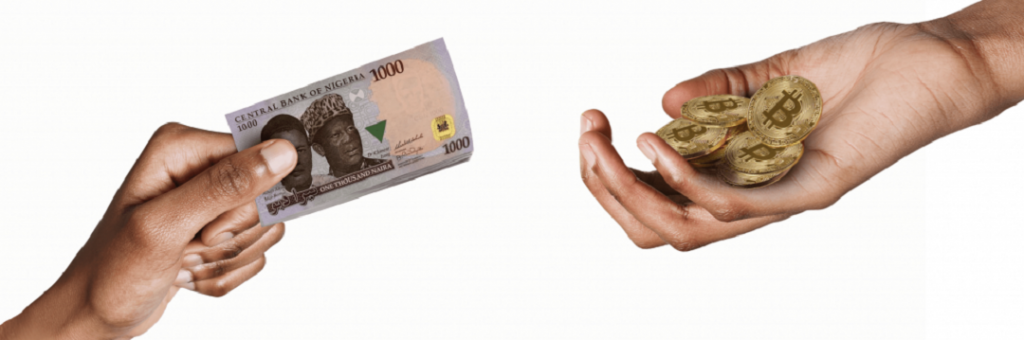
A Lagos businessman who accepts Bitcoin says most of his customers arrive with fully funded crypto wallets but still choose to settle their bills in cash or via bank transfers — a pattern he describes as evidence of the gap between Nigeria's high crypto adoption and its slow use of digital assets for everyday payments.
Vincent*, a trader in his mid-twenties who deals in electrical appliances, shared his experience in an interview with TechNext24 about the adoption of Bitcoin as a means of payment.
"People with Bitcoin wallets, they come, they will show me their crypto wallets and still pay me in cash or by bank transfer. A few of them still pay in crypto, but many of them would rather pay with cash instead of transferring crypto," he said.
According to Vincent, crypto adoption in Nigeria is high, but its use as a payment method remains low relative to the overall adoption rate — a phenomenon he said he still finds difficult to reconcile. Even so, he noted that crypto adoption as a form of payment is rising, albeit slowly. For the wider sector, that split is the number that matters: counting wallet holders is not the same as counting people who actually spend their coins, and a shop counter is one of the few places where the difference shows up in daily trade.
"Of all the customers who buy from me, about 30 per cent of them pay in crypto. Most of them come out of curiosity because of the Bitcoin sign I put up that I accept crypto. They make enquiries. Some of them end up buying and paying with crypto," he said.
He added that some visitors have never used crypto before. They come in to ask whether paying with crypto is quicker, cheaper and more convenient than using platforms such as Opay and Palmpay. Some eventually ask him to help them open crypto wallets and even buy some Bitcoin while they are at it.
Improving acceptance of Bitcoin payments
Vincent's remarks come against the backdrop of a tightly regulated Nigerian digital assets space, where the government keeps a tight leash on individuals and operators. Current provisions include a one per cent withholding tax on transactions carried out on approved exchanges, as well as taxes on profits from individual transactions that can rise to 25 per cent — provisions that shape the cost of converting between crypto and cash on regulated platforms.
The conditions are steeper for exchanges, which must maintain a minimum capital base of ₦2 billion, pay a separate ₦30 million registration fee, and hold a fidelity insurance bond covering at least a quarter of that paid-up capital. The rules also require 80 per cent of clients' digital assets to be held offline, in cold storage. These restrictions make operating in the crypto space appear very tedious and cumbersome.
To improve Bitcoin's acceptance as a payment method, Vincent said businesses that accept Bitcoin payments need to put up signs indicating that they accept crypto.
"Bitcoin is a digital asset, and no company owns it. Therefore, Bitcoin can't run advertisements for itself. But we that accept it, we are the ones that will do the publicity for it. Many businesses around this area accept crypto payments, but they don't want to put a signboard outside their shops and offices like me. They treat it as a need-to-know and only if the customer asks to pay Bitcoin. Crypto payment won't grow like that," he said.
He also encouraged digital asset companies cleared to operate in Nigeria — including Busha, Quidax and Yellow Card — to start running advertisements the way Opay, Moniepoint and other payments fintechs do. If advertising around crypto payments and acceptance took place on such a larger scale, he said, people would start coming around, even though it may take a while.
"Everybody knows what is Bitcoin. They just don't know how to use it, whether they can use it or if it is safe. We need to educate them, and that is the only way we can make them come around. When it starts growing, peer pressure will push other people to follow," he said.
Whether the curiosity his signboard attracts hardens into routine payment is the measure to watch — an outcome he ties less to the technology itself than to visibility, advertising and patient education.
Vincent acknowledged that the Nigerian environment has not been kind to crypto traders overall, which explains the scepticism. But cryptocurrencies are already here and millions of people use them, he argued, asking: "How long are we going to keep pretending?"
In Nigeria, cryptocurrencies are still considered digital assets, not a means of payment. In practice, however, many people trade them informally while also using them to pay for goods and services.
*The name of the trader was changed for privacy purposes.
Source: TechNext24

