Nigeria's 5G Market Share Crosses 5% for First Time as 3G Continues to Decline
Key Takeaways
- •Nigeria's 5G share climbed to 5.05% in September 2026, topping the 5% mark for the first time since the NCC began tracking network data in May 2023.
- •Monthly growth has averaged roughly 0.14 percentage points since December 2025, meaning 5G would only reach 6% around April 2027 at the current pace.
- •Airtel Nigeria deployed more than 1,000 5G towers in 2026, while MTN and Airtel, with a combined 143.7 million subscriptions, continue investing in coverage across Lagos, Abuja, and Port Harcourt.
- •3G fell to 4.16% in September 2026, widening the lead 5G first established when it overtook the older technology in August.
- •Internet subscribers rose to 160.9 million in September, and data consumption of 1.731 million terabytes marked the second-highest monthly total on record.
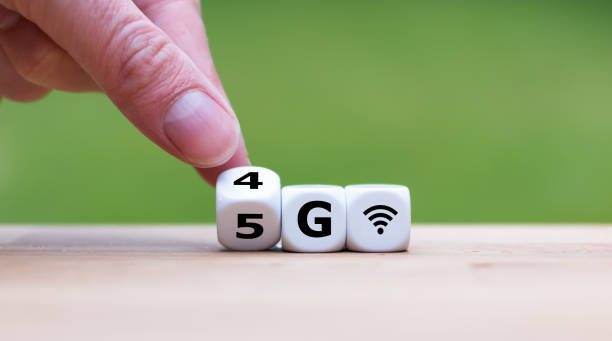
Nigeria's 5G market share has crossed the 5% threshold for the first time since the Nigerian Communications Commission (NCC) began recording network share data in May 2023. While 5G continues to expand, 3G is steadily declining, signalling its gradual exit from the market.
According to the NCC's latest industry statistics, 5G rose from 4.92% in August to 5.05% in September 2026. The pace of growth remains slow, however, relative to the country's mobile broadband subscription rate and rising demand for high-speed data among Nigerians.
Slow but steady expansion
5G's market share has grown every single month, climbing from 3.77% in December 2025 to 5.05% in September 2026. That represents an increase of just 1.28 percentage points (pp) over nine months, an average of roughly 0.14 pp per month. At this rate, it would take about seven months for the network to gain a single percentage point, meaning that at the current growth pace, Nigerians would wait another seven months — until April 2027 — for 5G to reach 6%.
Market dynamics and the growing penetration of internet users are placing pressure on the technology to expand faster than its current trajectory.
Even so, the milestone reflects measurable progress. 5G smartphone affordability is improving and mid-range 5G devices are entering the Nigerian market. Sustained capital expenditure by MTN and Airtel — the country's two largest mobile internet providers, with a combined 143.7 million subscriptions — to expand 5G coverage sites across urban centres such as Lagos, Abuja, and Port Harcourt is also making a significant impact.
For instance, Airtel Nigeria's CEO, Dinesh Balsingh, said during the operator's Open Network Launch that it had deployed more than 1,000 5G telecom towers in 2026 as part of its sustainability investment drive and its effort to improve network quality for subscribers. Accelerated deployment of this kind is expected to support further growth in the high-speed network's share.
The gains come at a time when 5G Fixed Wireless Access (FWA), including 5G ODU services and broadband routers, is increasingly substituting fixed connections — a shift with added relevance as national monthly data consumption runs at its second-highest level on record.
3G's gradual exit
By contrast, 3G continues to contract. The technology fell from 4.27% to 4.16% in September 2026, extending a consistent decline from 5.32% in April 2026. In August 2026, 5G at 4.92% officially surpassed 3G at 4.27% for the first time, and 5G has since widened its lead (5.05% vs 4.16%), underscoring 3G's gradual exit from the market. Future monthly updates to the NCC's industry statistics will indicate how much further 3G's residual share contracts and whether 5G sustains its climb toward the 6% mark.
Subscriber and usage figures
Internet subscribers, excluding internet service providers, reached 160.9 million in September, up from 158.5 million in August 2026. Within the mobile network contribution of 160.4 million, MTN Nigeria led with 86.5 million, followed by Airtel Nigeria with 57.2 million. Globacom added 151,000 new internet users to reach 15.9 million, while T2mobile (9mobile) stood at 810,010, unchanged from August and July 2026.
Internet data usage slipped slightly to 1.731 million terabytes of consumption from 1.756 million in August. Despite the dip, September's data consumption was the second-highest yet, indicating that Nigerians remain heavy data users.
With 4G and 5G accounting for a combined 59.42% market share, most internet users are on networks capable of loading higher-resolution graphics, richer media, and real-time data packets much faster.
Consumption patterns are shifting accordingly. Nigerians are increasingly moving away from Pay-TV and spending more time on bandwidth-heavy platforms such as YouTube, TikTok, Netflix, and Instagram. Streaming in HD or 4K can consume anywhere from 1GB to 3GB per hour, compared with roughly 350MB at lower resolutions, while short-form auto-playing videos on TikTok and Instagram use about 2MB to 20MB per brief clip.

