Binance Hack Prompts Unaffected Nasdaq Firm to Weigh Sale or Pledge of Its 5,833 Bitcoin
Key Takeaways
- •Next Technology Holding's board authorized its chief executive on October 30 to sell or pledge the company's 5,833 BTC in one or more tranches, though no transaction has occurred and none is committed.
- •None of the company's Bitcoin was held on Binance, so it suffered no direct loss from the hack, but its roughly $448 million stake remains fully exposed to Bitcoin's price movements.
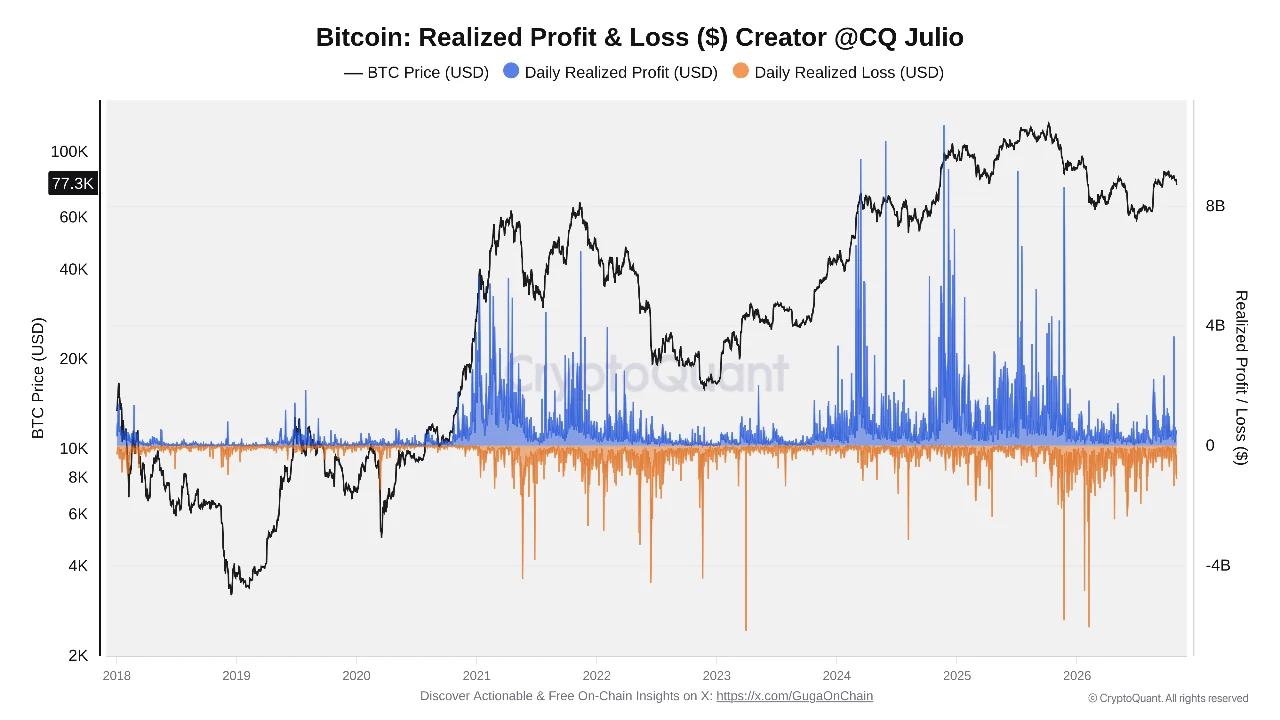
- •CryptoQuant data show realized losses jumped from $301 million on the October 29 hack day to $1.115 billion on October 31, which an analyst described as a delayed capitulation effect.
- •About 23,284 BTC of liquidity was withdrawn from order books on October 31, roughly four times Next Technology's entire holding, complicating any large exchange sale.
- •A June-quarter SEC filing showed digital assets at $351.5 million, or 68.6% of the company's $512.4 million total assets, with substantially all Bitcoin held with Japan-based institutional custodians.
Next Technology Holding Inc., the Nasdaq-listed company behind one of the larger corporate Bitcoin treasuries, announced on October 30 that its board has authorized its chief executive to sell or pledge the company's Bitcoin in one or more tranches. The board authorization followed a review of the recent Binance hack, even though none of the company's 5,833 BTC were ever held on the exchange. No sale or pledge has taken place, and the announcement makes no commitment that any transaction will occur.
Why a Company With Nothing at Binance Is Reacting
The board said its decision reflected a wish to reduce risk and improve liquidity, citing exchange vulnerabilities and, more unusually, potential threats from quantum computing. Those are the company's own stated concerns, not findings about how Binance was breached.
Keeping its coins with other custodians spared Next Technology any direct loss from the hack. What it could not escape was the bigger exposure: the price of Bitcoin itself. At around $76,800 — Bitcoin's price on October 30 — the holding is worth roughly $448 million, and that value moves every day regardless of where the coins are stored. Before hedges, debt or taxes, the change in the gross value of 5,833 BTC would be:
- A $10,000 move in Bitcoin's price: about ±$58.3 million
- A 10% move: about ±$44.8 million
- A 20% move: about ±$89.6 million
The hack itself is a matter for the investigators working to block the stolen funds. Next Technology's question is different: how much of that price swing its board still wants on the balance sheet.
The Hack's Cost Arrived Through Price, and Late
Next Technology is not the only Bitcoin holder that lost nothing at Binance and still felt the hack. On-chain data from CryptoQuant shows the wider market shrugged off the breach on the day it happened, then sold at a loss two days later.
October 29 — hack day:
- BTC close: $80,991
- Realized profit: $464 million
- Realized losses: $301 million
- Short-term holder cost: $76,056
October 31 — two days later:
- BTC: down to $77,553
- Realized profit: $519 million
- Realized losses: $1.115 billion
- Short-term holder cost: $75,913
Realized losses count coins sold for less than their holders paid, so the jump shows investors locking in losses rather than merely watching prices fall. In recent analysis, CryptoQuant contributor GugaOnChain called it a delayed effect of the hack. On hack day, he wrote, holding near $80,000 gave investors a false sense of security; two days later, buyers who had come in near the top gave up. The short-term holder realized price — the average cost of recent buyers — edged lower as they sold, and it is now the level that will show whether the selling eases or deepens.
The selling also met thinner markets. Citing CryptoQuant's FEI Downside Alpha indicator, the analyst reported about 23,284 BTC of liquidity withdrawn from order books on October 31. Next Technology's entire holding is about a quarter of that amount, which shows why a large seller in this market would have to think about how, not just whether, to sell.
That is the exposure Next Technology's board is now weighing. Its coins were never at risk inside Binance, but their value moves with a market still digesting the attack.
The Balance Sheet Behind the Decision
The company's June-quarter SEC filing shows how much of the company rides on that one asset. As of June 30, 2026:
- Digital assets: $351.5 million (68.6% of total assets)
- Cash and equivalents: $159 million (31%)
- Everything else: under 1%
- Total assets: $512.4 million
Those figures predate the hack by four months, so they show the scale of the bet rather than the company's current cash position. The same filing already allowed for periodic Bitcoin sales and for raising capital secured by the holdings, and described substantially all of the Bitcoin as held with Japan-based institutional custodians. Selling was always an option; the October vote hands management specific authority to use it.
Sell, Pledge or Wait
- Sell: Turns coins into cash and removes their price risk. Open questions: the price achieved, costs, taxes, and what the cash would fund.
- Pledge: Raises cash while keeping the coins — and their price risk. Open questions: rate, maturity, collateral terms, and liquidation triggers.
- Wait: Keeps flexibility and leaves the treasury as it is. Open question: whether the board's risk concerns are addressed at all.
The release allows sales on exchanges, private block trades and pledging arrangements, but names no lender and gives no financing terms. Its risk disclosures mention possible margin calls and forced liquidation — the point at which a pledge can turn into a sale anyway, at a price the company no longer controls. A loan also has to be repaid eventually, a problem previously examined in coverage of Hyperscale's Bitcoin-backed loan.
Timing matters here too. Selling 5,833 BTC through exchanges while order books are thin would weigh on the very price the company is trying to lock in, which is where the release's option of private block trades comes in. Pledging avoids that, but keeps the coins exposed to however the market resolves around recent buyers' cost level.
What the Next Filing Needs to Show
If Next Technology sells, the useful numbers are how many coins went, the net proceeds and what remains. If it borrows, they are the size of the debt, how many coins are pledged and the price at which a lender could sell them. A mix of both could cut some exposure while adding debt, so only those figures will show whether the company now carries less Bitcoin risk or the same risk with a loan attached.
This article is provided for informational purposes only and does not constitute financial or investment advice.

