New Jersey Governor Signs Garden State Balcony Solar Act Into Law
Key Takeaways
- •The Garden State Balcony Solar Act exempts plug-in solar devices up to 1,200 W from utility interconnection and metering requirements, including certain fees, approvals, and equipment mandates.
- •The law prevents landlords, homeowner associations, and municipalities from broadly prohibiting plug-in solar devices or requiring permits for their use, benefiting renters in a state with substantial multi-family housing.
- •Balcony solar devices plug into a standard 120-volt outlet, typically include a microinverter and adapter, and feed electricity directly into a home's existing system to offset energy use.
- •The plug-in solar model has been widely adopted in Germany, where hundreds of thousands of systems have been installed under simplified rules for low-capacity devices.
- •The Sherrill administration estimates its broader energy actions, including 18 new solar and storage projects and a 3 GW community solar expansion, will save New Jersey ratepayers $1 billion annually.
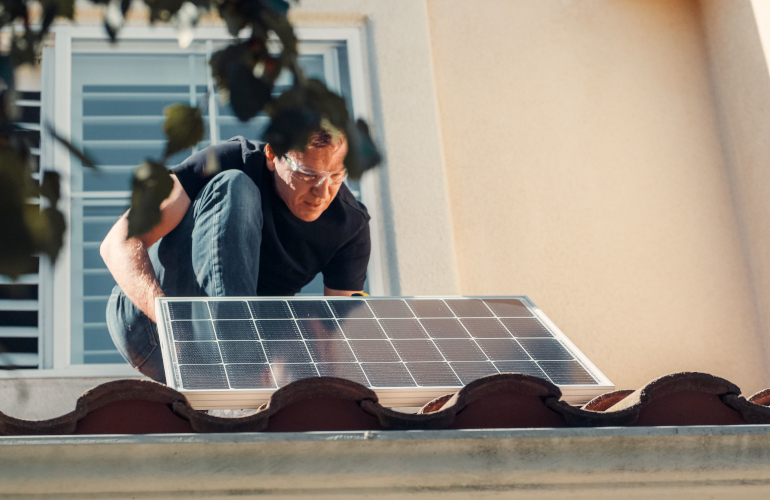
New Jersey Gov. Mikie Sherrill has signed the Garden State Balcony Solar Act (S2368/A4836), cutting regulatory red tape so that New Jersey residents can purchase and use portable, plug-in solar panels to generate their own clean energy and reduce their electricity costs.
"From day one, I've been laser-focused on driving down energy costs through an all-of-the-above approach, and that includes putting clean, affordable solar power that you can simply plug in directly into the hands of New Jerseyans," Sherrill said. "Balcony solar is a practical, easy-to-use tool that can help families save money while allowing more people to participate in our clean energy future. This bill cuts unnecessary red tape, expands access to affordable solar power, and proves that affordability and sustainability can go hand in hand."
Balcony solar devices plug into a standard 120-volt outlet — most units come with a microinverter and adapter — and feed electricity directly into a home's existing electrical system, offsetting energy use and lowering costs. Both the devices and the microinverter/adapter are readily available for purchase online and at local home improvement stores. The plug-in approach, often called "balcony solar" or "plug-in solar," has been widely adopted in Germany, where hundreds of thousands of such systems have been installed under simplified rules for low-capacity devices, and New Jersey's law follows a similar principle of exempting small systems from burdensome interconnection processes.
Under the new law, qualifying plug-in solar devices of up to 1,200 W are exempt from utility interconnection and metering requirements, including certain fees, approvals and equipment mandates. The law also prevents landlords, homeowner associations and similar entities from broadly prohibiting the use of these devices, and bars municipalities from prohibiting them or requiring permits for their use. The renter and HOA protections are notable in a state where a large share of residents live in multi-family housing, since traditional rooftop solar generally requires property ownership and landlord or association approval.
The measure builds on Sherrill's energy agenda aimed at lowering costs for New Jersey residents. During her inaugural address, Sherrill signed Executive Orders 1 and 2 to freeze rate hikes and accelerate new energy generation, particularly affordable, clean energy that can be deployed quickly. Since then, the Sherrill administration has approved 18 new solar and battery storage projects, announced a historic expansion of community solar to 3 GW, signed legislation to hold data centers and utility companies accountable, and fast-tracked advanced grid technologies intended to help cut costs. Together, these actions are estimated to save New Jersey ratepayers $1 billion annually.
"Plug-in solar gives New Jersey families another tool to lower their energy costs while expanding access to clean, homegrown energy. By making it easier for renters and homeowners alike to take advantage of solar, the Garden State Balcony Solar Act will help make our clean energy transition more affordable, accessible, and equitable," said Jesse Sutherland, Political and Policy Director of New Jersey LCV.
"By signing this law, Gov. Sherrill and legislative leaders have taken another big step in making solar energy more affordable and accessible for New Jerseyans," said Stephan Scherer, CEO and co-founder of CraftStrom, a balcony solar company. "As the most densely populated state in the nation, New Jersey is built for plug-in solar: it takes just an hour to install, fits on apartment and condominium balconies, and cuts utility bills immediately. New Jersey is sending a clear signal that the future of solar is portable, affordable, and consumer-led."
