New Jersey BPU Proposes 150 MW Expansion of Garden State Energy Storage Program
Key Takeaways
- •The NJBPU proposal would open 150 MW of energy storage capacity statewide under the next phase of the Garden State Energy Storage Program.
- •The program is part of New Jersey’s goal to reach 2 GW of energy storage by 2030 under the Clean Energy Act of 2018.
- •Residents who enroll their batteries could receive annual incentive payments over a 10-year term for energy exports during critical grid conditions.
- •Atlantic City Electric, Jersey Central Power & Light, PSE&G and Rockland Electric would handle enrollment, dispatch, performance tracking and incentive payments under NJBPU oversight.
- •The straw proposal is subject to public comment before the program’s final design is set.
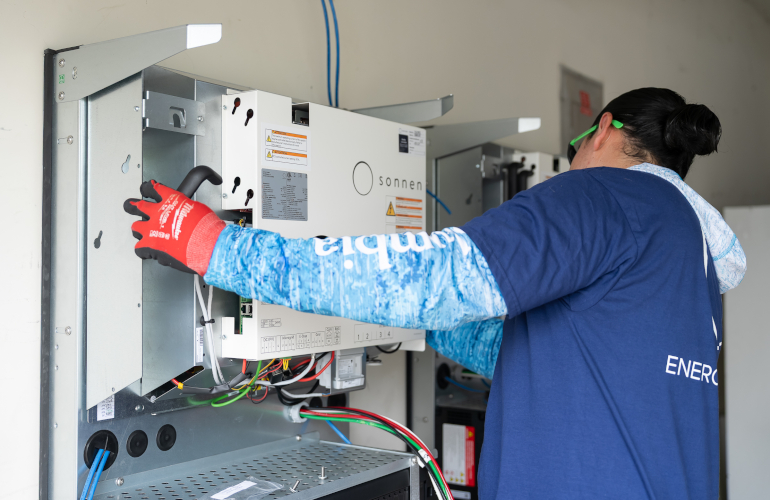
The New Jersey Board of Public Utilities (NJBPU), the state agency that regulates utilities, has released a proposal for the next phase of its Garden State Energy Storage Program (GSESP), which would open 150 MW of energy storage capacity statewide, including behind-the-meter residential battery storage.
"The Garden State Energy Storage Program advances Gov. Sherrill's 'Executive Order No. 2' by growing energy storage deployments in-state to meet growing energy demand while improving affordability and resilience," said Ben Hertz-Shargel, president of NJBPU. "Public input is essential as we plan for New Jersey's energy future, and this Straw Proposal gives residents and stakeholders an opportunity to help shape that work."
The proposal forms part of New Jersey's goal of 2 GW of energy storage by 2030, a target established under the state's Clean Energy Act of 2018. Behind-the-meter residential battery storage refers to batteries installed on the customer side of the utility meter; these systems provide backup power for residents and support the electric grid during periods of high demand or grid stress. Utilities and grid operators across the country have increasingly turned to storage to shift clean generation toward peak demand hours, and New Jersey is one of the states that has put that interest into a statutory deployment target.
The Straw Proposal released today aims to integrate more clean energy resources, lower energy costs and improve resilience across New Jersey, and complements NJBPU's virtual power plant and grid modernization efforts. Virtual power plants aggregate distributed resources such as home batteries, rooftop solar and flexible loads so they can be dispatched to the grid as a coordinated resource, and behind-the-meter programs like the GSESP are designed to expand the pool of devices such aggregations can draw on. In utility regulation, a straw proposal is a discussion draft issued for stakeholder comment before a formal rulemaking or program design is finalized, so the final shape of this phase will depend on the feedback NJBPU receives during the comment process.
The Straw Proposal also lays the foundation for residents to receive compensation for distributed generation exports to New Jersey's electric utilities. Once a resident enrolls their battery, they could receive annual incentive payments over a 10-year term for energy exports in critical situations, such as heatwaves or cold snaps. Paying households for grid services from home batteries is an approach other states have already used: California's Self-Generation Incentive Program, one of the longest-running distributed energy incentive schemes in the country, has provided incentives for behind-the-meter storage, and New York has run aggregated home-battery initiatives as part of its grid modernization work.
Electric distributors Atlantic City Electric, Jersey Central Power & Light, PSE&G and Rockland Electric would administer residents' battery enrollment, coordinate dispatch, track performance, monitor data and issue verified incentive payments to residents under NJBPU oversight. The four distributors sit under different corporate parents — Atlantic City Electric is a subsidiary of Exelon, Jersey Central Power & Light is part of FirstEnergy, PSE&G is New Jersey's largest electric utility, and Rockland Electric is a subsidiary of Con Edison's Orange & Rockland — so a single statewide program would operate across multiple utility companies.
News item from NJBPU (via Solar Power World)
