Neuroscientist Frank George Argues Trump Displays Pattern of Neurodegenerative Disorder
Key Takeaways
- •Neuroscientist Frank George claims President Trump exhibits behavioral patterns consistent with frontotemporal dementia, a neurodegenerative condition affecting judgment, personality, and language.
- •George argues that the APA's 1973 Goldwater Rule, which discourages psychiatrists from diagnosing public figures without personal examination, has suppressed legitimate professional discussion of observable behavioral patterns.
- •George asserts that reframing Trump's behavior in medical terms rather than political ones has increased public willingness to question his cognitive fitness.
- •The neuroscientist contends that news organizations treat individual outbursts as isolated incidents rather than recognizing them as part of an enduring psychological pattern.
- •George concludes that the core problem is not a lack of evidence or vocabulary but a deficit in institutional and societal courage to describe recurring behavioral patterns publicly.
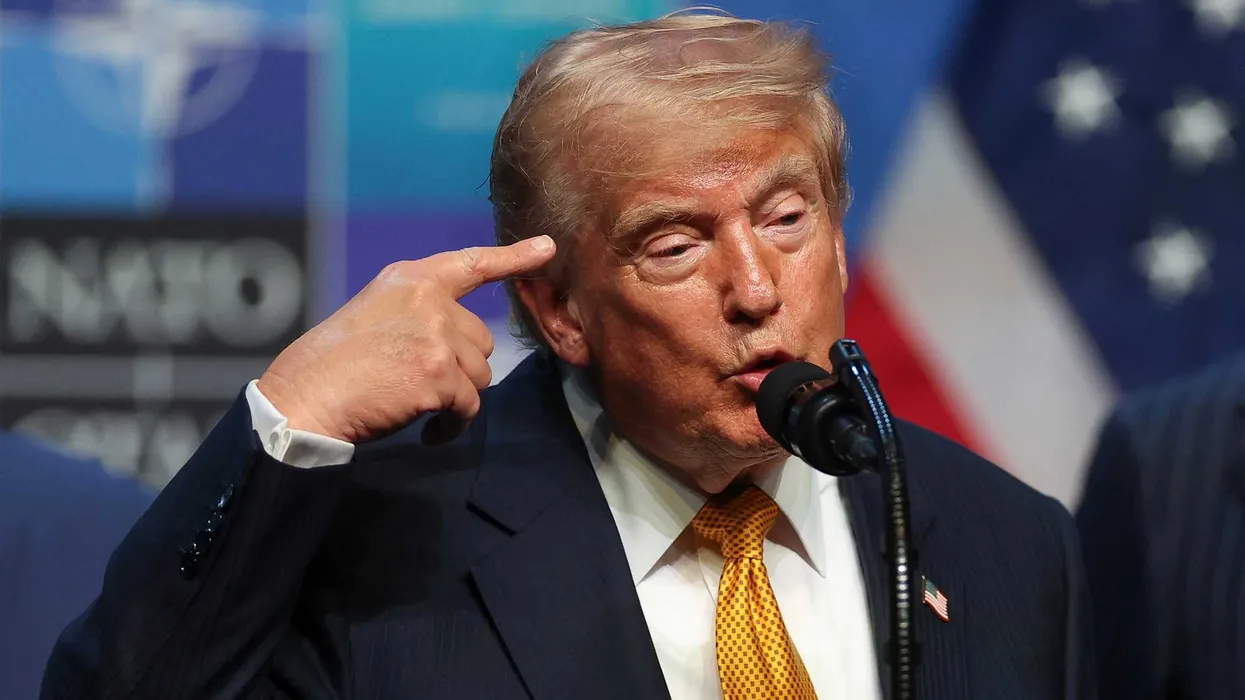
Neuroscientist Frank George argues that President Donald Trump has exhibited a consistent "psychological pattern" throughout his political career that indicates some form of "neurodegenerative disorder." In remarks published Friday, George identified the specific disorder he believes is driving Trump's behavior and contended that American society needs to become more willing to recognize such conditions in public figures. The discussion comes amid a broader public debate during the 2024 election cycle about the cognitive fitness and age of both major-party candidates, a topic that has drawn increasing attention from voters, commentators, and medical professionals alike.
George asserts that U.S. institutions suffer from "blind spots" that hinder their capacity to identify and publicly discuss certain psychological patterns. Pointing to the press as an example, he observed that while "nobody objects" when journalists highlight patterns in corruption, fraud, or discrimination, "when the pattern involves personality and behavior, many news organizations are way more hesitant to frame it that way. Instead, they treat each disturbing outburst as a fresh controversy rather than asking whether the controversies themselves reflect an enduring psychological pattern." George contends that the pattern itself — rather than any single incident — deserves headline attention.
He traces much of this reluctance to "the Goldwater Rule," a standard established by the American Psychiatric Association in 1973 — following controversy over psychiatrists who publicly assessed Senator Barry Goldwater during the 1964 presidential campaign — that prohibits psychiatrists from diagnosing public figures or offering professional opinions about them without conducting a personal examination. George acknowledges that the rule has theoretical merit, since it reduces the risk of psychiatry being weaponized politically. However, he argues that "Psychiatrists became so worried about saying too much that the public was left hearing almost nothing at all. Ironically, the profession dedicated to recognizing behavioral patterns became remarkably reluctant to talk about one unfolding in front of hundreds of millions of eyewitnesses."
In Trump's case, George argues that decades of public observation have made certain behavioral patterns unmistakable. "You don't have to diagnose someone to notice that they've never admitted they lost an election," he states. "You don't need a $500 office visit to recognize chronic grandiosity, projection, or an inability to tolerate criticism. You don't need to diagnose someone to notice that they have never admitted making a mistake. Ever. Millions of people can observe those things. That's called...Observation."
George notes growing public interest in the possibility that Trump is exhibiting "progressing signs of dementia, notably FTD" — frontotemporal dementia, a neurodegenerative condition affecting the brain's frontal and temporal lobes, associated with progressive changes in behavior, personality, judgment, and language — as well as "Malignant Narcissism," a clinical term combining narcissistic personality traits with antisocial behavior, aggression, and paranoia. He attributes this shift in willingness to a recent reframing of how Trump's behavior is discussed publicly.
"For years, many people heard: 'Trump has a personality disorder.' That sounded like politics," George explains. "But when they heard: 'Trump may have a neurodegenerative disorder,' that sounded like medicine. Once the conversation moved into a medical frame, people became more open to asking broader questions about the brain, behavior, and judgment. Some then revisited personality explanations they had previously dismissed."
George also argues that American discourse has created an artificial moral distinction between different types of behavioral observation. "Somewhere along the way," he writes, "we decided there was a moral difference between saying, 'His hippocampus is deteriorating,' and 'His capacity for empathy appears profoundly impaired.' Both are observations about brain function. One feels clinical. The other feels personal. One is saying the car needs work. The other is saying the driver needs work."
Ultimately, George contends that the greater issue may be Americans' collective reluctance to acknowledge such patterns rather than the patterns themselves. "We didn't lack evidence. We didn't even lack the vocabulary," he concludes. "What we lacked was the institutional and societal courage to put the two together. And when a society can't comfortably describe a recurring pattern...That pattern gets a very long head start."

