President Trump to Host Israeli Prime Minister Netanyahu at the White House on Tuesday
Key Takeaways
- •Netanyahu will travel to Washington for a White House meeting with Trump on Tuesday to address interconnected regional issues spanning Iran, Syria, Lebanon, and Israeli-Arab normalization.
- •Trump has signaled he is close to a decision on potential military action against Iran that would exceed previous operations in scope, with Israel prepared to participate if requested.
- •Trump has encouraged Netanyahu to reduce Israel's military presence in Syria and Lebanon, potentially creating friction since Israel views those operations as essential to border security.
- •The administration has tied a major U.S.-Saudi nuclear agreement to Saudi Arabia normalizing relations with Israel, which would represent the most significant expansion of the Abraham Accords to date.
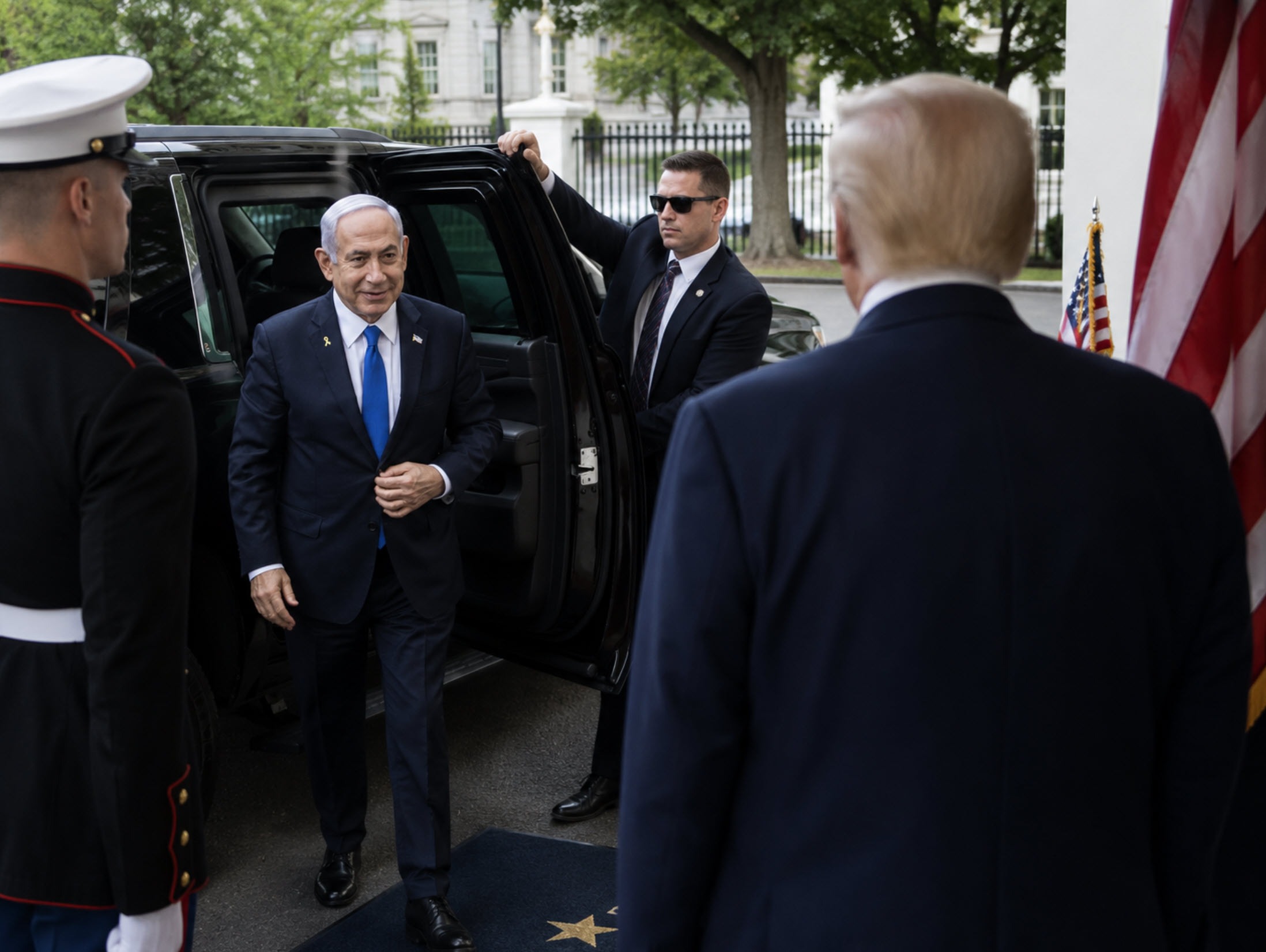
The Israeli Prime Minister's office has announced that Prime Minister Benjamin Netanyahu will travel to Washington to meet with President Donald Trump at the White House on Tuesday.
The meeting comes at a critical juncture in Middle East diplomacy, with multiple overlapping tracks of U.S. regional policy — Iran, Syria, Lebanon, and Israeli-Arab normalization — converging into a single bilateral agenda.
Israel has recently reiterated that it would not act as an aggressor in the ongoing conflict involving the United States and Iran unless specifically requested to do so by Washington. The positioning reflects Israel's careful calibration between maintaining its freedom of action on security matters and coordinating with its most important ally during a period of escalating U.S.–Iran tensions.
President Trump has continued to strongly back Israel and Prime Minister Netanyahu, reaffirming the close U.S.–Israel alliance. At the same time, he has signaled that the United States is prepared to take an even tougher stance against Iran if necessary. Trump recently stated that he is "close to making a decision" on potential military action against Iran that would be larger in scope than previous operations. He indicated that Israel would quickly participate if asked, though he noted that the United States could also act independently.
In parallel, Trump has reportedly encouraged Netanyahu to begin reducing Israel's military presence in Syria and Lebanon, arguing that prolonged deployments could complicate broader regional objectives. The request highlights a potential area of friction, as Israel has viewed its operations in Syria and Lebanon as essential to countering Iranian-aligned forces and securing its northern border.
Additionally, Trump has tied a major U.S.–Saudi nuclear agreement to Saudi Arabia normalizing relations with Israel. The linkage underscores his push to expand the Abraham Accords — the series of normalization agreements between Israel and several Arab states originally brokered in 2020 — while maintaining strong support for Israel's security and strategic interests. Saudi Arabia's entry into the Accords would represent the most significant expansion of the framework to date, given the Kingdom's influence across the Arab and Muslim world and its role as OPEC's largest oil producer.
The Tuesday summit is expected to address these interconnected issues, with outcomes likely to shape the trajectory of U.S. and Israeli policy across the region in the coming months.

